


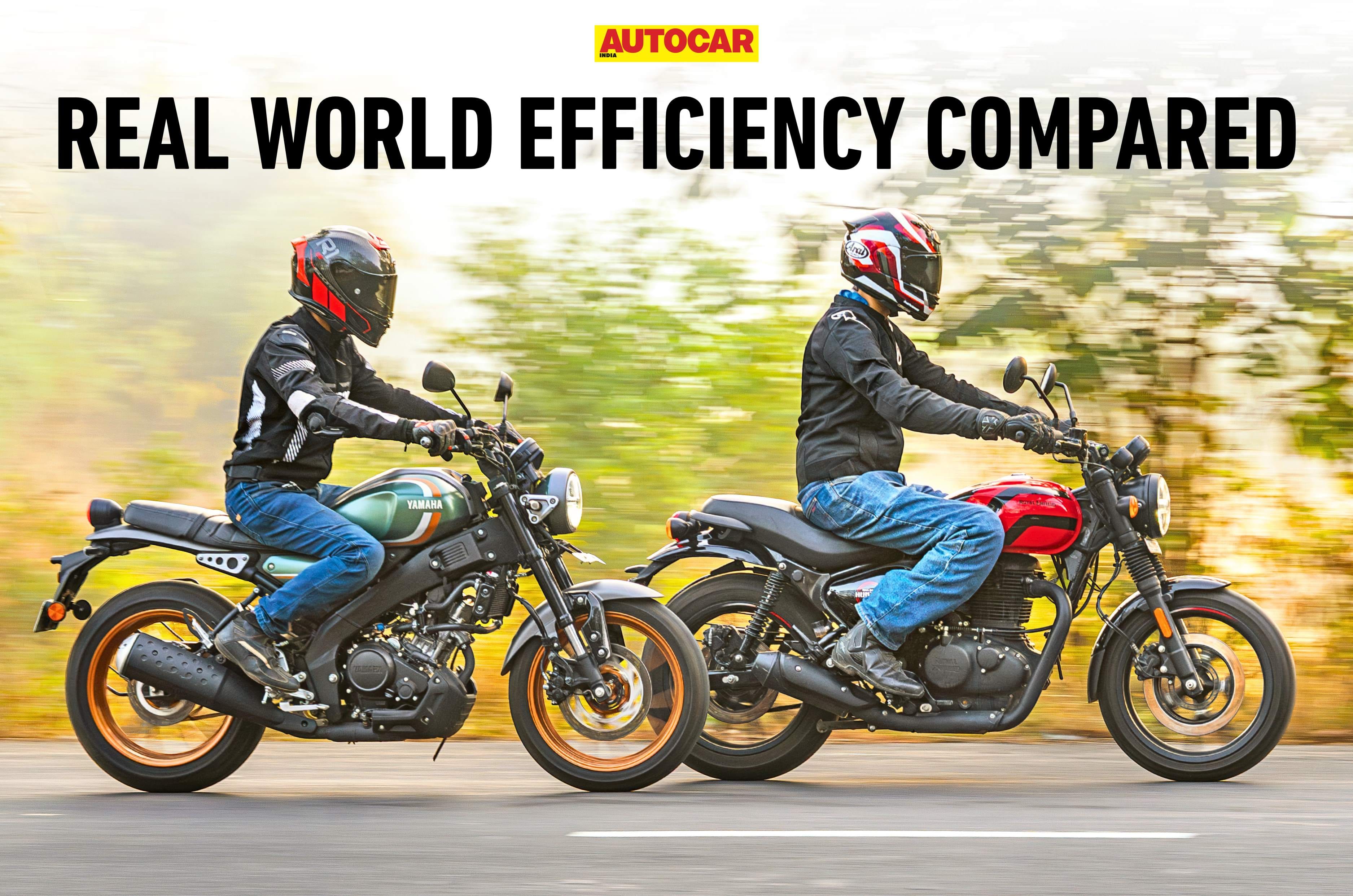
While the XSR 155 and Hunter 350 have different characteristics, someone who is in the market for one of these bikes, might also be considering the other because of their similar price points. The Yamaha XSR 155 is a retro sport motorcycle as it shares its chassis and engine with the R15 and MT-15. Meanwhile, the Hunter 350 has a proper old-school vibe to it.
Yamaha XSR 155 real-world mileage
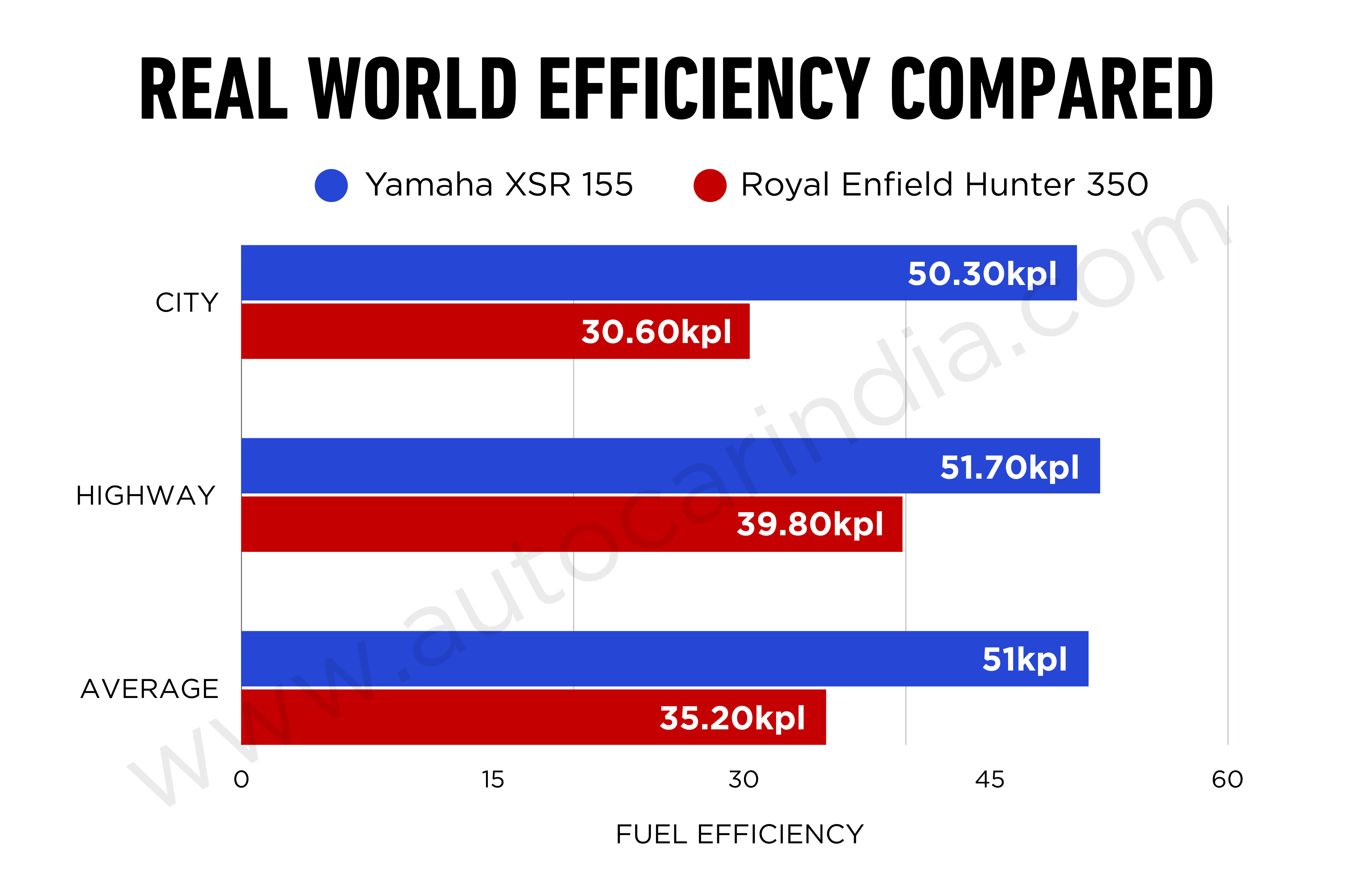
The XSR 155 was able to achieve 51.7kpl on the highway and 50.3kpl in the city.
We first ran the Yamaha XSR 155 on the highway for a little over 50km, after which it needed 1.1 litres of petrol for the tank to be filled up again. Therefore, we arrived at a very respectable highway fuel economy of 51.7kpl. Once that was completed, we headed to the traffic-riddled streets of South Mumbai, where we ran the XSR for a shade under 50km, after which it needed just 0.96 litres of petrol to top up the tank. Thus, we arrived at a really good city fuel efficiency of 50.3kpl.
Royal Enfield Hunter 350 real-world fuel efficiency
The Hunter managed to get 30.6kpl in the city and 39.8kpl out on the highway.
As is our pattern, we began by running the Hunter on the highway for a little over 50km, after which the bike needed 1.30 litres of fuel to brim its tank again. Therefore, we arrived at a highway fuel economy number of 39.8kpl for the Hunter. Once that was done, we ran the Hunter in the city of Mumbai for just over 50km, after which topping up the fuel tank needed 1.70 litres to be topped up. Thereby, we achieved a city fuel efficiency figure of 30.6kpl.
Yamaha XSR 155 vs Royal Enfield Hunter 350 fuel economy analysis
The Yamaha XSR 155 was able to achieve a higher overall fuel efficiency than the Royal Enfield Hunter 350.
The Hunter 350 has a higher engine displacement, has a kerb weight 44kg heavier than the XSR 155 and misses out on a sixth gear. Both bikes feel good in the mid-range rpms, but the Hunter 350 has better low end torque, while the XSR 155 has better top end performance, thanks to its VVA (Variable Valve Actuation) technology. In the city, the Hunter 350 requires fewer gearshifts than the XSR 155. Out on the highway, both bikes can easily cruise at 100kph, but the Yamaha has a higher top speed.
For our city fuel efficiency run, we were cruising on the Hunter 350 while keeping a steady pace, making adequate gearshifts, and not unnecessarily revving out the bike. Meanwhile, out on the highway, we kept a speed of around 70-80kph and were in fifth gear for most of the time. If we take an average of the city and highway efficiency, it gives us an average of 35.2kpl, which is good for a bike in this segment.
The Yamaha XSR 155 engine has had a reputation for being really fuel efficient, and compared to the MT-15 and R15, it is the lightest bike of the lot. The 6-speed gearbox has well spaced gears and that allowed us to keep the engine in its sweet spot when cruising on the highway at the 80kph mark. Taking an average of the city and highway fuel economy, we got an impressive average mileage of 51kpl, making the XSR the winner of this fuel economy test.
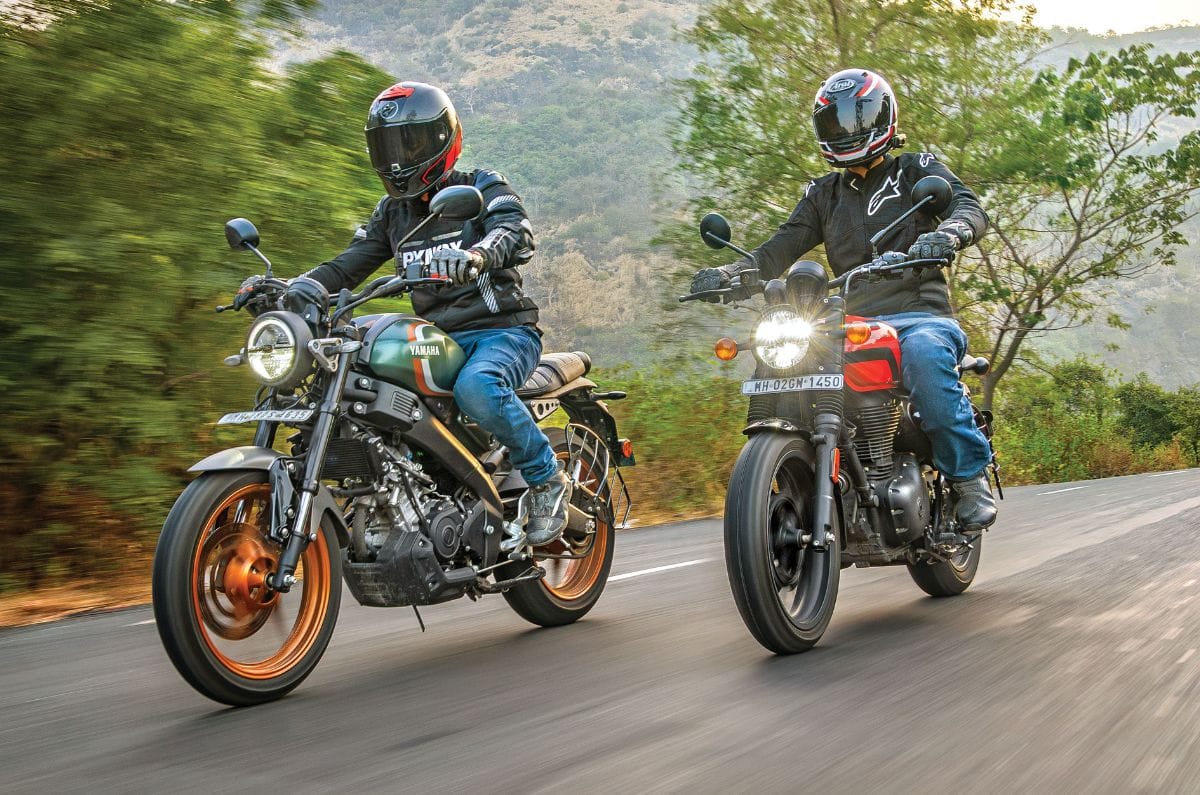
Autocar India’s fuel-efficiency testing
Our fuel-efficiency testing routine starts by first brimming the tank and ensuring the bike is running the manufacturer’s recommended tyre pressures. The bike is then ridden on fixed city and highway routes, where we maintain average speeds that best mimic real-world scenarios, as well as keeping speed limits in mind. The payload on the bikes is kept constant by balancing rider weights and ballast, ensuring consistency across different vehicles and riders. At the end of the test cycle, the fuel tank is once again filled to the brim, giving us an accurate figure of how much fuel has been consumed against the trip meter reading.