


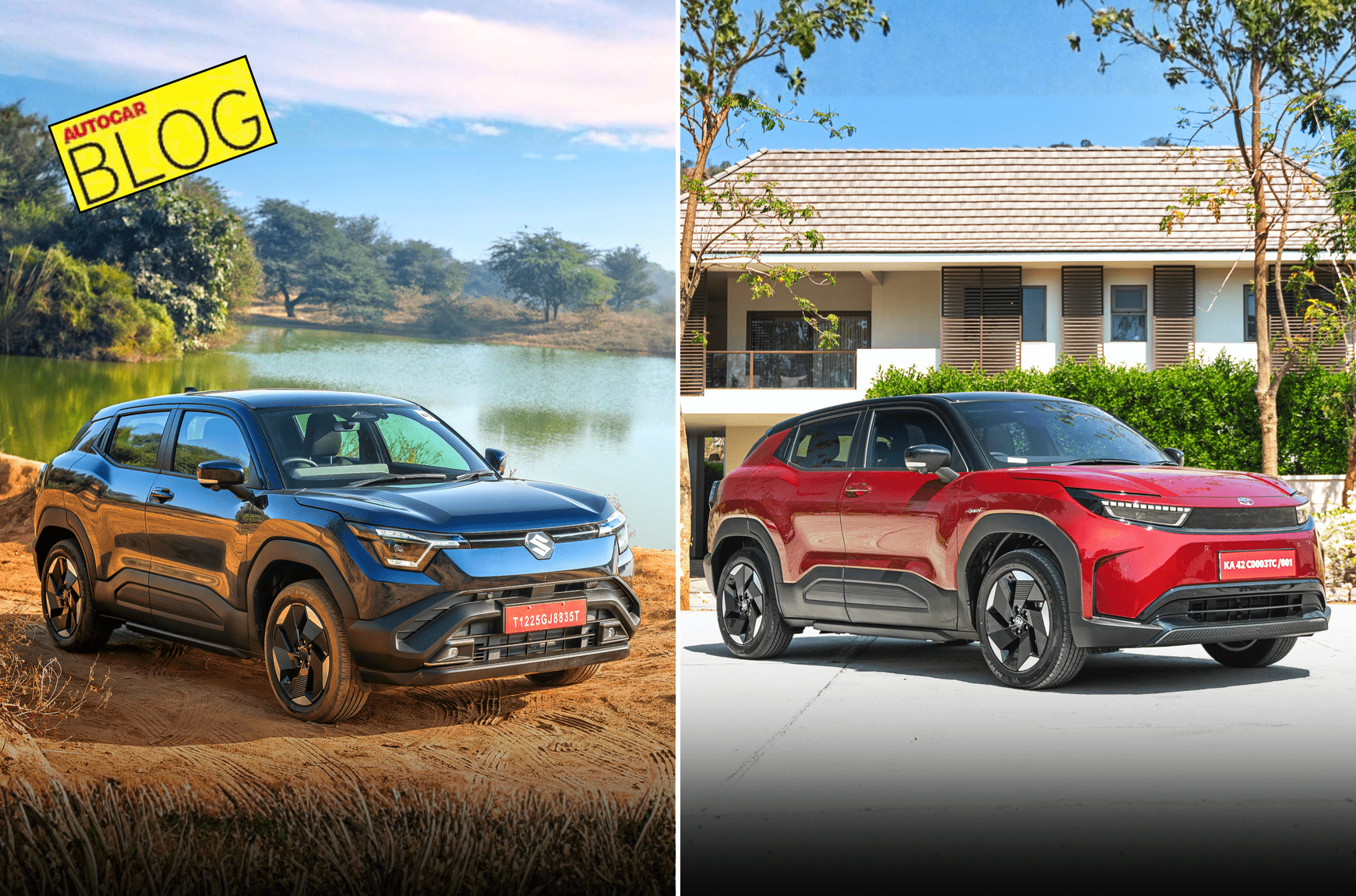
Maruti Suzuki has spent the better part of two years building up the e Vitara story, starting with the eVX concept at Auto Expo 2023 and then the full-blown unveil of the production-spec car at Bharat Mobility Global Expo in January 2025. By December 2, 2025, the company had officially “launched” its first electric SUV, complete with range claims, ecosystem talk and its charging partnerships. Yet in mid-February 2026, there is still no price on the car, even as units quietly roll into Nexa dealerships.
Toyota has followed a similar script with the Urban Cruiser Ebella, its badge-engineered twin to the e Vitara. The carmaker revealed the Ebella for India, opened bookings from January 20, 2026, and has since published detailed specs – two battery packs, long-range claims, full feature lists – on its site and across dealer communications. What it has not done is the one thing that officially constitutes a launch – declare the price.
It is unusual for manufacturers as methodical as Maruti and Toyota to bring cars this far down the retail pipeline without declaring the price. Dealers are ready, and so are some customers. Yet the cheque cannot be written. This extended silence on pricing has led to all kinds of speculation on why the all-important price has not yet been announced.
Both cars sit on the same dedicated EV platform, share the same hardware and occupy the same mid-size electric SUV space that is the most hotly contested in the market. Whoever blinks first on price effectively leaves the other to undercut it and, in turn, offer better value. But it’s not just a ‘you go first’ impasse between the Maruti Suzuki and Toyota.
There is also, one suspects, intense discussion happening at the very top between the two partners. How aggressively can they afford to price their new EVs? How much margin can they surrender? And how low is low enough to make buyers overlook the fact that, in hardware terms, these are at best mediocre offerings rather than groundbreaking products.
Conservative design, modest performance and limited cabin space, and range figures that are respectable but rapidly becoming industry standard are what these EV twins have to offer. Take away the ecosystem narrative, and price becomes the single biggest weapon, and what’s left is a pair of EVs that will live or die almost entirely on the strength of their sticker.
Industry chatter suggests a price band of roughly Rs 15-18 lakh, pitched to sit under the Creta Electric. But in a market moving this quickly, is this enough? We will know soon enough after prices are finally announced, hopefully in the coming week.