


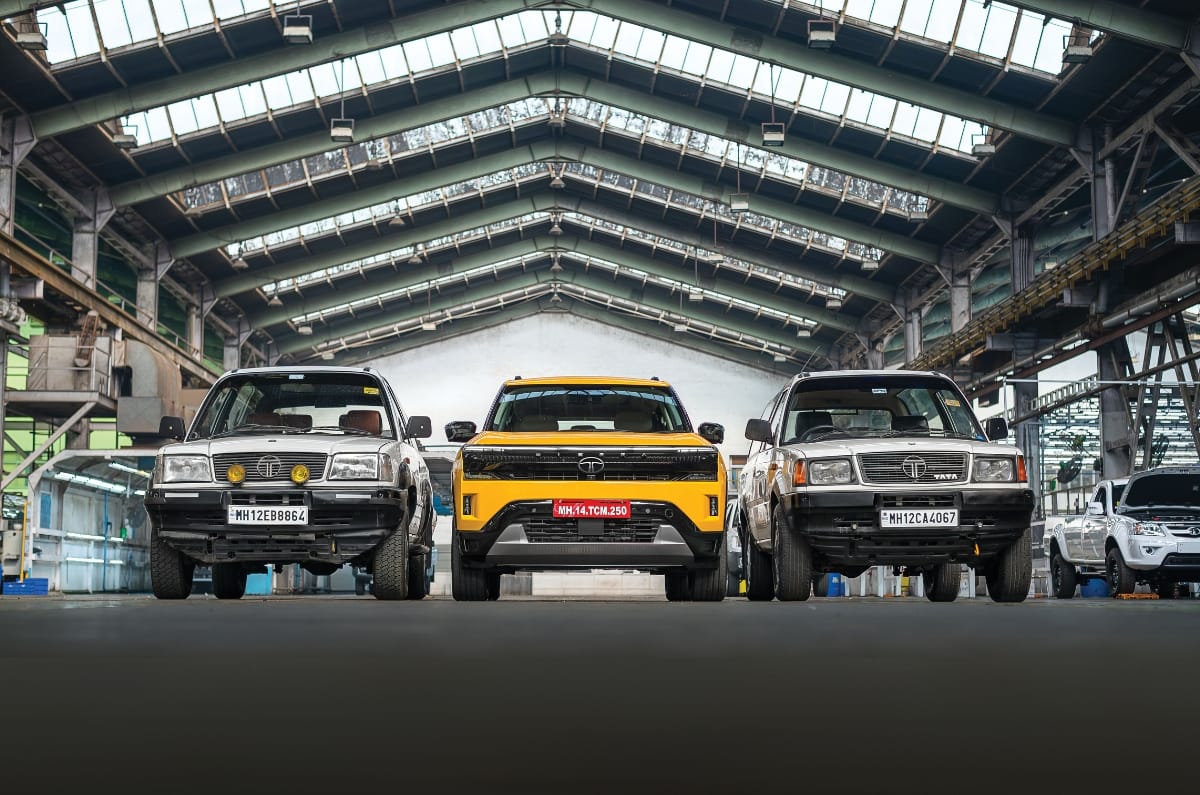
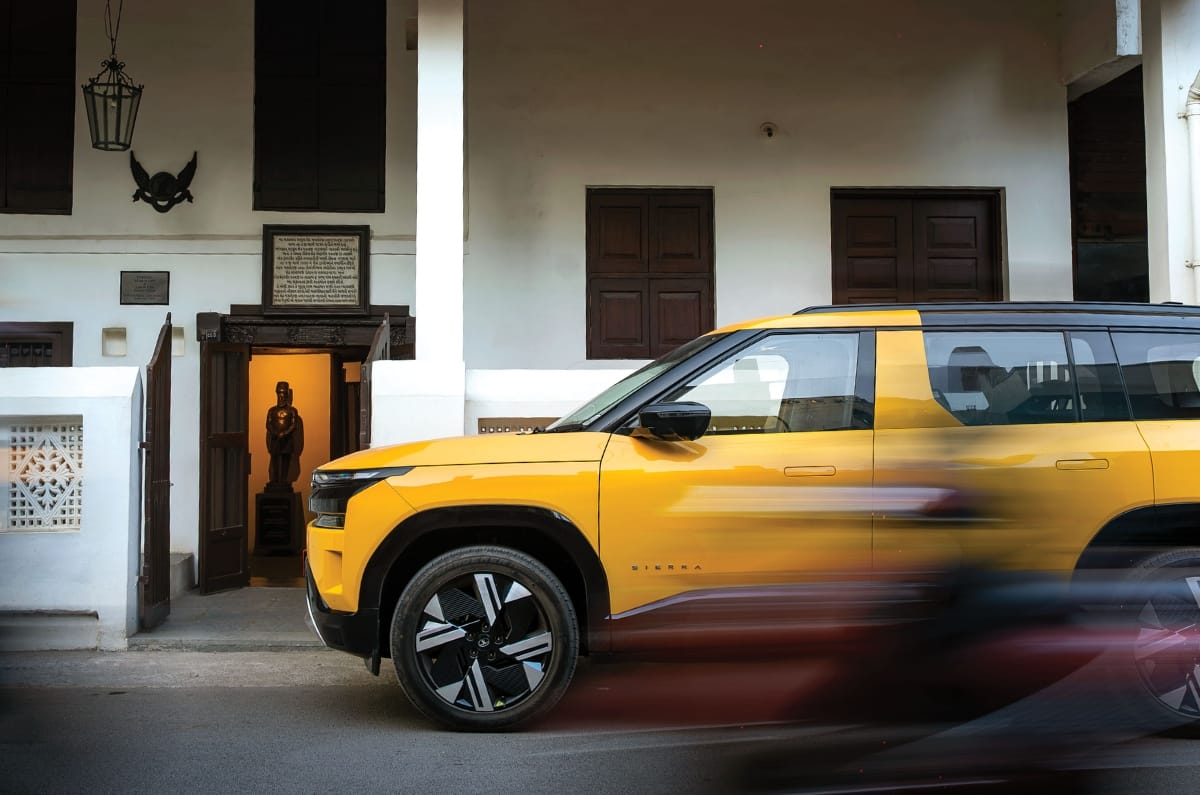
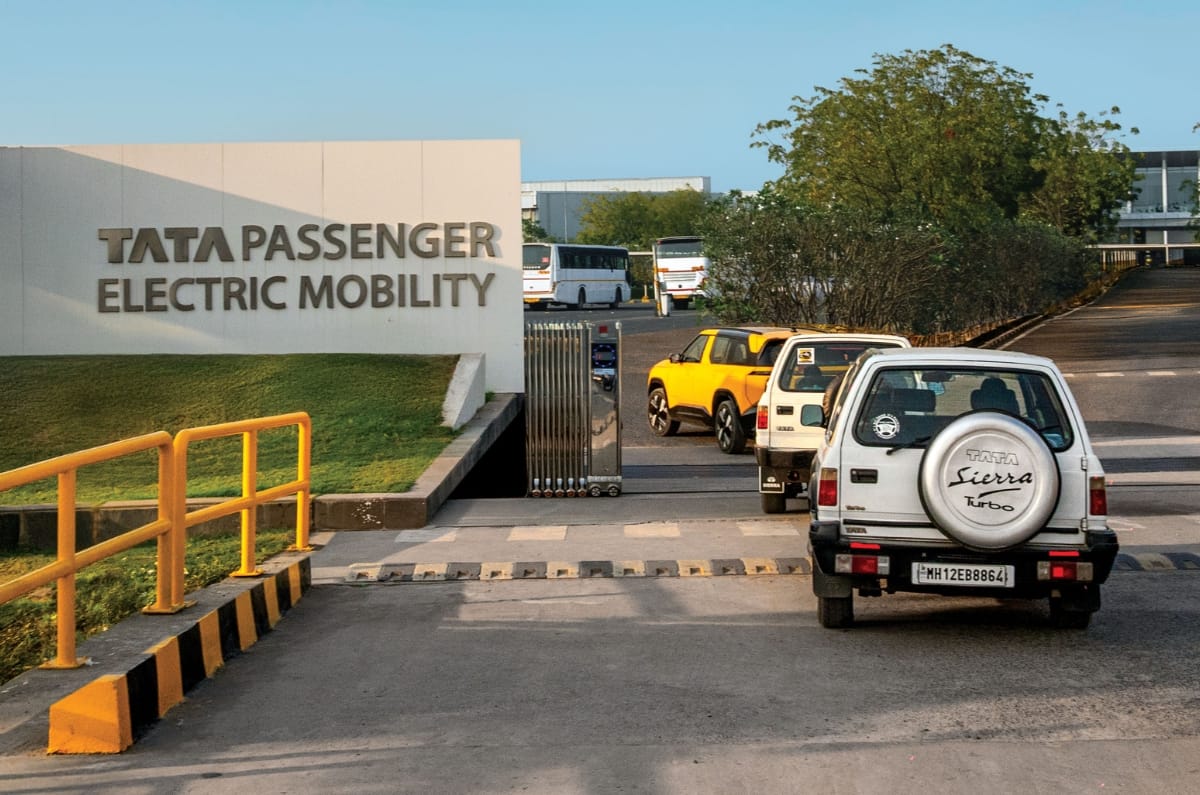
A shutter rattles open. Morning sunlight cuts across the factory floor. The rays illuminate a white rectangular shape, putting it in the spotlight. The profile is none other than that of India’s first SUV, the 1991 Tata Sierra. Sitting next to it, also in white, is the 1997 Sierra Turbo. Then, completing the set, Tata’s new Sierra rolls in; slick, modern and futuristic, but with its roots firmly anchored in the past.
Now, back in the day, Tata’s Sierra didn’t quite get the respect India’s first SUV deserved. A bold step into the future, it had plenty of new tech for the time and, as a result, a fair amount of issues. Problems apart, however, India’s first SUV was so forward looking, it clearly stands on a pedestal today.
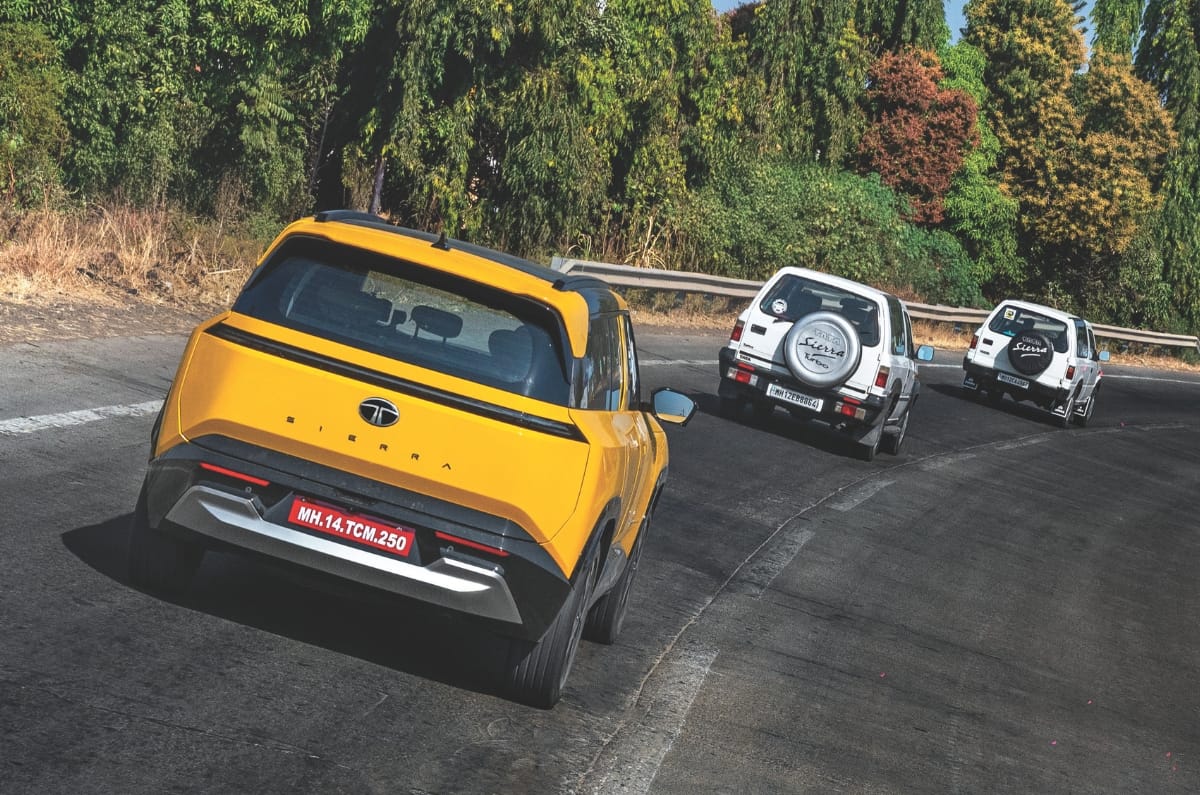
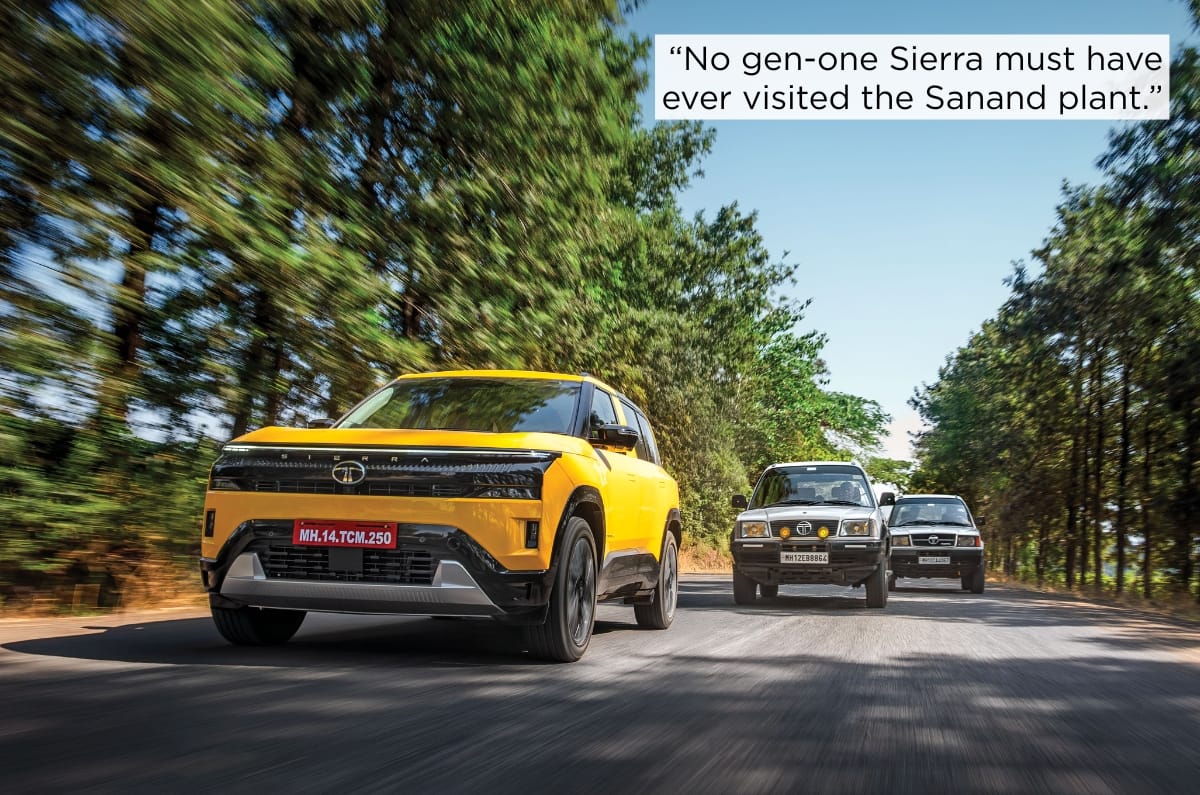
What’s also abundantly clear is that the new Sierra has come a long way from the original. So, to celebrate its rebirth and to see just how far the new car has come, we endeavour to connect the birthplace of India’s first SUV, Pune, with Tata’s new high-tech production hub in Sanand, Gujarat. Traverse 700km, capturing the first Sierra, the Sierra turbo and the new Sierra over diverse backdrops and road conditions. From Pune’s industrial roots, across the Western Ghats and older roads, onto four-lane expressways, the journey mirrors the journey the car has taken.
Ratan Tata’s baby
Transport yourself back in time to the early 1990s. To an age when India only made compact cars or very basic utilitarian ones. One man, however, wanted to drag the Indian Automobile industry into the modern age. His name was Ratan Tata… and the Tata Sierra was his baby. Inspired by the Chevy Blazer and, to some extent, the Ford Bronco, the Sierra was built on the 207 Telcoline or Tatamobile platform. A relatively easy-to-engineer three-door SUV with massive fixed glass panes at the rear, it was a car that also came loaded with features that were ahead of its time.
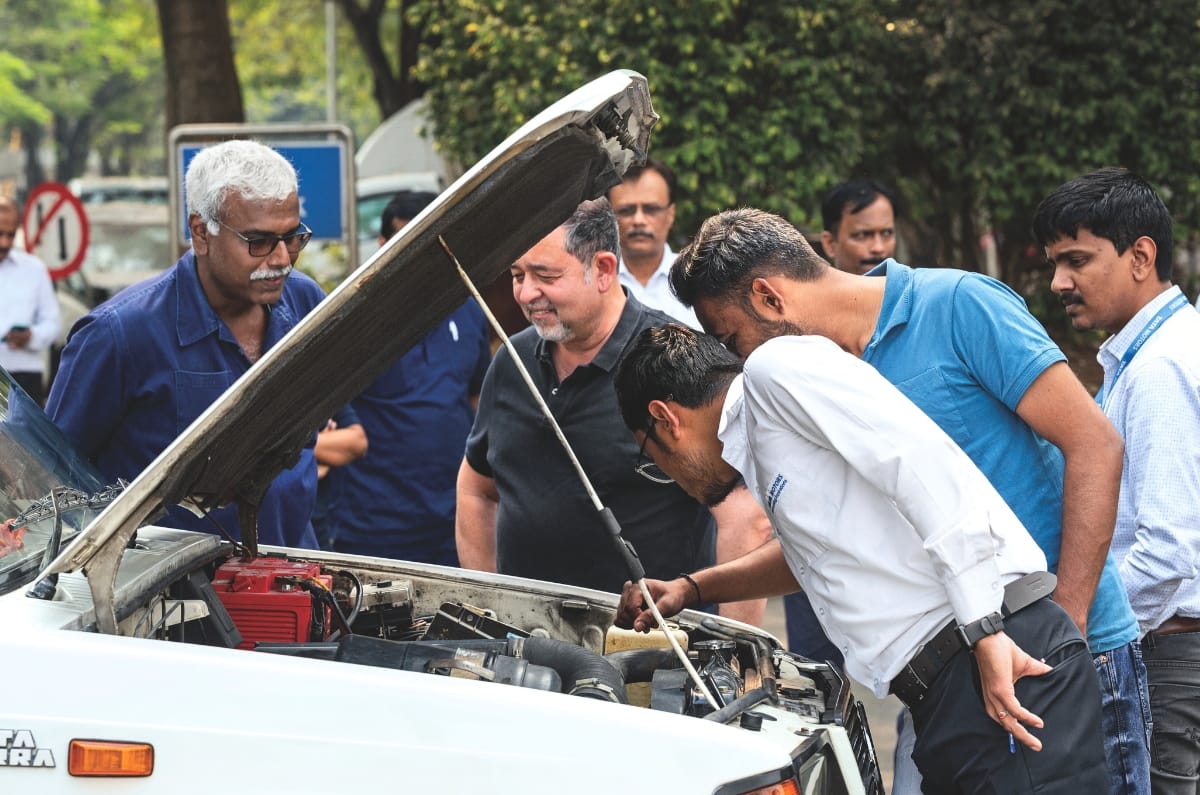
Seeing all three generations together draws in the crowds at Tata’s Pune plant. The word is out, and many cut short their lunch breaks to come and see the classic Sierras. A bunch of three senior line managers strolls up with broad smiles. “We helped build this car”, says one, with immense pride. “I worked on engine assembly,” chips in another, as we peer into the bonnet of the turbo. “This is the 483 TC IC (turbocharged, intercooled),” I repeat from memory. The line managers smile. “We had a tough time packaging the intercooler,” says another, “which is why it is vertically installed”.
At the plant, we catch up with Mohan Savarkar, CPO (chief product officer), who marvels at just how significant the old Sierra was. “There were no emissions norms at the time, remember, and now, with this modern diesel, we are at Bharat Stage VI Phase 2.” Savarkar also explains why the new Sierra isn’t built on a ladder-frame chassis. “With the ladder frame, there’s a limit to how much you can get the centre of gravity down, a limit to the ride and handling balance you can achieve, and front-wheel drive is more efficient.” And both ICE and electric Sierras will get four-wheel drive.
Across old ghats to Nashik
Then it’s finally time to leave. The naturally aspirated Sierra starts up with its clattery idle, followed by the softer turbo; none of these are direct-injection engines, so they don’t exactly sound like water pumps. In contrast, the new Sierra is, but it’s the softest of the three, with modern tech softening the sharp diesel pulses. Before we leave, we stop to pay our respects to a recently installed statue of Ratan Tata.
Later, outside the plant, locals gather around the cars, eyes wide. Some recognise the old Sierras and flood the Club Sierra owners with questions. “Grab one before prices climb,” they advise. Others mill around the new one, drawn in by the colour and design of the side profile. One thing’s clear; the Sierra nameplate still has the magic.
Once on the road, the first leg of our journey takes us towards Nashik. The road winds through the Western Ghats, past dhabas, toll plazas and broken patches of road. Driving the old Sierra is a reminder of how far we’ve come – 34 years, to be precise. The naturally aspirated diesel takes off OK. And left to its own devices, it copes. So, as long as you are not in a hurry, it keeps up gamely with traffic; the gravelly engine note is actually quite charming. And then there’s the unique gearbox, with that sportscar-like dogleg first that isolates first from the regular ‘H’; it’s pretty cool. Where it struggles, and considerably, is when you need to overtake. Calling it flat-footed is mild, it takes 33 seconds to get to 100kph. But this was back in the early 1990s, when diesels were good for fuel economy and nothing more. Performance aside, the Sierra rides really well, there’s loads of space, and the bucket seats are very comfortable. The brakes need a bit of planning, though. More than a bit if you need to stop in a hurry.
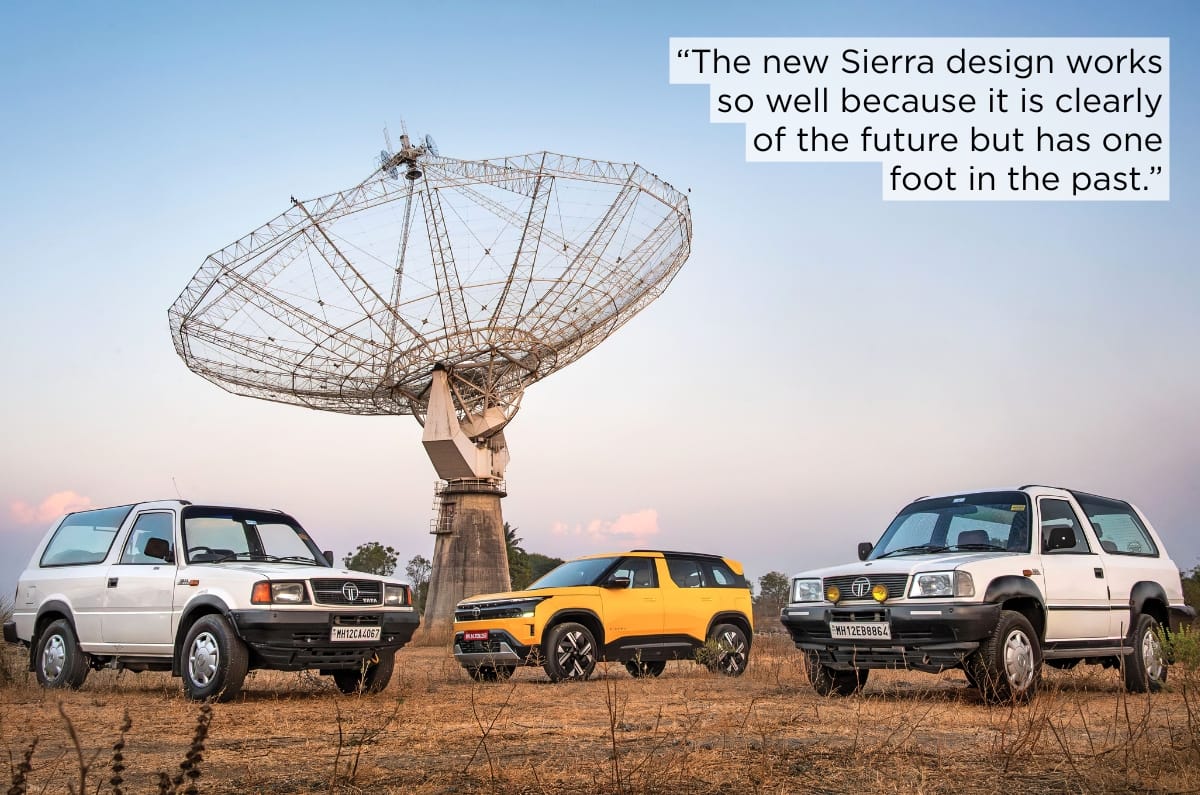
Near Narayangaon, we take a detour to see the world’s largest array of meter-wave radio telescopes, 30 massive dishes that work in sync and collect radio waves from faraway galaxies. The largest and most sensitive radio telescope array in the world at low frequencies, it is operated by the National Centre for Radio Astrophysics (NCRA), part of the Tata Institute of Fundamental Research, Mumbai.
Down the memory lane to Navsari
The longest day of the drive takes us from Nashik to Ankleshwar, with a special stop at Navsari – the hometown of the Tata family – positioned halfway between Pune and Sanand.
Time to reflect on the Sierra’s genesis. Back in the day, Tata barely had a design department. Despite that, Ratan Tata managed to inspire his team to put together an SUV that looks nicely balanced. Sure, it has Mercedes undertones, both inside and out, and it was quite generic, but what’s clear is that Mr Tata’s architectural training and good design sense held him in good stead.
While the first Sierra was similar under the hood to the 207 pickup, the leaf-spring rear suspension was replaced with a coil-spring setup. And then, what stood out was that it got loads of kit; power windows, power steering, powered door locks, an adjustable steering wheel, rear aircon vents, and on the turbo, twin rear wipers!
Today, I spend some time behind the wheel of the Sierra Turbo. Launched in 1997, this is a car I remember testing clearly. Smoother, with a distinctive whistle from under the bonnet when the turbo spools up, the Turbo moves smartly even today on boost. In fact, plan in advance, and overtaking slower traffic is possible. It was considerably quicker too; 0-100kph taking 22 seconds. Still slow by today’s standards, but fast for the day.
At Navsari, we pause. The Tata family’s roots are here, and we visit the birthplace of Jamsetji Tata, the founder. Priests by tradition, a little-known fact is that around 60 percent of the capital of the Tata companies is owned by charitable trusts, not family members. It’s been this way for more than a century.
Back seat panoramas
Further up the road, I climb into the back of the original Sierra. The view is breathtaking. Wide, tall, panoramic, the field of view is so good it feels like sitting in a moving glasshouse. We pass a section of tall trees, sun glinting off the tops, and they look amazing – these ‘Alpine’ windows curl up around the edges of the roof. It’s even comfortable sitting in the back, the backrest of the seat nicely reclined and the seat base quite comfortable. I immediately want to be driven over some Himalayan passes. The Sierra owners have already done that.
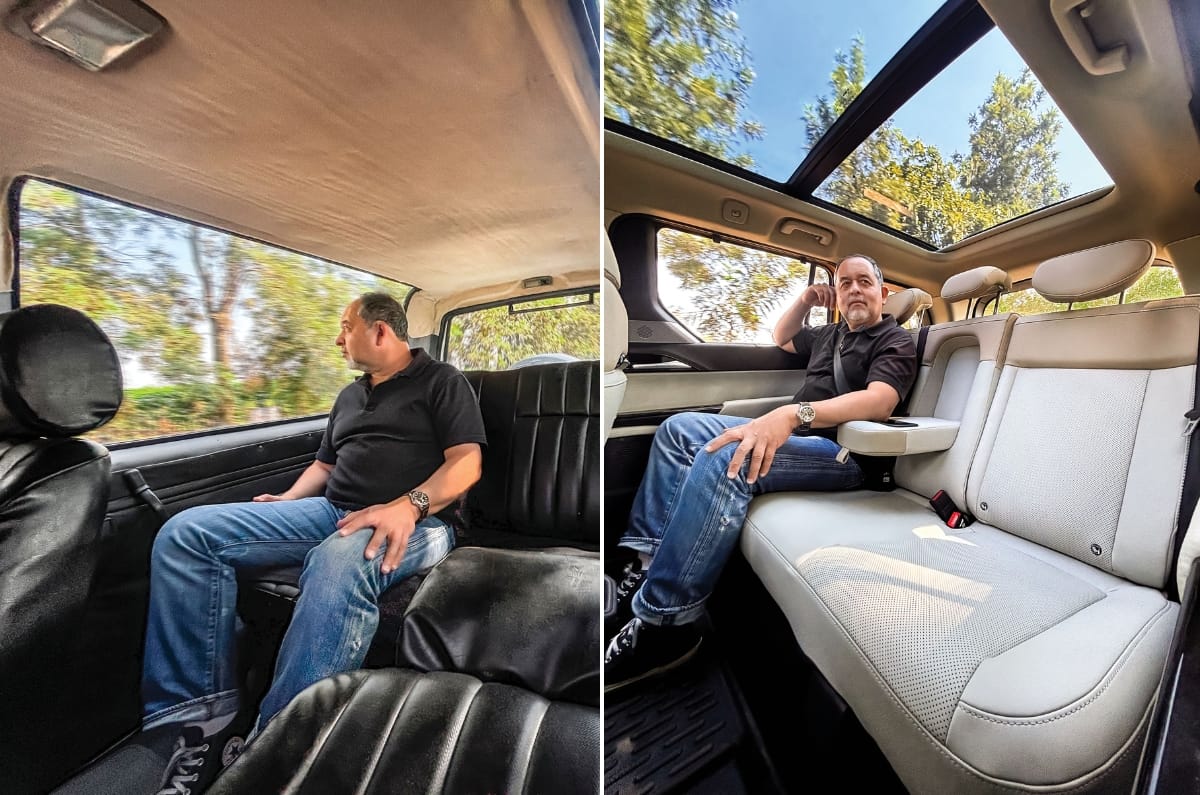
The new Sierra is nice and also airy in the back. There’s a good amount of legroom, the cabin is beautifully trimmed, especially the seatbacks, and with the sunroof open, it does remind me of the wide-open rear seat of the OG Sierra. Yes, the car’s ‘B’ pillar is thick, and you don’t quite get the panoramic view of the Alpine windows. Still, this SUV is airier and more open than rivals at the back, and it’s got the original Sierra to thank for that. It even gets useful rear sunblinds and rear seat recline. Cool features include a sound bar up front, sun visors that are adjustable, a boss seat function and ambient lighting. It’s plush, modern, indulgent, and even rides well. So, in many ways, the DNA is intact. The Sierra has always been about the view, the comfort, and being ahead of the curve. And that hasn’t changed.
Into Sanand and the future
The next morning, we stop in Bharuch, famous for its peanuts. Crunchy, flavourful, addictive. A bag of them sits on the dashboard of the old Sierra as we compare cabins. The original Sierra’s dash was revolutionary for its time. Modern molded plastics, central console, glovebox, vents on top. Clear, legible instruments. The new Sierra’s cabin is a different world. Screens everywhere – 10.25-inch instrument panel, 12.3-inch touchscreen and passenger display. Fabric-covered dash, metallic details, plush materials, ADAS, 360-degree cameras, HUD with augmented reality. It’s a leap into the future, but the ethos remains: the Sierra was always about being ahead of its time, about being comfortable.
The last stretch takes us from Bharuch to Sanand. And this is a real mix of roads. Ancient roads on the way out, through an old town with buildings more than 150 years old. Then a new four-lane national expressway and, finally, a three-hour crawl across the widest part of Ahmedabad and onto and across to Sanand.
As the convoy enters the Sanand plant, I realise this is probably the first time the original Sierras are visiting the new hub. It’s symbolic – the past meeting the future. And a crowd gathers here as well. Inside, we see modern production techniques – robotics, automation, precision, and quality checks at every stage. The Sierra hasn’t just come full circle, it’s taken a massive leap into the future.
The legend lives
As the journey ends, I reflect. Tata’s Sierra was clearly underappreciated back in the day. Ahead of the curve and possibly ahead of the capabilities in India at the time, it, however, set a template. The new Sierra carries forward that DNA; the comfort, the openness of the rear and the individual character. All while embracing the future with modern engineering, safety and technology.
One thing’s for sure, cars are emotional. Not just an amalgamation of metal, plastic, fabric and electronics. They tug at our heartstrings, and the Sierra proves it. From Pune to Sanand, from past to future, from Ratan Tata’s vision to today’s reality, the baton has been passed. The legend continues. Surely Mr Tata must be looking down and smiling. Especially as the new Sierra has already scooped up more than 70,000 bookings.
Sanand, where the new Sierra is made
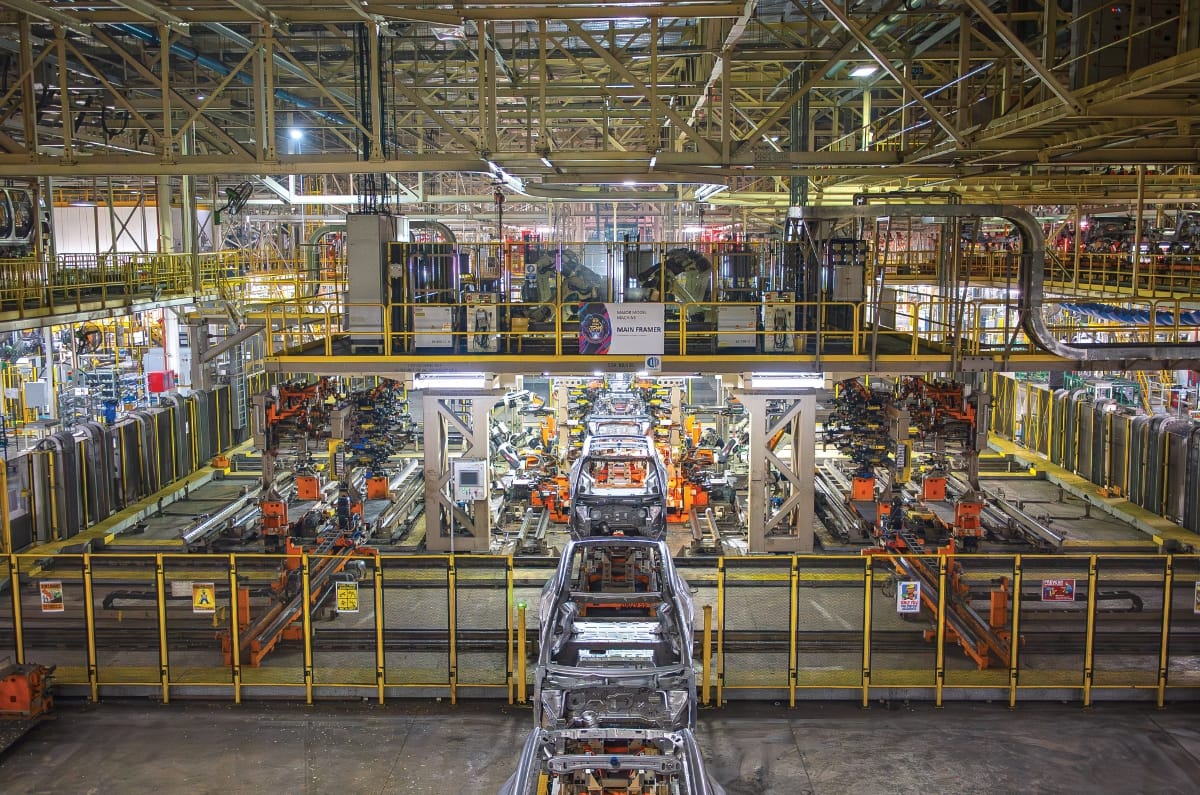
The contrast between the old days in Pune and today couldn’t be more stark. Assembly at the Pune plant, Block J3, to be precise, was all manual. Right from welding to the fastening of parts, the Sierra was built by hand. Tata’s Sanand plant is highly automated, has multi-model capability, and can produce both ICE-powered and electric vehicles on the same line. In fact, as we drive in, it says Tata electric vehicle plant on the outside. Conforming to WCQ level 3, a global quality standard, it features technologies like automatic defect checking and is responsible for roughly 60 percent of Tata cars produced today, making it Tata’s most important plant.
Keeping the flame alive
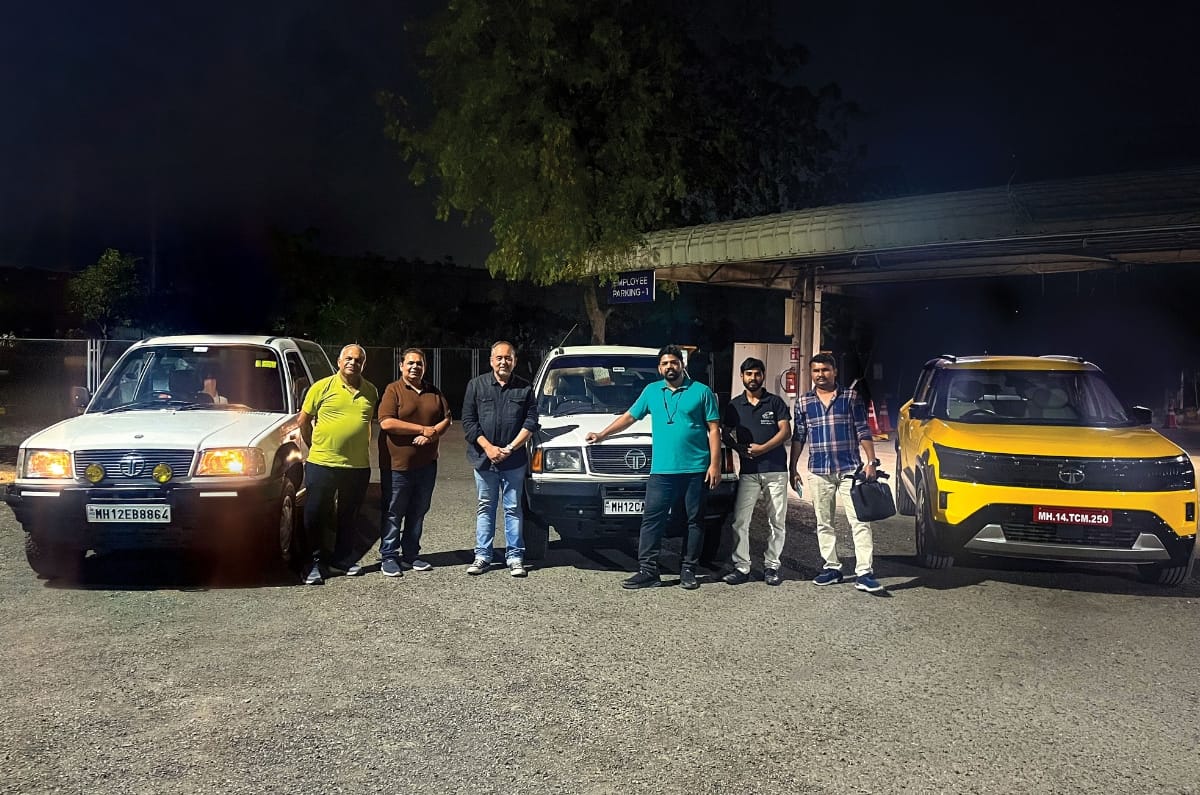
The Sierra Group Pune has done sterling service in keeping the memory of the Sierra alive. Keeping these now almost 35-year-old cars on the road is a herculean task, especially so since Tata Motors workshops stopped working on these cars a few years ago. As founding member Ajinkya Kadam says, it is now both a lack of parts and a lack of technicians trained on this car that make things difficult. What helps is that some of the parts are shared with the 207, Tatamobile, old Safari and Sumo. Special thanks to Ajinkya Kadam, Prasad Pimpudkar, Krunal Ghodke and Kishor Ghodke for joining us on the drive.
1991 Sierra Express
Mumbai-Delhi non-stop in 26 hours – Hormazd Sorabjee
The return of the Sierra unlocked a vivid memory from 1991, when I spent two weeks and over 4,000km in the original. Tata Motors (TELCO back then) had just launched it and were very keen we use their new “lifestyle” vehicle for the Himalayan Rally route survey, which they were close to sponsoring.
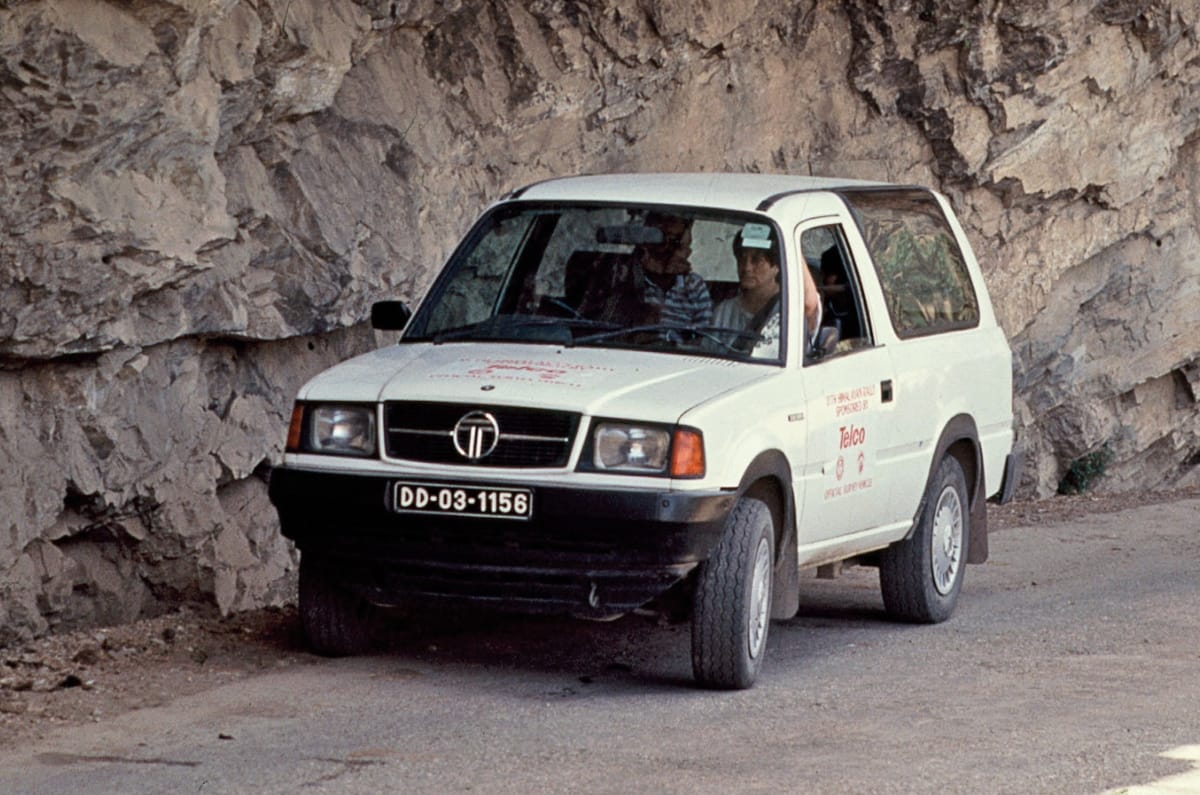
It’s hard to believe today that a 2-litre naturally aspirated 69hp diesel didn’t feel underpowered, but its nearest rival was the equally slow and crude Mahindra Commander, and by those standards, the Sierra felt transformative. Riding on front independent suspension – unique then for something on a ladder frame – it was extremely comfortable. I drove from Bombay to Delhi virtually non-stop to make a fixed meeting with army officials; there were three of us in the car, but since the two ladies with me didn’t drive, I did the entire 26-hour run alone, in peak summer, on single-lane highways long before expressways and the Golden Quadrilateral.
What hit me was how plush and modern the Sierra felt compared with the Gypsys and clunky Mahindras then. The driving position, suspension, air conditioning and revolutionary styling made it feel like it belonged to another planet. This was India’s first SUV in spirit and became the template for the ‘bridge’ products that helped Tata Motors transition from truck maker to carmaker.