


I am standing up to my thighs in murky water and surrounded by cypress trees, partaking in an activity called ‘slogging’ – a sloshy hike in the swamps of the Everglades National Park. I’ve got over the rude shock of the cold water and am now striking a cheerful pose that suggests an air of carefreeness. It’s a sham!
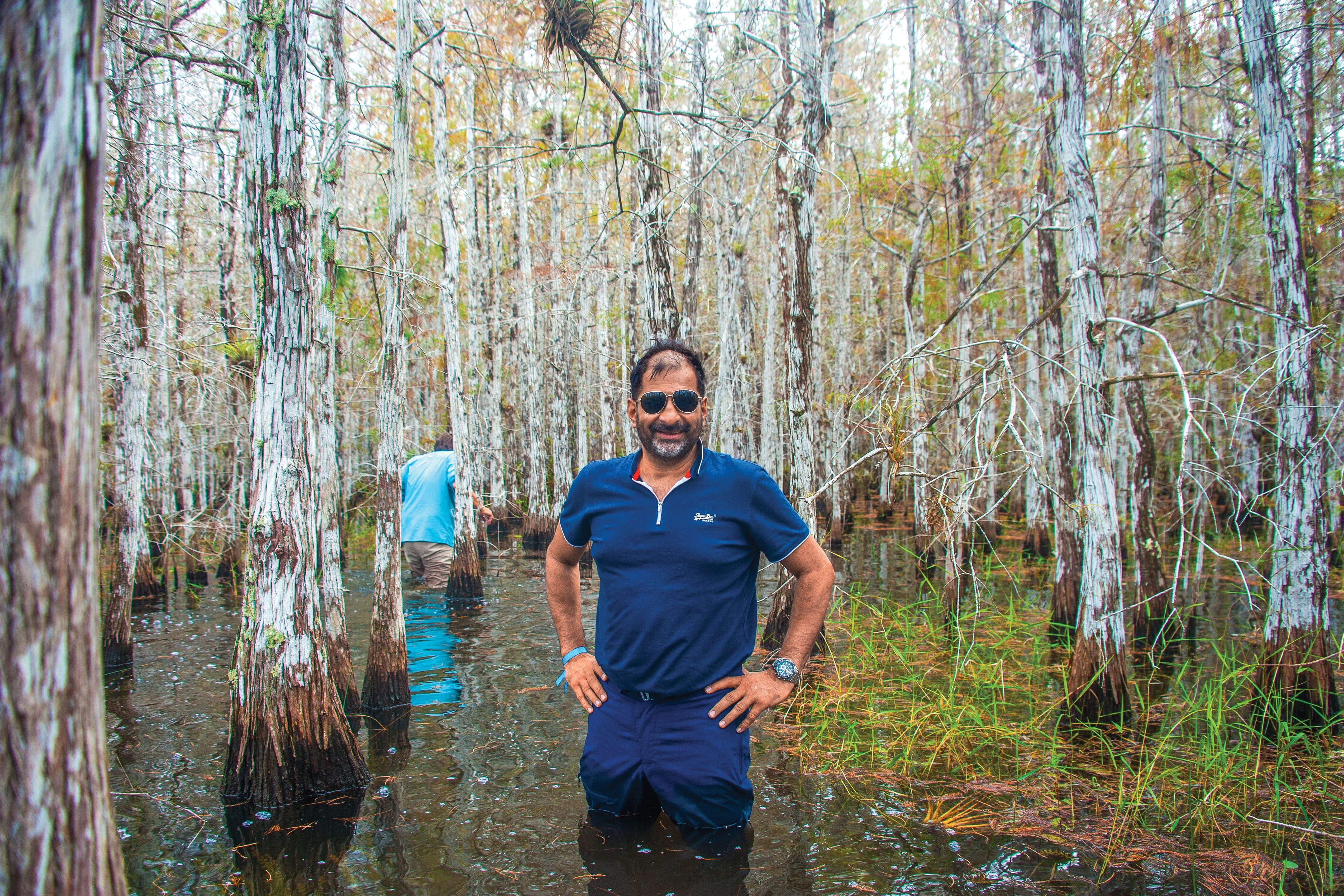
Just moments ago, a full-grown alligator had stealthily glided past, its marble-like eyes unblinkingly taking in our group. As I stand waiting for Garl, our guide, to focus and compose the perfect frame, my bowels are flopping over like a stranded fish and I am immensely grateful that a few strides away is waist deep water – just in case.
I had arrived in Miami a few days earlier on an invitation from Lexus to attend the Miami Design Week. This city-wide celebration of art and design is a vibrant event that draws artists, enthusiasts and buyers alike. Lexus has been bringing installations to Miami Art & Design Week since 2018 and for the 2023 edition, the luxury car brand showcased an installation titled 8 Minutes and 20 Seconds at the Institute of Contemporary Art, Miami (ICA Miami).
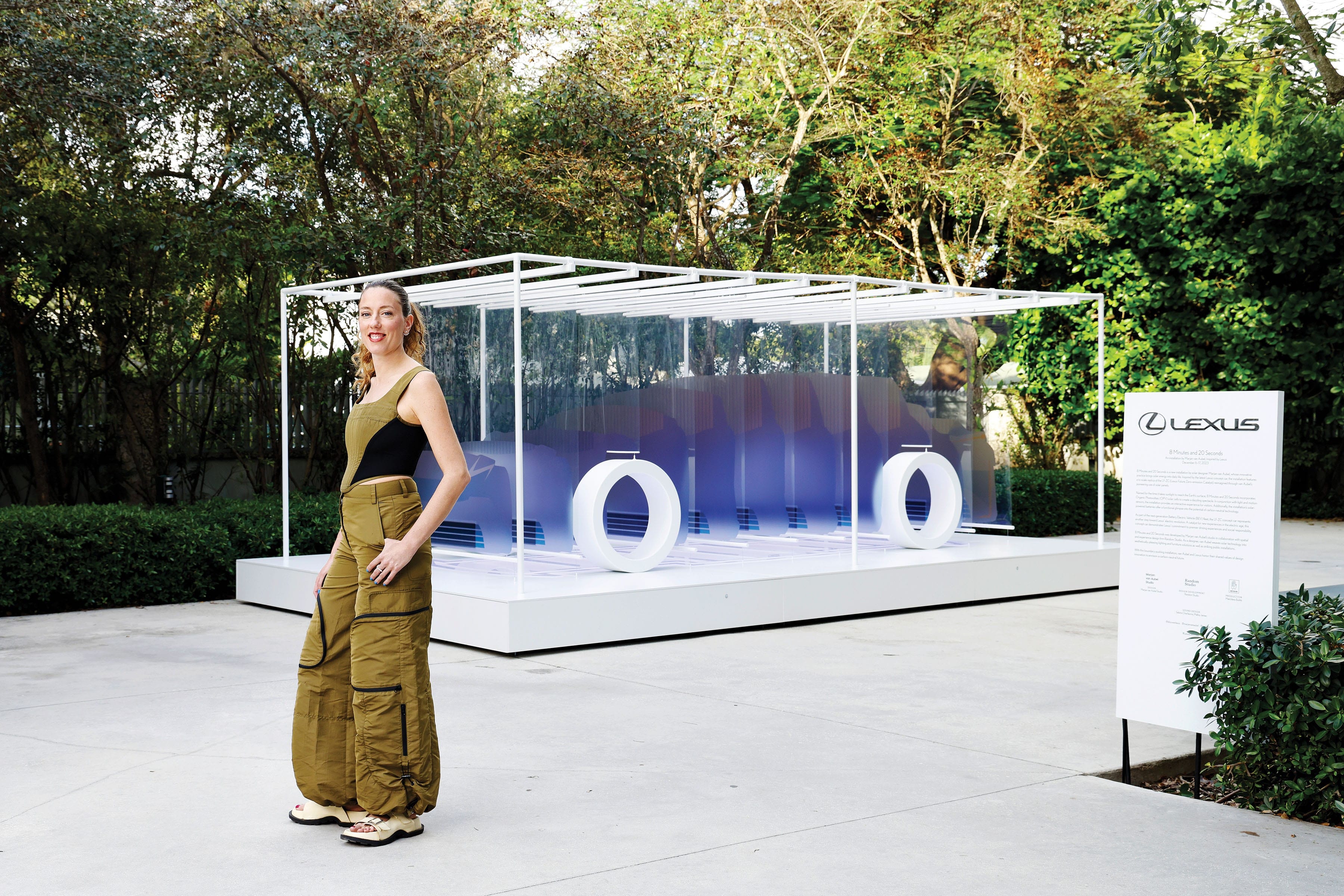
With a name that’s a nod to the duration it takes for light from the sun to reach our planet, 8 Minutes and 20 Seconds was created by Dutch solar designer Marjan van Aubel who made use of organic photovoltaic (OPV) cells commonly employed in solar power applications. The new and advanced LF-ZC Lexus Battery Electric Vehicle (BEV) Concept car that was showcased at the inaugural Japan Mobility Show in Tokyo in October 2023 was the inspiration behind this work of art.
I spent three days in Miami appreciating art before giving in to the allure of adventure. And so, I set off south behind the wheel of a Lexus RX 500h F SPORT Performance dressed in a lovely copper tone. Sitting at the very south of the state of Florida, the Everglades National Park is a unique wilderness. Called the ‘River of Grass’ by Native Americans, the Everglades is a motley mix of rivers, the sea, wetlands, swamps, lakes, grasslands and prairies. It can appear calm and serene but within it is an astonishing array of wild creatures, including birds, alligators, crocodiles, panthers and pythons. Encompassing 1.5 million acres, it is roughly divided into the northern and southern Everglades. I was headed to the latter.
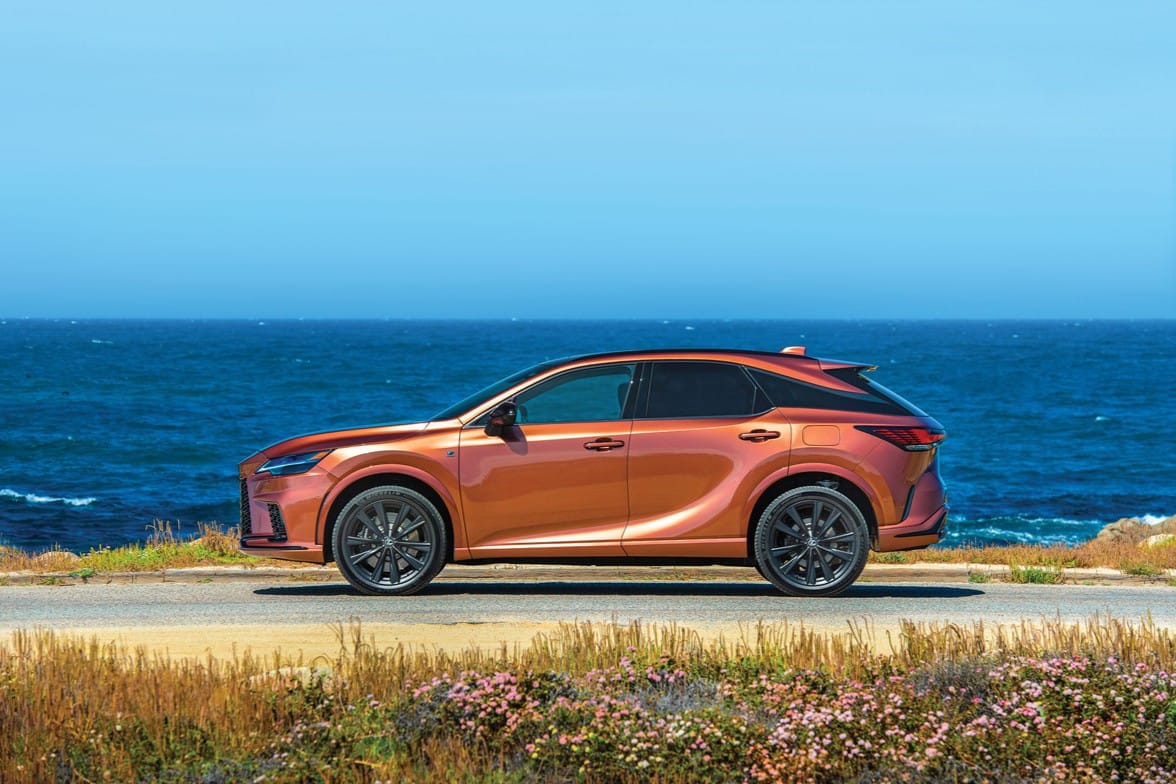
Florida City, the gateway to the Southern Everglades, is just 43 miles from Miami South Beach and an easy drive down an Interstate. The RX 500h has a transversely mounted 2.4-litre turbo internal combustion engine up front that is mated to a six-speed automatic transmission. This engine drives only the front wheels. The ‘h’ in the model name of this car stands for ‘hybrid’, with twin electric motors – one on each axle. The rear eAxle unit comprises an electric motor, a bipolar nickel-metal hydride battery to power front and rear electric motors, an inverter and a reduction gearbox. So the rear wheels are driven purely by electric torque.
When I pulled out of my parking at South Beach in Miami, only the electric motors were in play driving all four wheels. It was only when I stepped down further on the throttle that the IC engine came to life with an almost indiscernible quiver.
While negotiating traffic within Miami at a gentle pace, the power mostly came from the engine. But when I got to the Interstate and stepped down on the accelerator, the front and rear electric motors kicked in to assist engine, with electric torque now driving the rear wheels and electric plus internal combustion torque driving the front wheels. This translated into hefty torque always on tap.
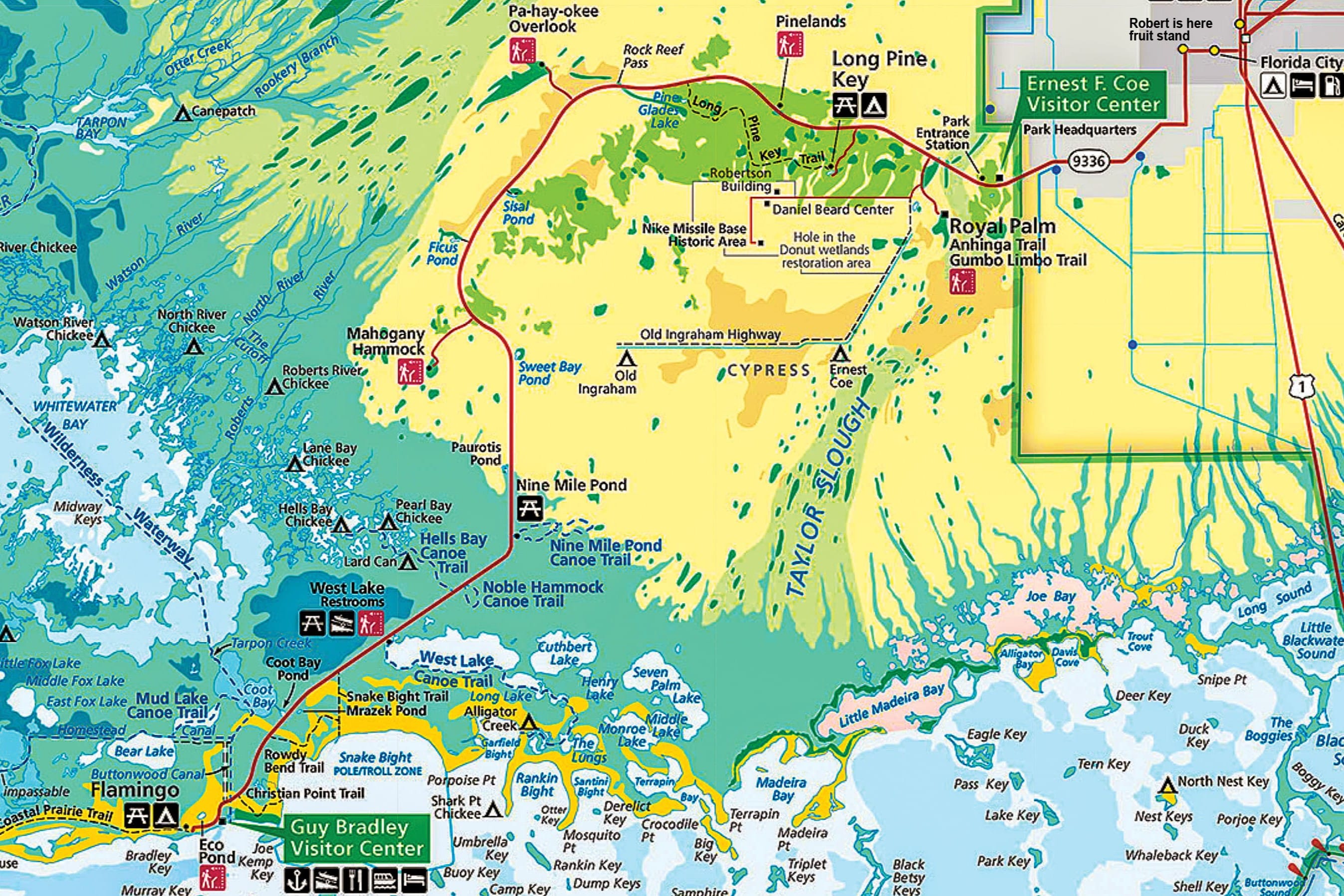
On that day, I drove straight to the Earnest F Coe Visitor Centre on Florida State Highway 9336 that leads into the Southern Everglades. Armed with a map of the region, I started off to explore. State Highway 9336 is the solitary road that runs past the visitor’s centre to the Flamingo marina 38 miles to the southwest. And on this road, there are various pullouts and parking spots for ponds, lakes and hiking trailheads. The lady at the visitor’s centre had told me that the Snake Bight hiking trail would take me to the bight where there was a good chance of seeing flamingoes and spoonbills.
“You could drive the dirt track if the rangers haven’t closed it for cars today, since it might still be slushy from recent rain”, she added.
When I got there, I saw that the barrier had been drawn across to bar cars. There was a small gap between the barrier and the edge of the trail for pedestrians to pass. I parked the Lexus and headed for the gap. My attention was up the trail where it met the sea and I was almost at the barrier when I stopped so suddenly that my shoes skidded on the slippery mud of the trail.
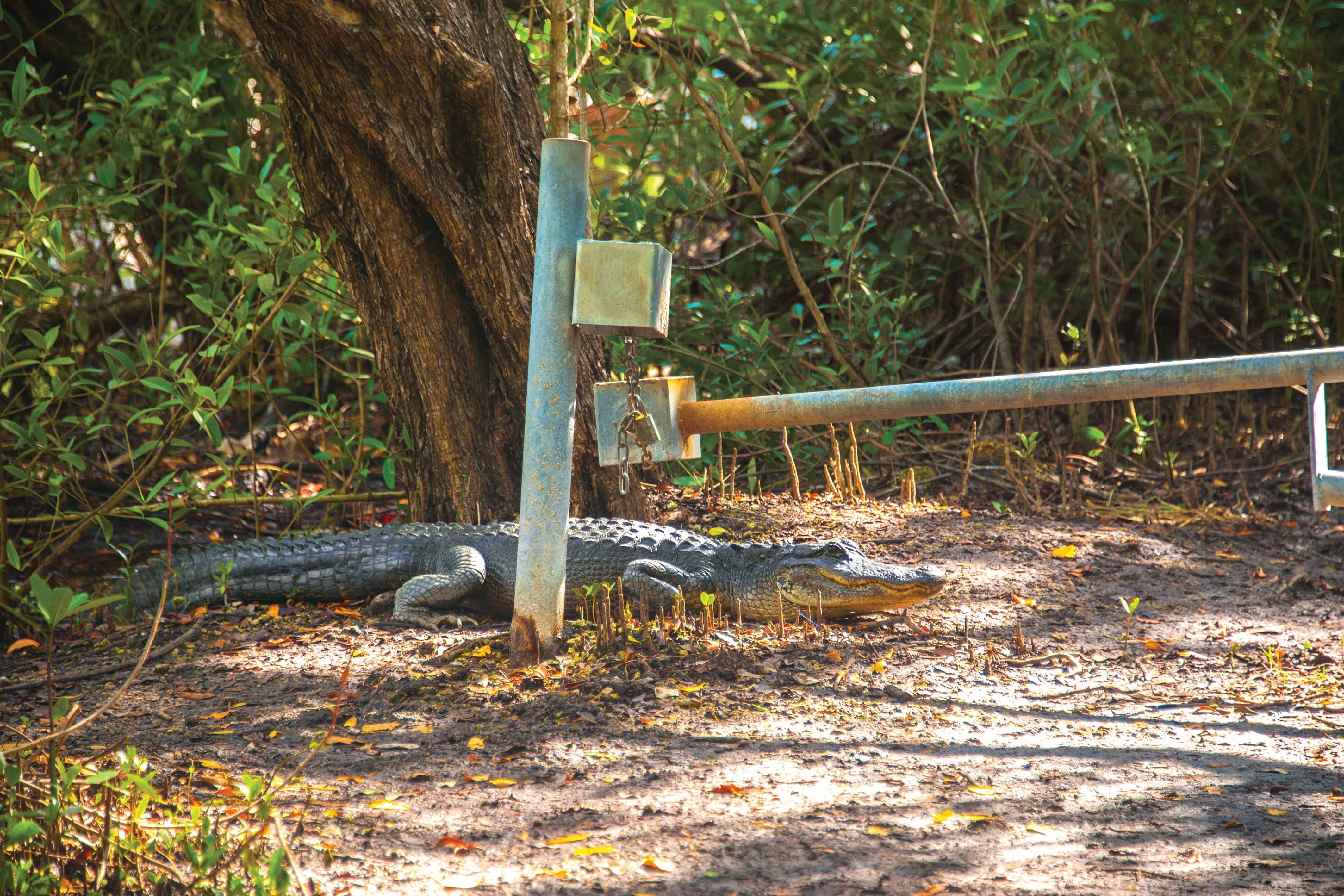
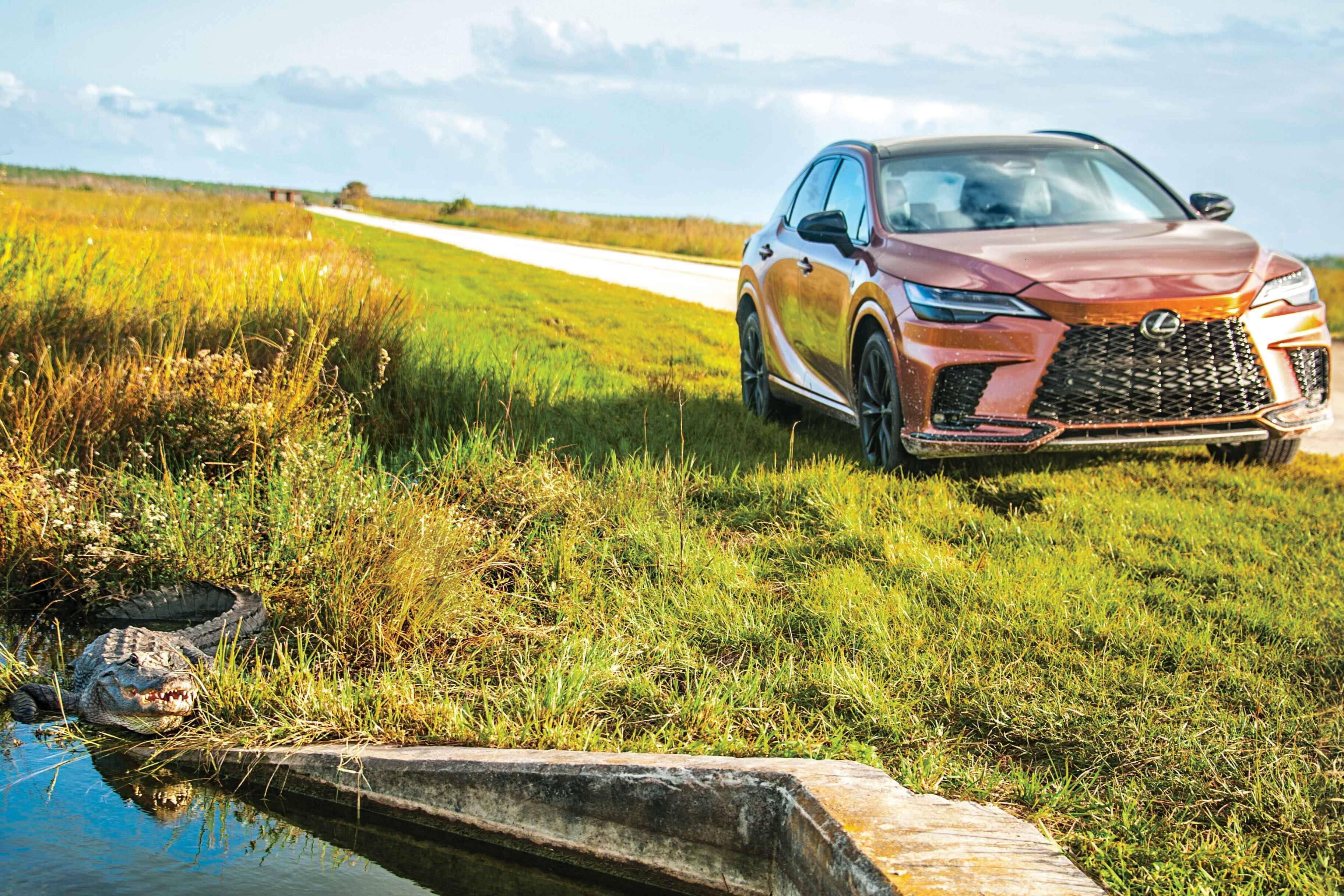
While I was parking the car, a full-grown alligator had parked itself in the gap between the barrier and the edge of the trail. Even though I knew there was a chance I’d see crocodiles or alligators, this situation had the same nonchalance as coming across a mongrel on the streets of Bombay. Such was my sense of disbelief that it was a full minute before my brain snapped out of surprise mode and went into selfie and social media mode.
But I reigned myself in, I have seen enough alligators to know how quickly they can lunge and how fast they are over short distances and there was no way I was going to turn my back to this one to get a selfie. In fact, I slowly backed away to a respectable distance and then took photographs. I then quickly went back to get the car in the hope of getting a picture of the Lexus and the croc, but when I got back, the croc was gone. Needless to say, I abandoned my plan of walking the trail to Snake Bight. It was already evening and light was fading, and I had no intention of playing Jumanji.
The next day I was at Robert is Here fruit stand at 11am sharp to meet Garl Harold who runs kayaking tours in the Everglades. While reading up about the Everglades, I often came across praise for Garl’s Coastal Kayaking full-day tour. So even though it was steeply priced at USD 181 (including tax), I decided to opt for it.
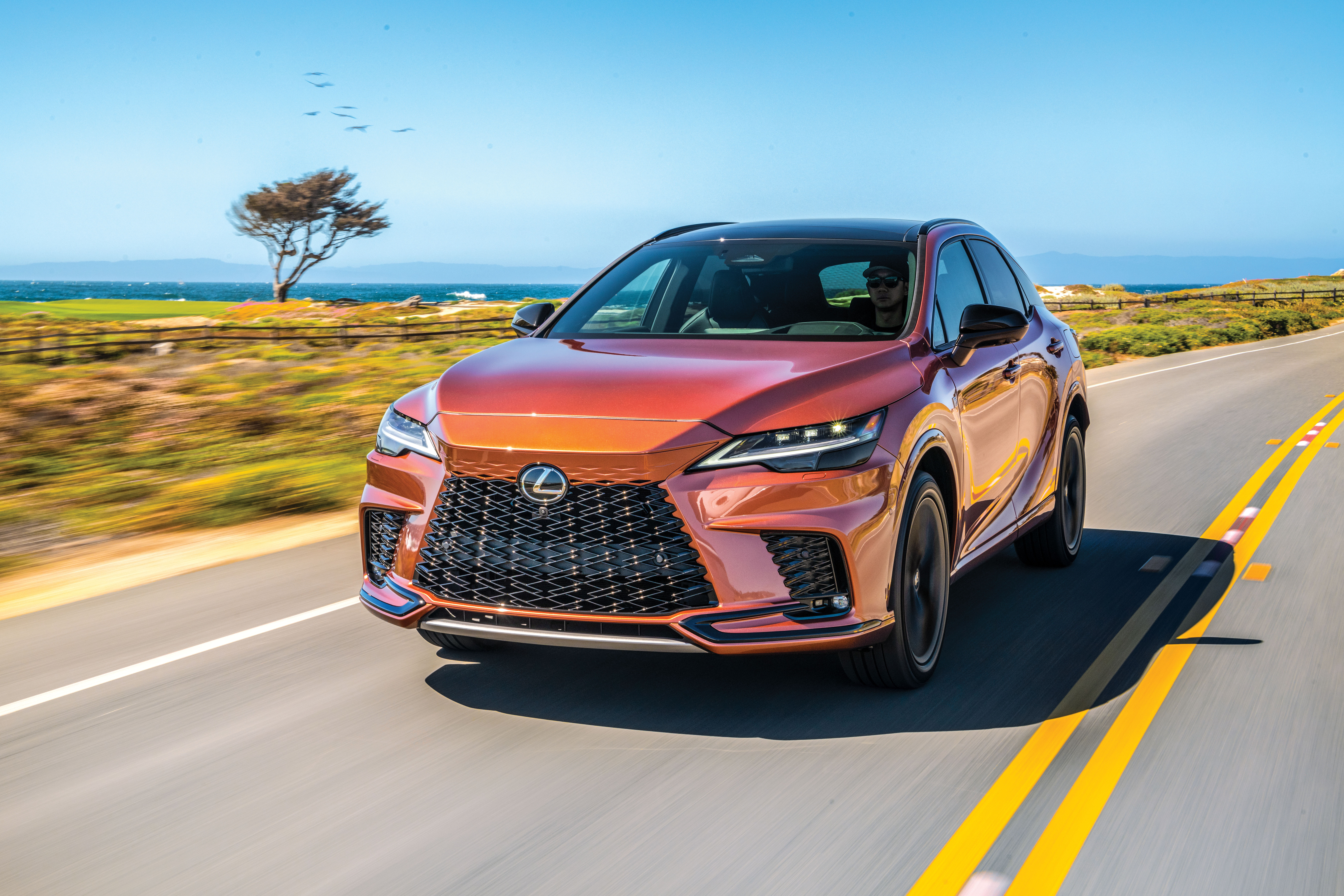
Our group that day comprised seven people and we drove off from the fruit stand following Garl’s SUV, with a trailer full of kayaks hitched to it, in our own cars. Since we were driving in a convoy, I turned on the Dynamic Radar Cruise Control that matched my speed with the car ahead. Yellow lines neatly divide the SH 9336, and so the Lane Departure Assist System kept the car in its lane. This autonomy gave me a chance to peek around as we were driving through the Everglades.
Somewhere between Pinelands and Ficus Pond, Garl pulled over and parked on the shoulder. We followed suit and alighted from our cars. Cypress domes bordered the road here. A cypress dome is a type of freshwater-forested wetland, or a swamp that forms when pond cypress trees grow in shallow standing water.
“Alright, here we go!” Garl announced and led us through a gap in the shrubbery.
It was like entering a magical world. Dappled rays of sunlight filtered through the domes formed by the cypress trees above. I was already till my knees in water and as Garl led us further, the water got deeper.

My encounter with the alligator a day earlier was still fresh in my mind and so I asked the question that I am sure was burning in everyone’s brain.
“Arre Garl, what about the crocs and gators?”
“Oh look!” replied Garl gleefully, “There’s an alligator” as one regally glided by.
As we pose for pictures Garl says that he has been taking tours like these into the Everglades for 20 years and there has never been an untoward incident. Even park rangers lead slogging walks into cypress domes.
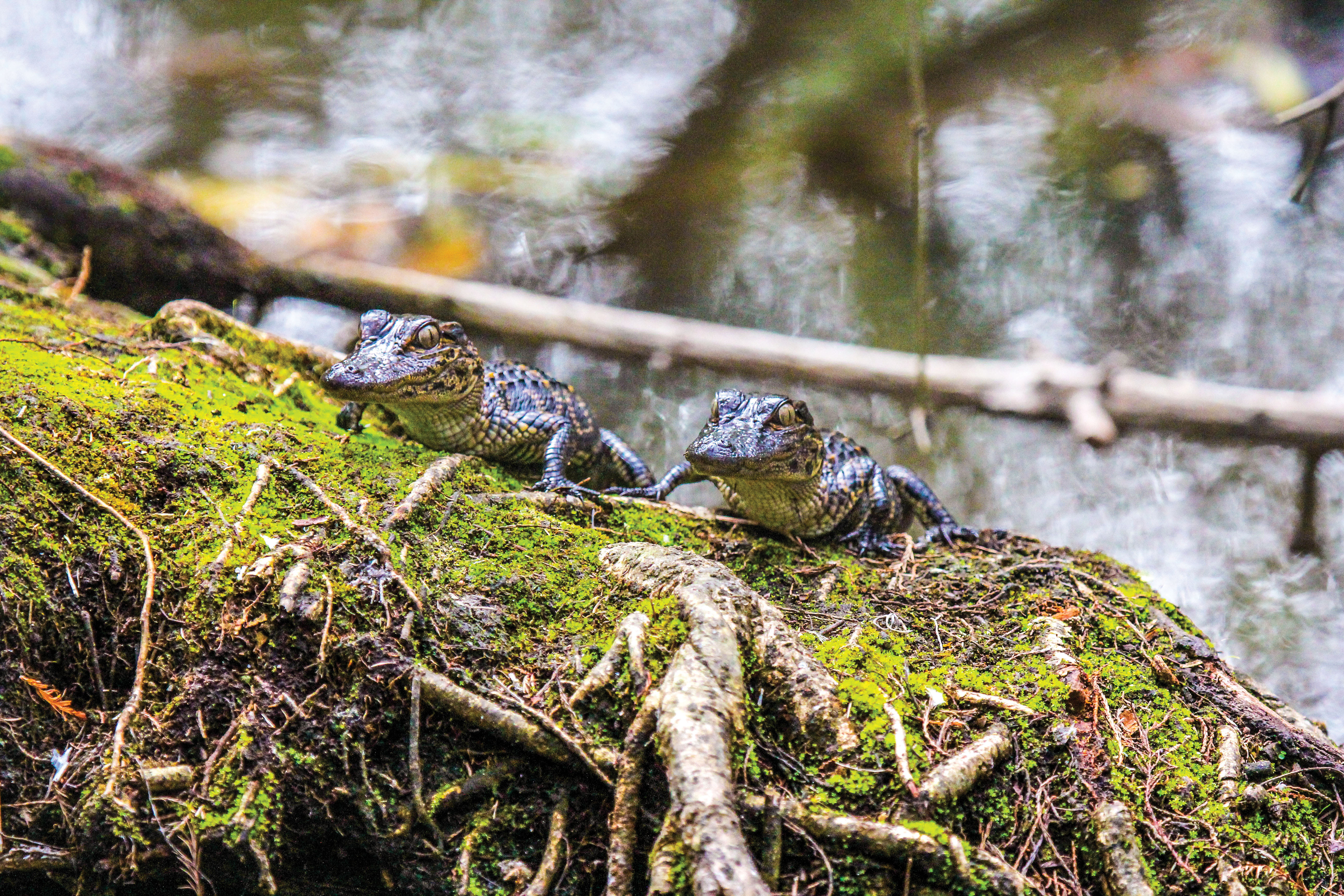
As we continue to slog with the water now waist-high, Garl beckons us to stop and points out a pair of hatchlings on a bark covered with green lichen. It is an absolute Jurassic World moment.
Garl’s experience is apparent and documentary film crews from National Geographic and Netflix often hire him. His knowledge and jungle craft, honed over the years, help him track the park’s fauna.
“I’ve pulled out so many Burmese pythons from these domes,” he says casually. “These reptiles are not native to Florida and are considered vermin and there are plenty of them here,” he adds gesturing the area around with his hand, sending a little shiver up and down my spine. “I get paid per foot to capture them and bring them in,” he adds.
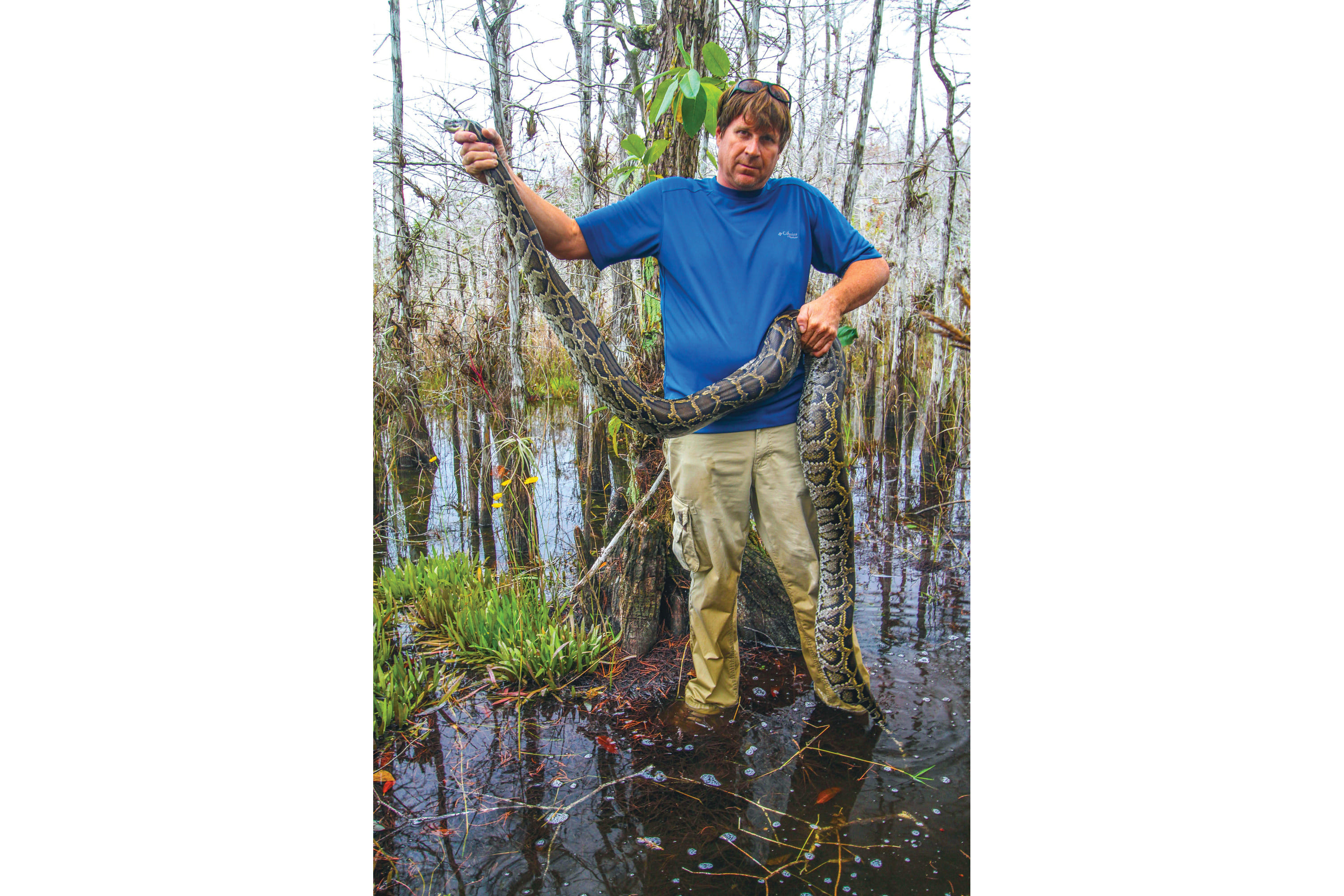
We exit the dome after slogging through it for over an hour and I breathe a little easier once I am back within the confines of the Lexus. Those 90 minutes of walking through waist-deep murky water with the knowledge of, but not knowing for sure, what lies beneath have been one of the most eerily exciting experiences of my life with equal doses of anxiety and awe.
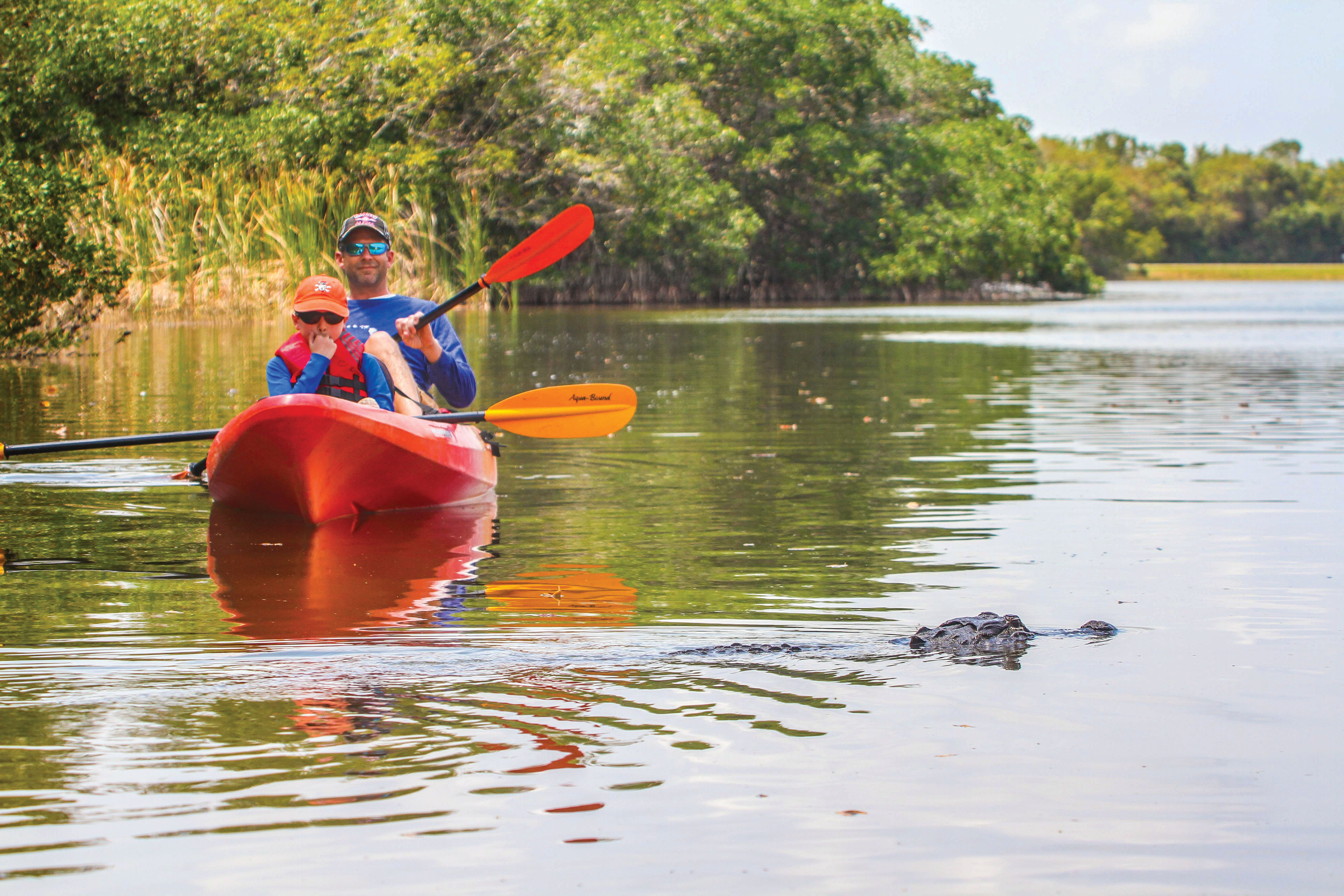
We start off as a convoy once again on SH 9336 and arrive at Nine Mile Pond where we unload and launch the kayaks. These are sit-on-top kind of kayaks with backrests rather than the ones you slide into; these are far more stable than the latter, and in case you do topple over, getting back on is a quicker process. A significant advantage in these alligator-infested waters.
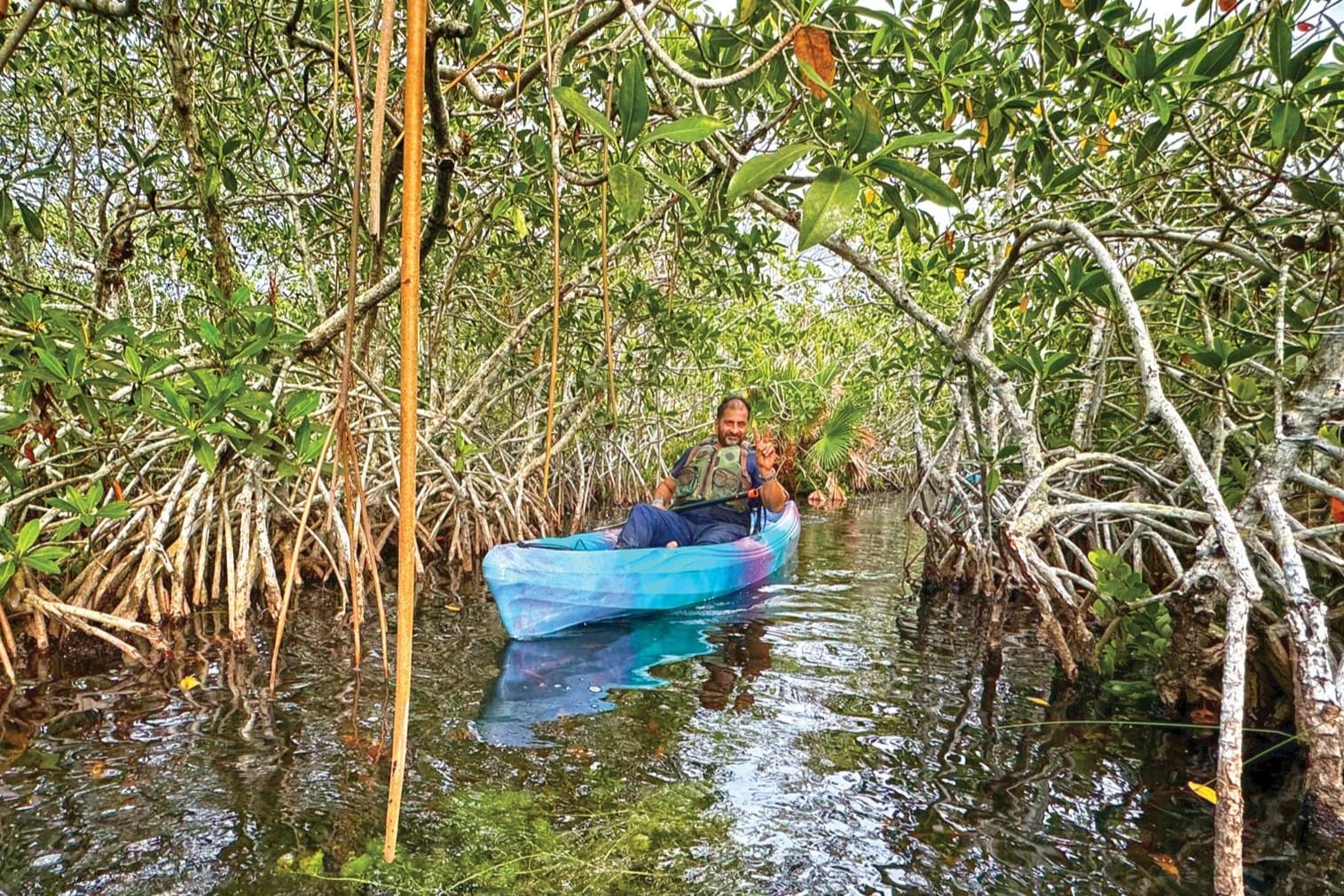
At the far end of the pond are mangroves, and once again, Garl knows the way through them like the back of his hand. He tells us that he is often called out to rescue tourist kayakers who’ve got lost in this network of mangroves. We see alligators here too, but like tigers in our national parks, the presence of humans doesn’t seem to bother them. Some continue to bask while others slip into the water. Some of the channels through the mangroves are so narrow that my paddle keeps getting stuck in the trees and I have my work cut out navigating these constricted waterways. I realise how easy it would be to get lost here.
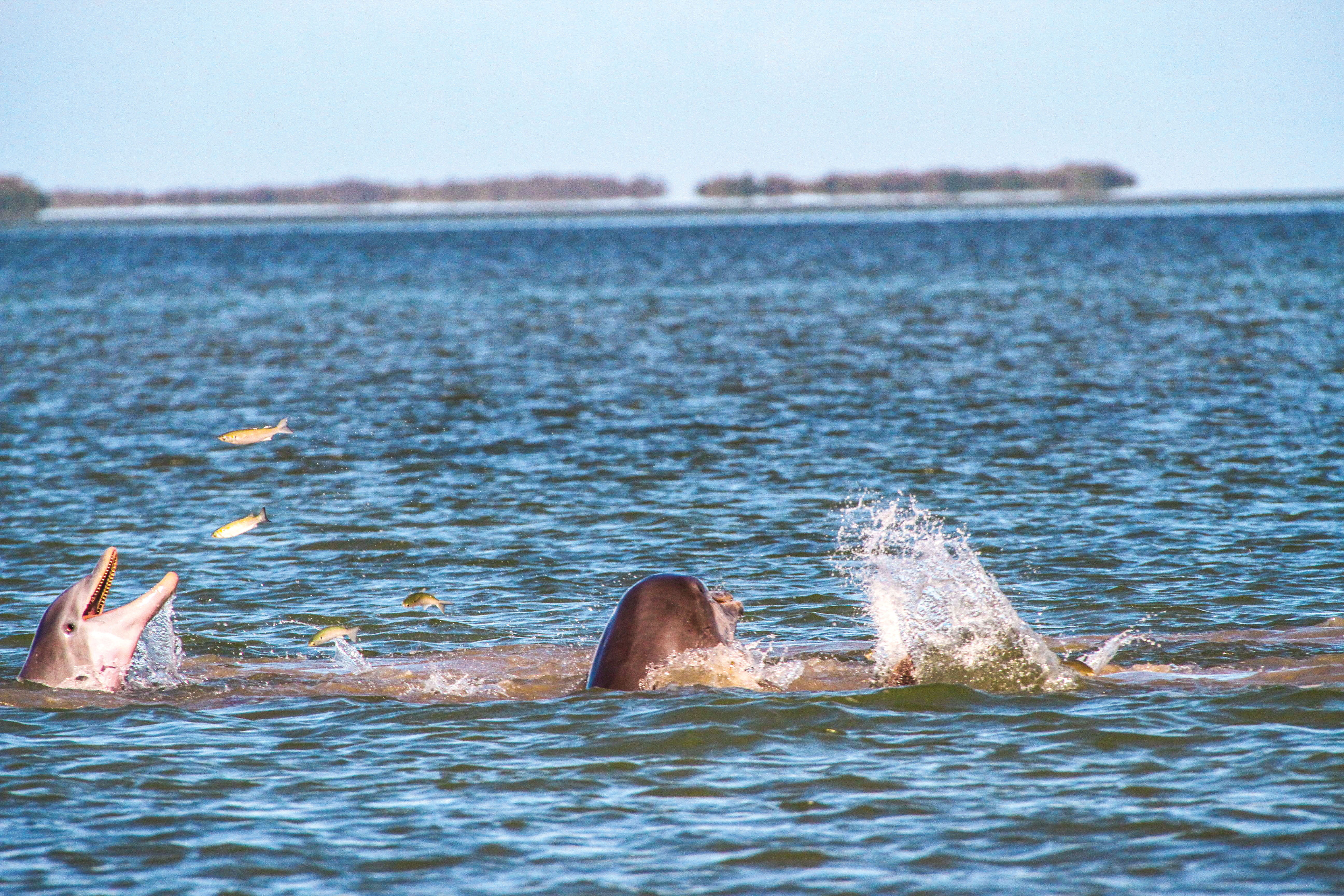
Our last adventure of the day starts at about 4.40pm at the Flamingo marina with our flotilla of kayaks heading out to the open sea towards Snake Bight. Almost at once, we spot dolphins frolicking and fishing. A little further out, I point out a dorsal fin that is headed straight towards my kayak and shout, “Garl look, another dolphin.”
“No,” Garl replies casually, “that’s a lemon shark.”
The shark circles my kayak once and then goes on to check out other kayaks before swimming away. It is not the only one, there are around 12 of them swimming about unconcernedly. Then Garl points out to the shore where a big crocodile is lounging. As if on cue, it slips into the water and starts heading towards us before its snout disappears below the water. The sight of all these water babies reinforces my resolve to stay on top of my kayak come what may.
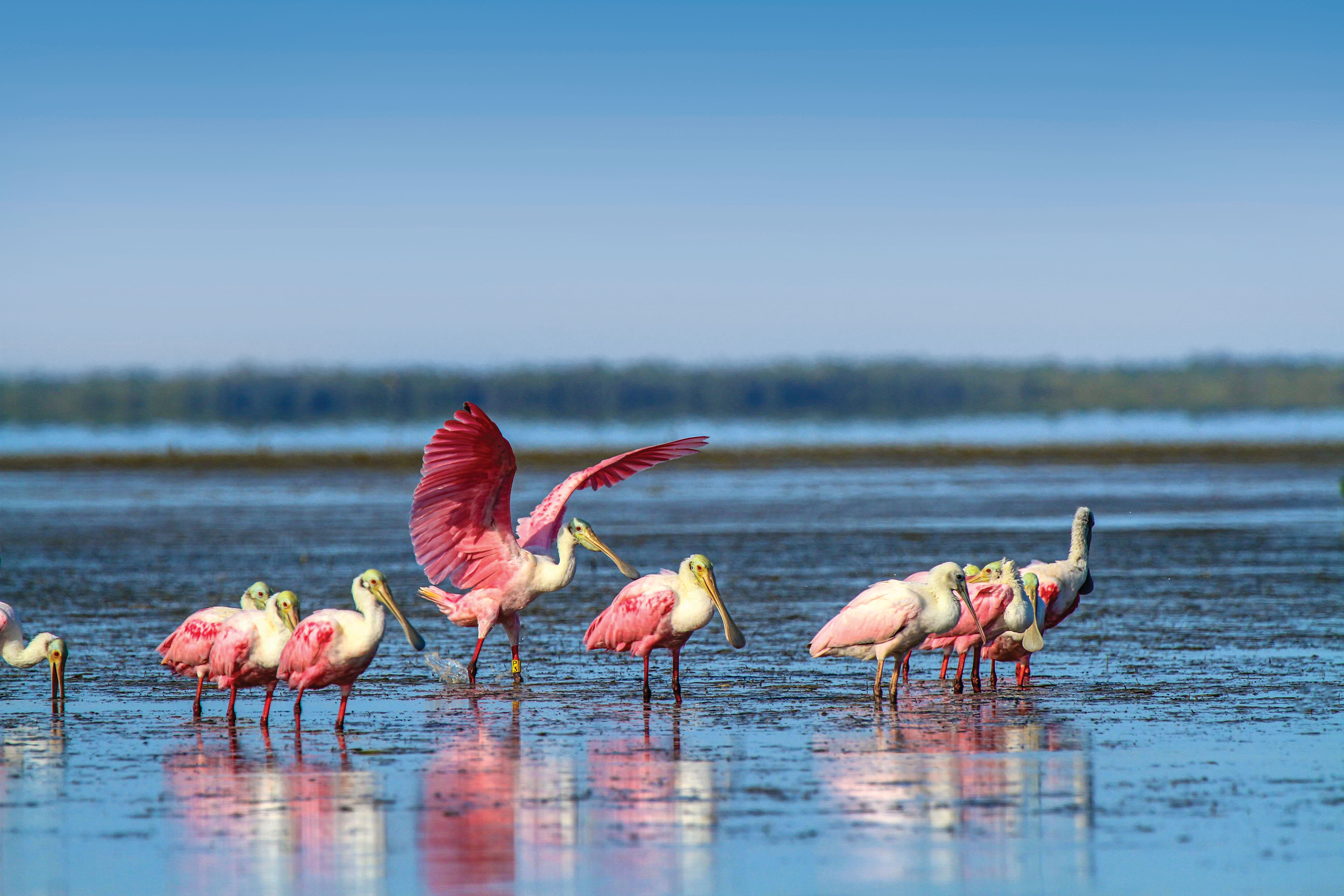
By the time we get to Snake Bight, the light is lovely to photograph the flamingoes that seem to be literally posing for us. Darkness follows dusk with such alacrity that we find ourselves paddling back to Flamingo Marina in pitch darkness. It takes an hour during which I am eaten alive by mosquitoes. This is my second eerily exciting experience of the day because the sea is a shifting mass of black and often I feel a bump against my kayak and gulp and convince myself that is just driftwood. But, the next moment I see a dorsal fin cut the surface and circle my kayak. I paddle a little faster and position myself in the centre of our convoy of four kayaks. At intervals, Garl sweeps the surface of the sea with his torch and twice we see the shining eyes of crocodiles swimming in the sea.
It is when I am driving back to Florida City in the dark on SH 9336 that the adrenaline kicks in and I realise that I have been on such an awesome adventure in the Everglades. While I am reflecting on my day, the Lexus, which is on cruise control, slows down, and I wonder why. There is no car for miles ahead. But then I see movement on the road ahead – there are two alligators slowly crawling across the road and the car comes to a stop on its own; the gators momentarily freeze in the glare of the headlights. I contemplate getting down to get some photos but then I decide against it. I have tempted fate enough today!