


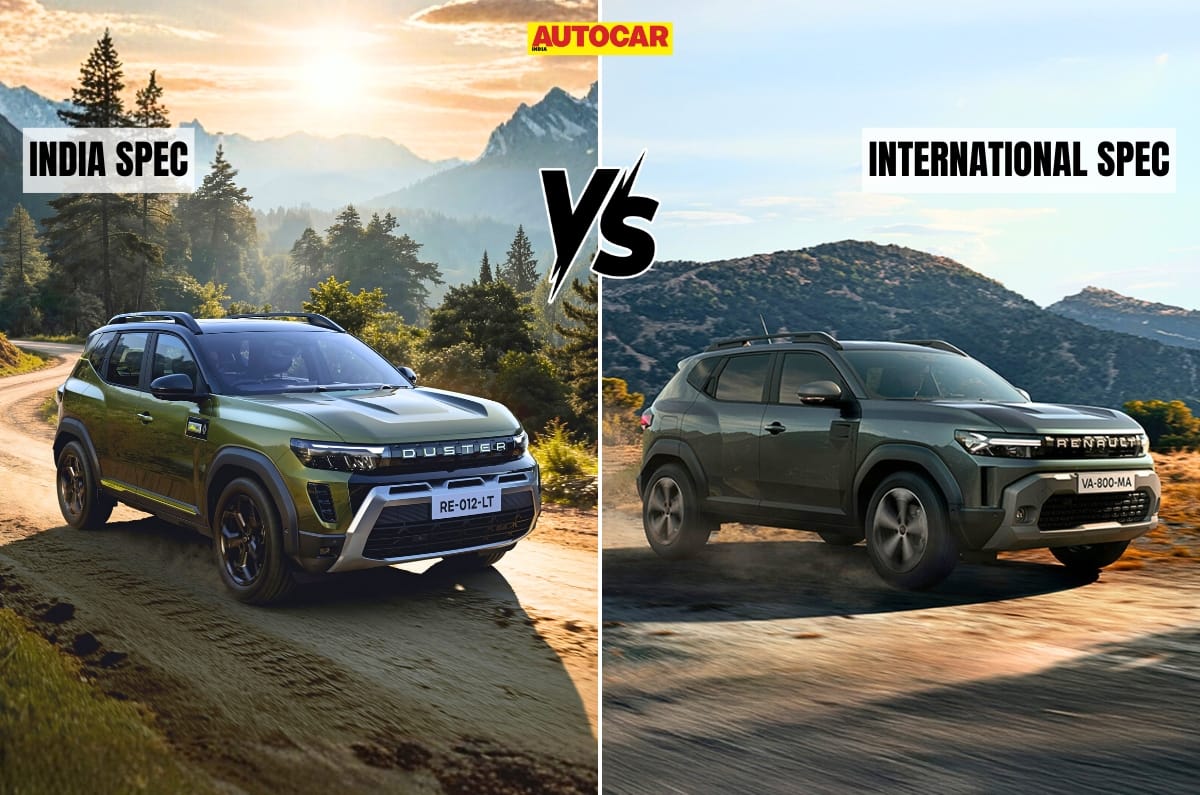
Around three years after production of the first-generation Duster ended, Renault India brought back the nameplate in the form of the third-generation Duster. While several global markets got the second-gen model, the French carmaker skipped it entirely for India. The India-spec 2026 Duster that has been revealed boasts several distinct differences when compared to its foreign counterparts. Renault has taken note of what Indian buyers want in terms of design and features in their midsize SUV, and it has tried to implement the same. Let us take a look at those – both on the outside and inside.
2026 Renault Duster exterior: What is different on the outside?
The India-spec model adds market-specific stylistic cues.
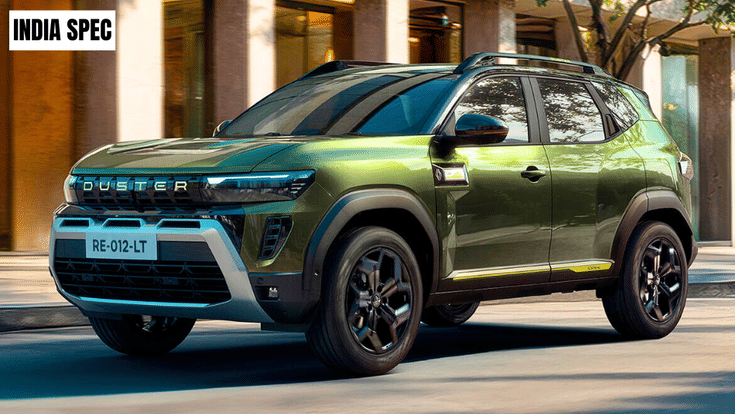
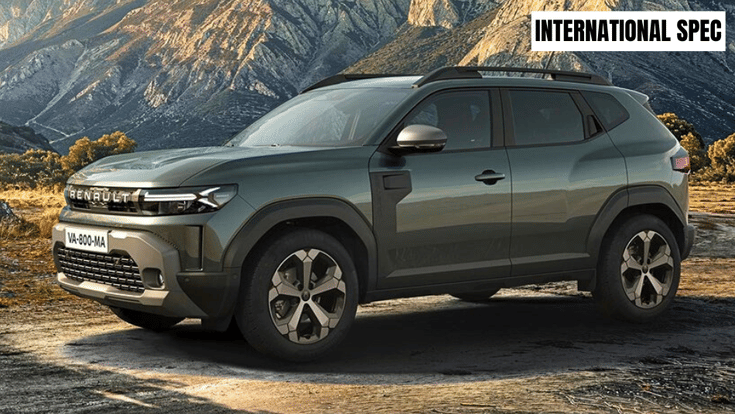
Starting up front, one of the most noticeable differences on the India-spec Renault Duster has to do with differing branding strategies. In markets such as Mauritius and South Africa, the black grille spells out ‘Renault’ in bold letters. This is replaced with ‘Duster’ in the India-spec car, as the model’s name is an even bigger draw in our market.
The angular design of the headlights remains the same, but the inner elements have been overhauled for India. Out go the Y-shaped LED daytime running lights found on global-spec models in favour of slim eyebrow-style units in our market. Renault has also tweaked the design of the actual headlights. While the silver plastic protrusion on the front bumper remains, its design looks chunkier yet better executed on the global-spec Duster.
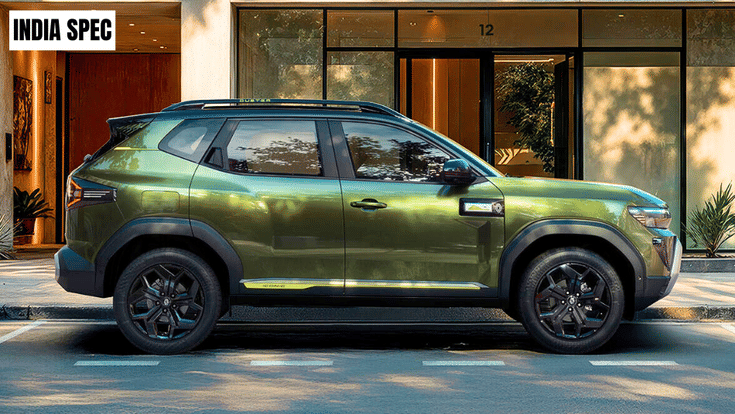
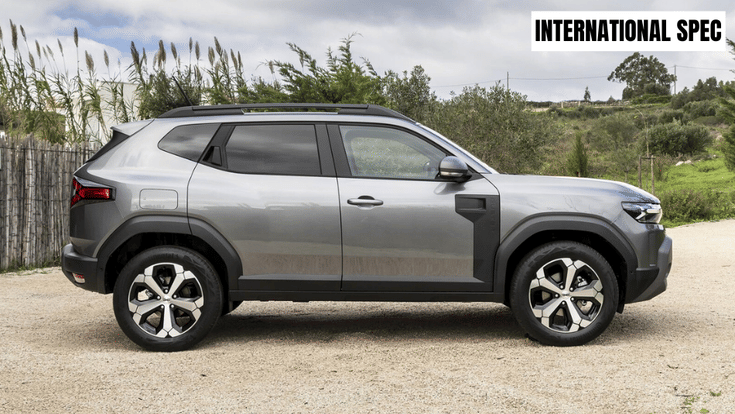
For India, Renault has added triple intakes at the top while pushing the fog lights out to the corners. It has also changed the grille design of the lower air dam. The vertically oriented air intakes are more angular and have a black plastic trim for the housing. The launch edition of the new Duster features ‘Himalayan-inspired’ fender badges instead of a black plastic trim on the front door with ‘Duster’ lettering. Furthermore, a yellow ‘Iconic’ strip runs across the lower portion of the doors, plus ‘Duster’ is written in yellow on the roof rails.
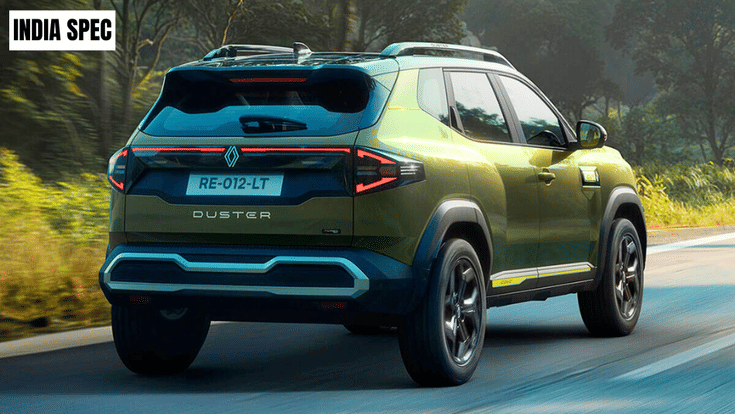
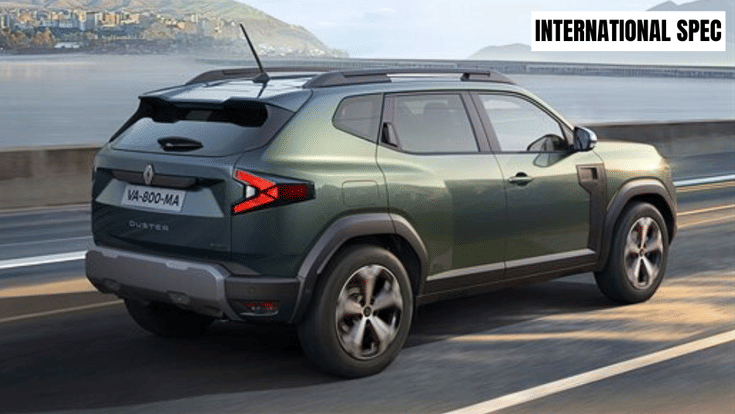
While the alloy wheels are still 18 inches in size, the India-spec ones are finished in black. Moving to the back, the design of the roof spoiler and windscreen remains unchanged from the global model. However, the India-spec Duster gains a sharkfin antenna and a connected LED strip. The triangular tail-lights get a sleeker LED cluster for India, while the tailgate sports both glossy and matte black trim. The two-tone rear bumper is a whole new unit that comes with a silver surround effect for a sportier look.
2026 Renault Duster interior: What is different inside the India-spec car?
The Duster’s positioning in India means its cabin feels more premium than the global model.
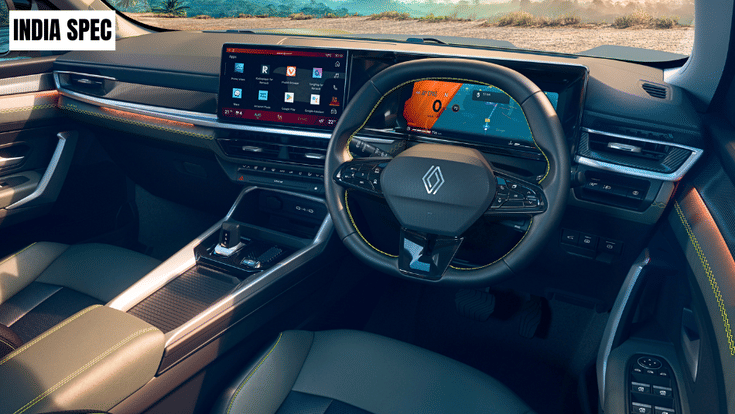
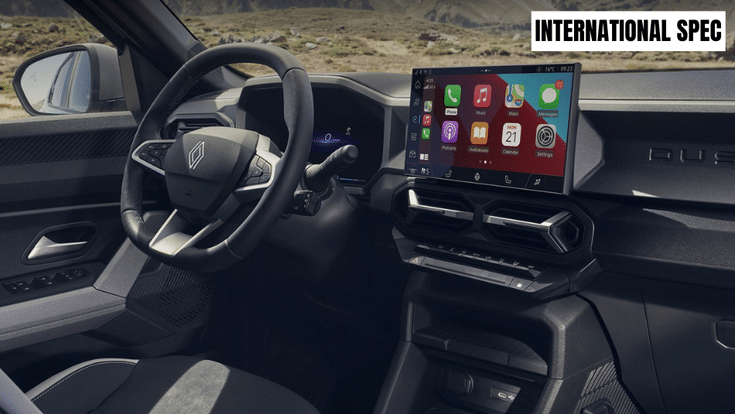
The interior of the global-spec model is primarily grey and monotonous. For India, Renault has brightened this up by using contrasting yellow stitching on the steering wheel, seats, armrest, dashboard and door pads. There is also yellow ‘Duster’ branding on the dashboard, a contrast to the simplistic branding found on the global-spec model. Adding to the premium appeal are other design touches such as faux carbon-fibre inserts, satin silver trim and two-tone leatherette seats.
One of the major changes on the design front in the India-spec Duster is its driver-oriented dashboard and centre console. This is seen in the latest Dacia Duster sold in markets like Ireland and the UK but not in its Renault counterpart in Australia or South Africa. This angled setup not only injects a sporty feel into the India-spec Duster’s cabin but also makes it easier to view and reach the infotainment screen from the driver’s seat. Renault has even redesigned the dashboard to accommodate the two digital displays inside one seemingly continuous panel, adding to the premiumness.
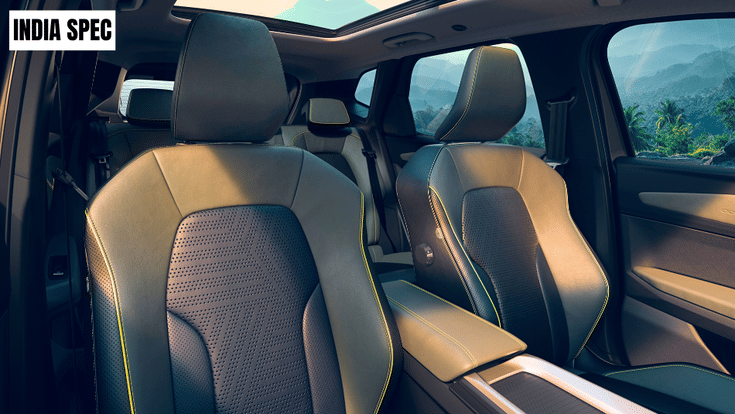
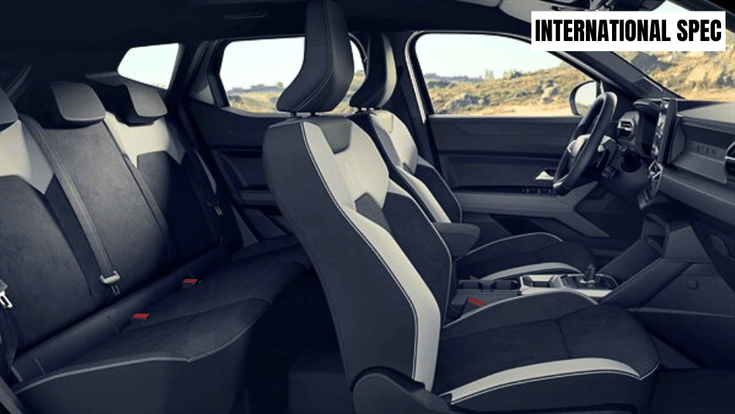
While the Indian model retains the physical HVAC controls of its global counterparts, Renault has tweaked the design of the front vents. However, the design of the transmission selector and the location of the wireless charger have not been changed for India.
2026 Renault Duster key features
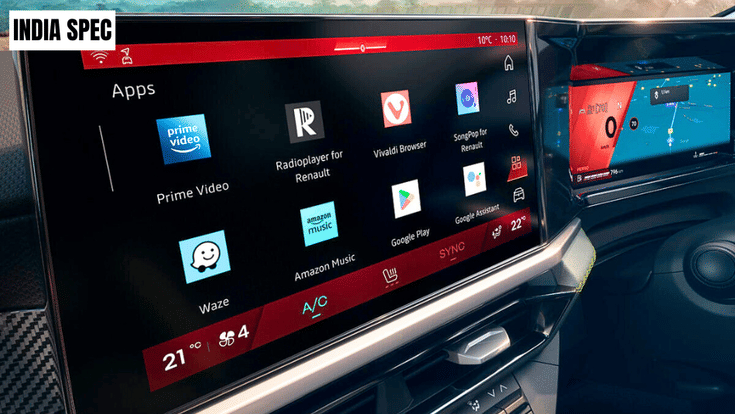
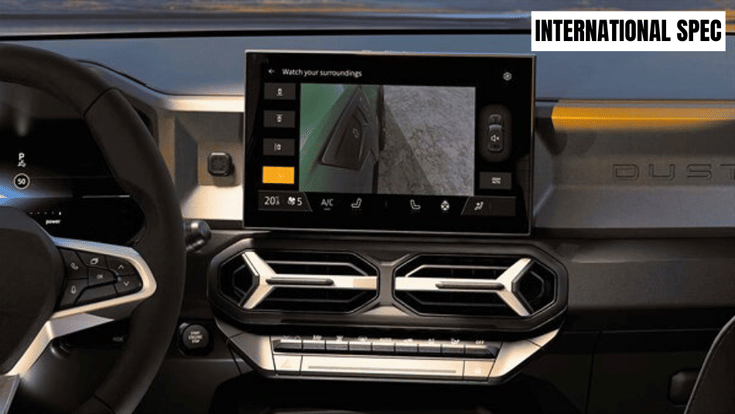
The third-generation Renault Duster gets a panoramic sunroof, powered and ventilated front seats, dual-zone climate control with PM2.5 filter, 48-colour ambient lighting, ‘My Renault’ connected-car features and three drive modes. The India-spec Duster’s 10.1-inch touch-infotainment unit comes with wireless Apple CarPlay and Android Auto, while the OpenR link multimedia system supports Google apps (including Google Play). Higher variants of the Duster get a 10.25-inch digital instrument cluster, with the lower ones featuring a smaller 7-inch unit.
Key safety features on the 2026 Duster include 6 airbags, surround-view cameras, electronic stability control and ISOFIX anchor points. There are also up to 17 ADAS-related features, including adaptive cruise control, collision detection with auto-emergency braking, lane-departure warning and lane-keeping assist, among others.
2026 Renault Duster powertrain: What makes the India-spec car different?
No AWD version available in India.
In markets like Australia, Mauritius and South Africa, the new Duster is available with a 1.2-litre three-cylinder hybrid powerplant. However, the hybrid version headed to India will be powered by a 1.8-litre four-cylinder engine assisted by a 49hp traction motor, for a total output of 160hp and 172Nm of torque. While the Australian and South African markets have the Duster’s 1.3 turbo version available, their Indian counterpart is more powerful, offering 160hp and 280Nm.
Meanwhile, the entry-level variants of the 2026 Duster in India will offer a 1.0-litre three-cylinder turbo-petrol engine with 100hp and 160Nm on tap. This three-pot unit is not available in most global markets, which include the likes of the United Kingdom and Ireland. However, while many of these countries have an all-wheel drive (AWD) version with the new Duster hybrid, it will not be making it to India anytime soon.
Also read
New Renault Duster: All your questions answered
Why 2026 could be the Creta’s toughest year with Sierra, Duster and Seltos
What to expect from upcoming Skoda Kodiaq RS?