


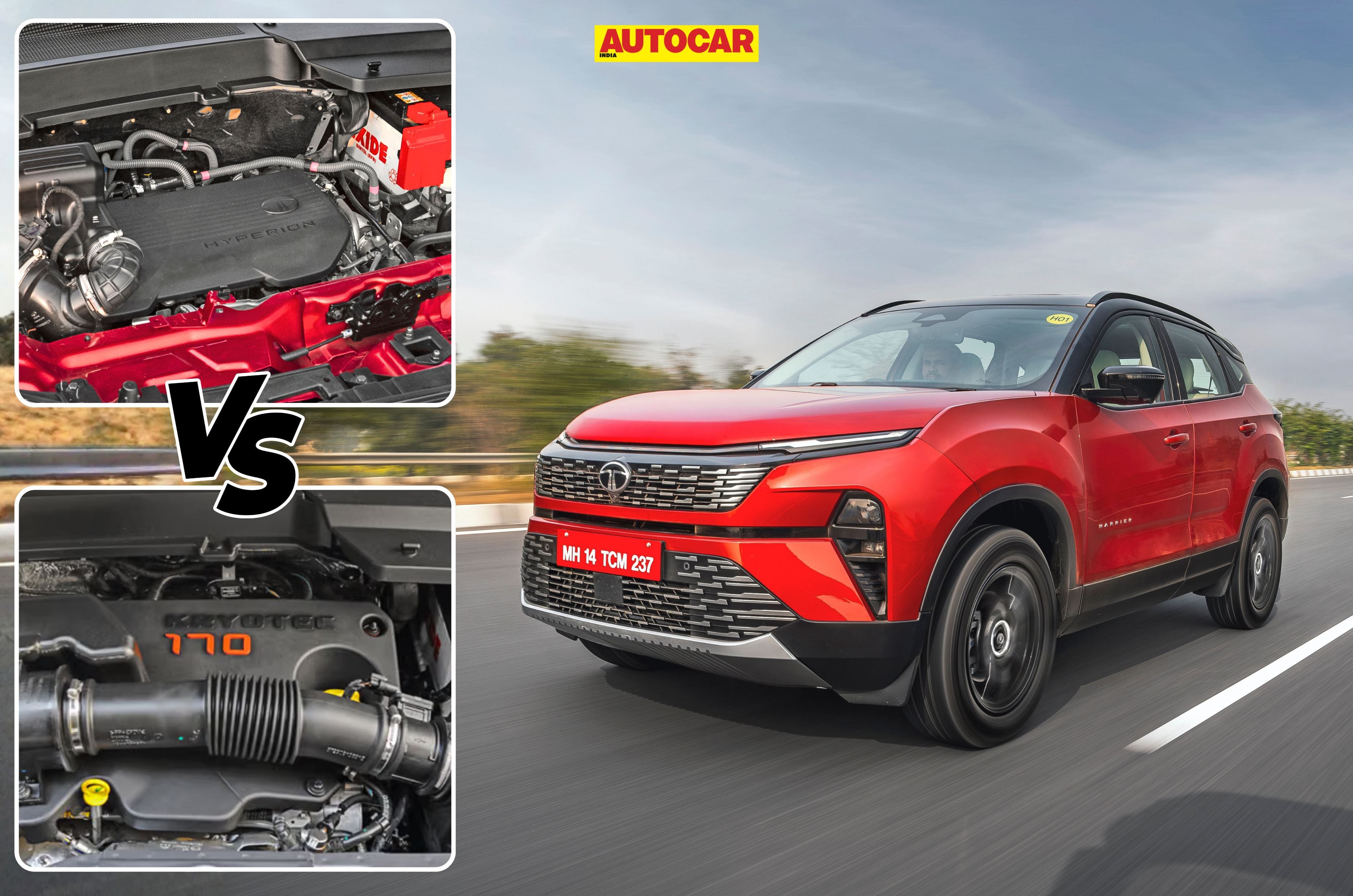
For years, the Tata Harrier was exclusively a diesel proposition. That changed with the introduction of the 1.5-litre Hyperion turbo-GDI petrol engine – the same unit powering the Sierra, but tuned to deliver 10hp and 30Nm more in the Harrier. The midsize SUV’s petrol version also gets additional features over its diesel counterpart. Here are the key differences between the Harrier’s petrol and diesel variants.
- New Fearless Ultra trim introduced with Harrier petrol
- 14.5-inch QLED screen available only in Harrier Fearless Ultra
Tata Harrier petrol vs diesel: Features
New digital IRVM with integrated dashcams, washer for front and rear cameras, and more
The Fearless Ultra trim, available only in the petrol Harrier, features a 14.5-inch Samsung Neo QLED infotainment screen, replacing the diesel version’s 12.3-inch unit. Complementing the display is Dolby Atmos audio through a 10-speaker JBL system that adds a central speaker absent on the diesel variants. Additionally, it gets a new digital interior rearview mirror (IRVM) with dual integrated dashcams, as well as a new washer function for the front and rear cameras.

The tech upgrades also include Mappls auto navigation (versus Map My India in the diesel variants), along with a 65W USB Type-C fast charger – an upgrade from the 45W unit seen on the diesel variants. The ADAS Level 2+ suite adds an Intelligent Speed Assist (Map) feature.
The petrol variant even gets a new Nitro Crimson exterior paint shade and lighter upholstery inside, with a dual-tone dashboard and wooden finish in the middle to further distinguish it from the diesel versions.
Tata Harrier petrol vs diesel: Mechanical differences
Petrol engine produces power on par with diesel

The 1.5-litre Hyperion delivers 170hp and 280Nm, whereas the 2.0-litre Kryotec diesel produces identical power but pushes 350Nm – 70Nm more through a narrower 1,000rpm band. Both are offered with 6-speed manual or automatic transmissions. Notably, Tata claims that the petrol version weighs 80kg less, which improves the front-axle loading for sharper turn-in and reduces understeer. However, there wasn’t any handling difference noticed in the initial road tests.
| Specifications | Tata Harrier Diesel | Tata Harrier Petrol |
| Engine | 2.0-litre diesel | 1.5-litre turbo-petrol |
| Power (hp) | 170 | 170 |
| Torque (Nm) | 350 | 280 |
| Gearbox | 6-speed manual / 6-speed AT | 6-speed manual / 6-speed AT |
The Hyperion engine employs Miller cycle combustion, cooling intake air before injection for improved efficiency. This technology generates strong low-end torque, delivering 160Nm from just 1,000rpm, creating a diesel-like initial response. The torque plateau extends – 1,000rpm wider than the diesel’s window – meaning the engine remains in its sweet spot longer, requiring fewer gear changes.
The Harrier petrol prices are yet to be announced, but we expect it to be roughly Rs 50,000-80,000 more affordable than the diesel, ranging between Rs 13 lakh and Rs 24.5 lakh, ex-showroom.