


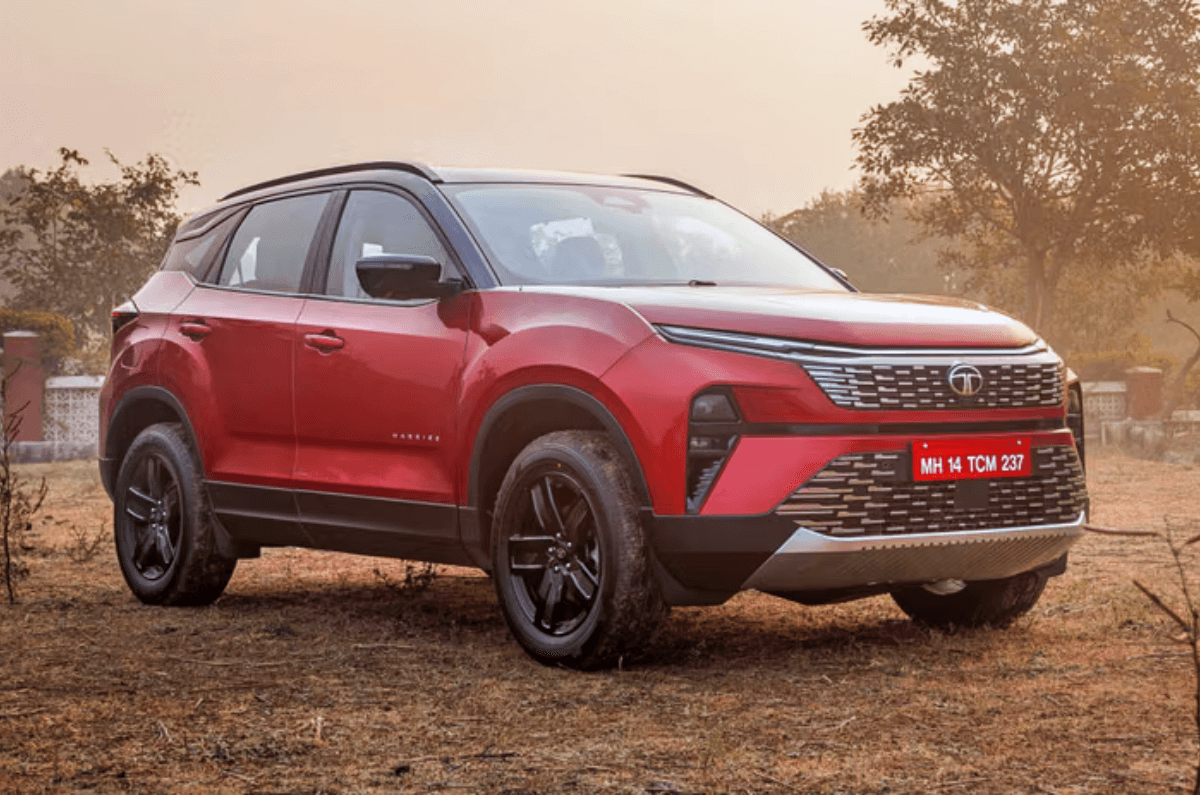
After debuting its 1.5-litre turbo-petrol Hyperion engine in the Sierra, Tata Motors has now introduced the same unit in the Harrier and Safari, both of which have been limited to a diesel engine since their respective launches. The petrol SUVs have also received a new top variant with minor feature upgrades, but prices are still awaited.
In this feature, the focus is on the Tata Harrier as we break down the strengths and weaknesses we observed across different areas during our recent review.
Pros
Smooth and effortless performance
160Nm torque available from 1,000rpm
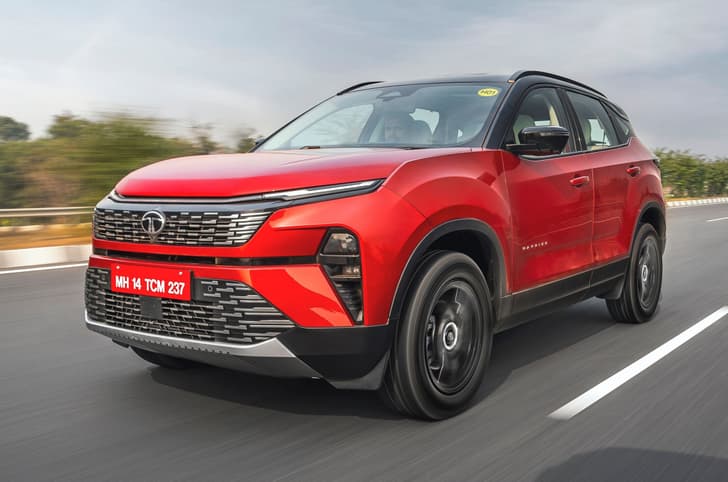
Tata has tuned the direct-injection motor to deliver 170hp and 280Nm in the Harrier – 10hp and 25Nm more than the Sierra – to compensate for its higher weight. Notably, 160Nm is available from as low as 1,000rpm, and turbo lag is minimal. The speed build-up is effortless, and while it doesn’t deliver a mid-range punch or top-end like some turbo-petrol engines, the performance is far from lacking. For reference, the Safari sprinted from 0 to 100kph in an impressive 10.5 seconds in our preliminary instrumented testing (not as per Autocar India standards), and with the Harrier being lighter, it should be quicker.
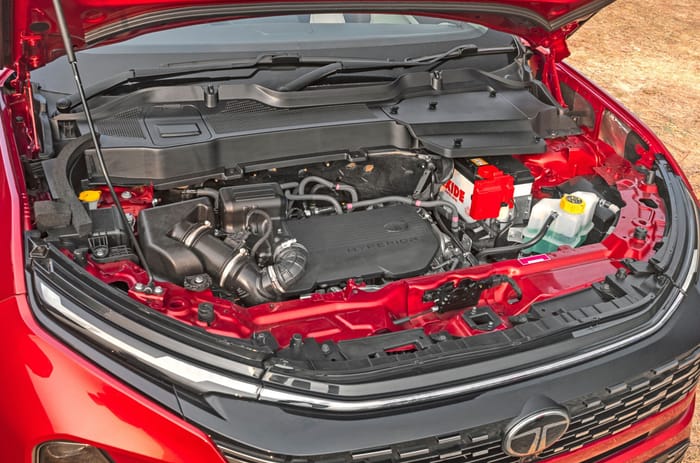
Torque converter auto’s ratios are well-matched to the engine
The engine is smooth, with barely any vibrations across the rev range. Both 6-speed manual and 6-speed Aisin-sourced torque-converter automatic gearboxes are on offer, but the automatic is our pick, thanks to its smooth, well-timed shifts and the fact that you rarely feel the need to use the paddleshifters.
Good ride quality and highway manners
Feels robust over rough patches
Much like the diesel Harrier, the petrol version boasts superb ride quality. The Land Rover-derived platform lends it a reassuring sense of robustness over rough surfaces. There’s an underlying firmness when crawling over broken tarmac, but it never becomes uncomfortable. On highways, it’s planted at triple-digit speeds, holding its line through bends. The petrol Harrier is claimed to be 80kg lighter than the diesel, which may help it feel more agile on twisty roads.
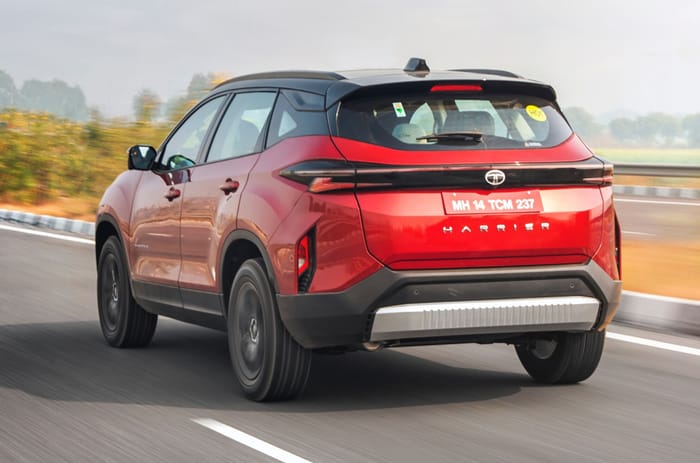
Both damping and body control are excellent, making it suitable for long-distance cruising. The well-calibrated electric steering feels light at low speeds, weighing up progressively to provide confidence at high speeds.
Feature packed
Bigger 14.53-inch QLED touchscreen, Dolby Atmos
The Harrier is known to be a feature-rich SUV, and its petrol line-up carries that forward. The petrol SUV’s top-spec Fearless Ultra trim and its Red Dark edition, neither of which is offered with the diesel, come with a bigger 14.53-inch QLED touchscreen and Dolby Atmos. Another upgrade is the digital rearview mirror, which relays feed from the roof-mounted camera and, together with the front camera, also functions as a built-in dashcam.
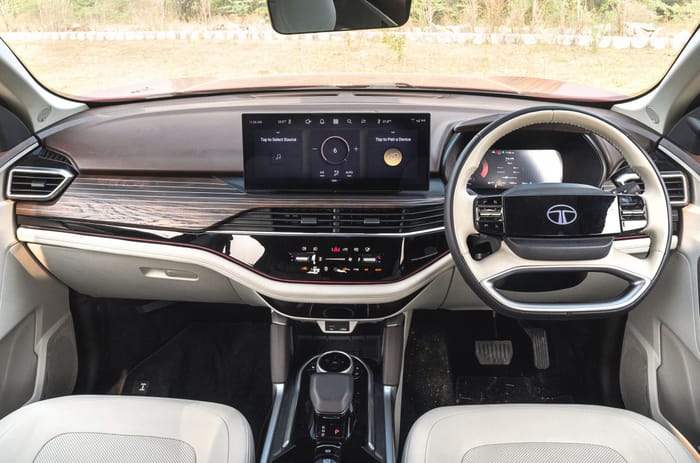
The cabin feels fresher thanks to a lighter colour scheme; faux wood trim with subtle silver pinstriping on the dashboard gives it a premium look. Washers for both the front and rear cameras have been added, along with a memory function for the outside rearview mirrors, which now tilt down automatically when the reverse gear is engaged.
Cons
Ergonomic quirks persist
Wireless charger is hard to access; fiddly HVAC controls
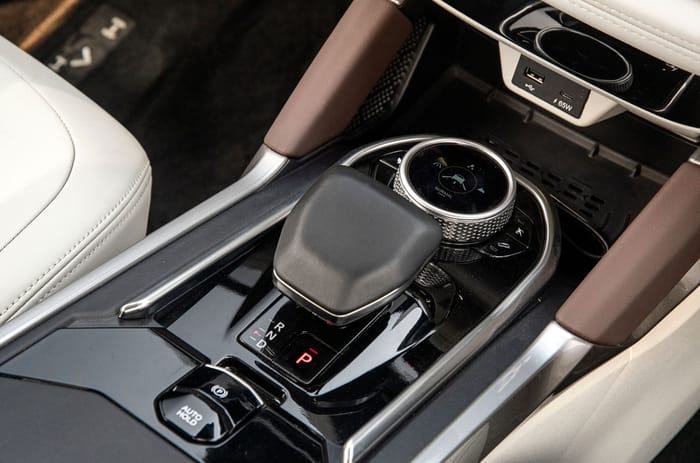
Since the interior is largely the same as the diesel’s, some ergonomic issues continue to be there. Access to the wireless charger tucked away behind the terrain mode selector is difficult, and the 10.25-inch digital driver’s display sits too far back into the dashboard, making the smaller fonts tough to read. The touch-based controls for the climate control system, hazard lights and door locks don’t help either, as they’re small and fiddly to use while driving. Adding to that, the side of the driver’s knee tends to brush against the centre console, especially over rough roads.
No exterior changes
Misses out on any petrol-specific badging
Save for a new Nitro Crimson shade exclusive to the Harrier Fearless Ultra variant, there isn’t anything to distinguish the petrol Harrier from the diesel. Wheel sizes still range between 16 and 19, and their designs are familiar too. No petrol-specific badging is present on the exterior, either.