


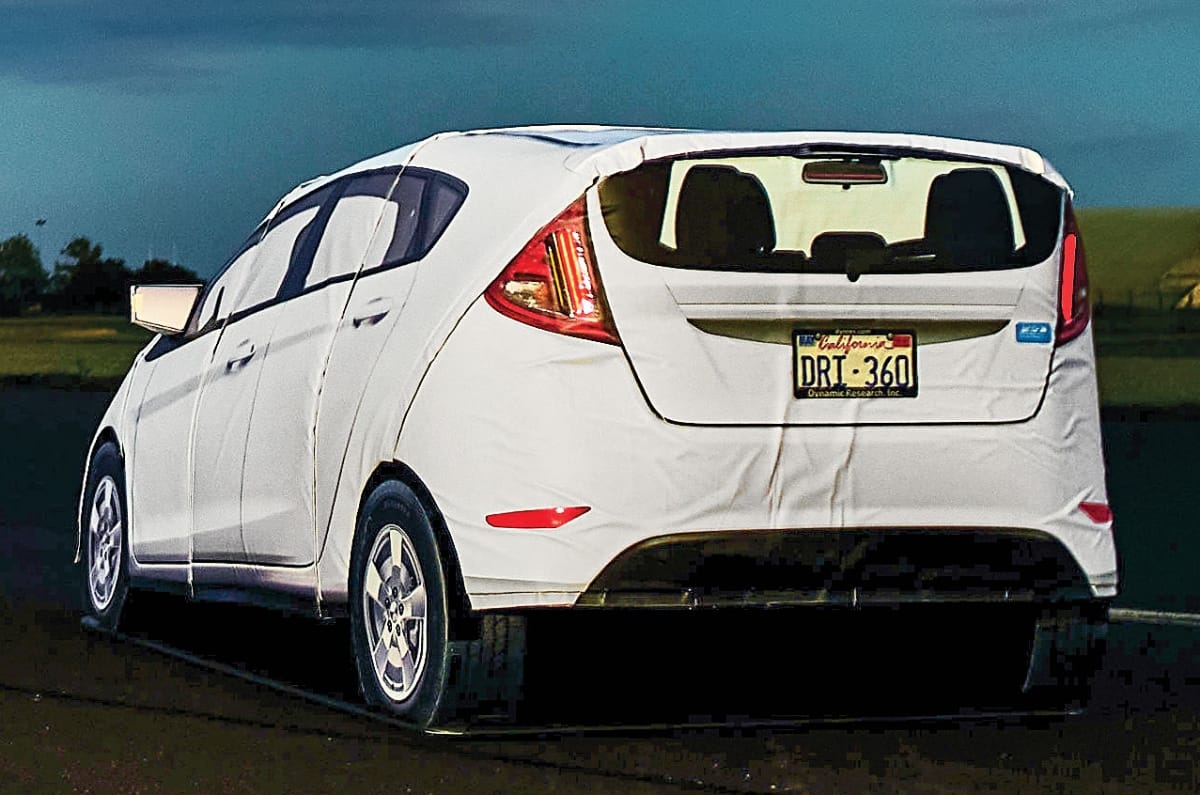
It has been said for years that when autonomous cars arrive, the technology driving them won’t be all-new but more an evolution of the advanced driver assistance systems (ADAS) we have today. ADAS really got going as standard kit in the UK a decade ago, when manufacturers had to fit autonomous emergency braking to have a hope of gaining five stars from Euro NCAP. But beyond computer simulation, how can these increasingly complex systems be tested safely and without trashing thousands of vehicles on proving grounds?
One way is by using soft targets like the Soft Car 360, developed by AB Dynamics and its sister company Dynamic Research Inc (DRI). A hatchback version of the Soft Car is Euro NCAP’s official Global Target Vehicle for ADAS testing. It’s made from lightweight panels, and anyone familiar with flat-pack furnitures would be comfortable putting it together. The panels can be reassembled in eight minutes and separated into lightweight parts on impact to avoid damaging either the test vehicle or the target.
It can act as a static target, but its greatest use is as a moving target mounted to the partners’ ‘GST platform’, a battery-powered plate. The platform comes in various sizes, including a small one for dummy pedestrians and cyclists. Both can be remote-controlled or pre-programmed with a ‘path following’ algorithm capable of anything from steady-state cornering and double-lane changes to whole laps of Silverstone. Despite the Soft Car’s lightweight, prefab construction, it can hit 75mph (120kph) on a GST platform.
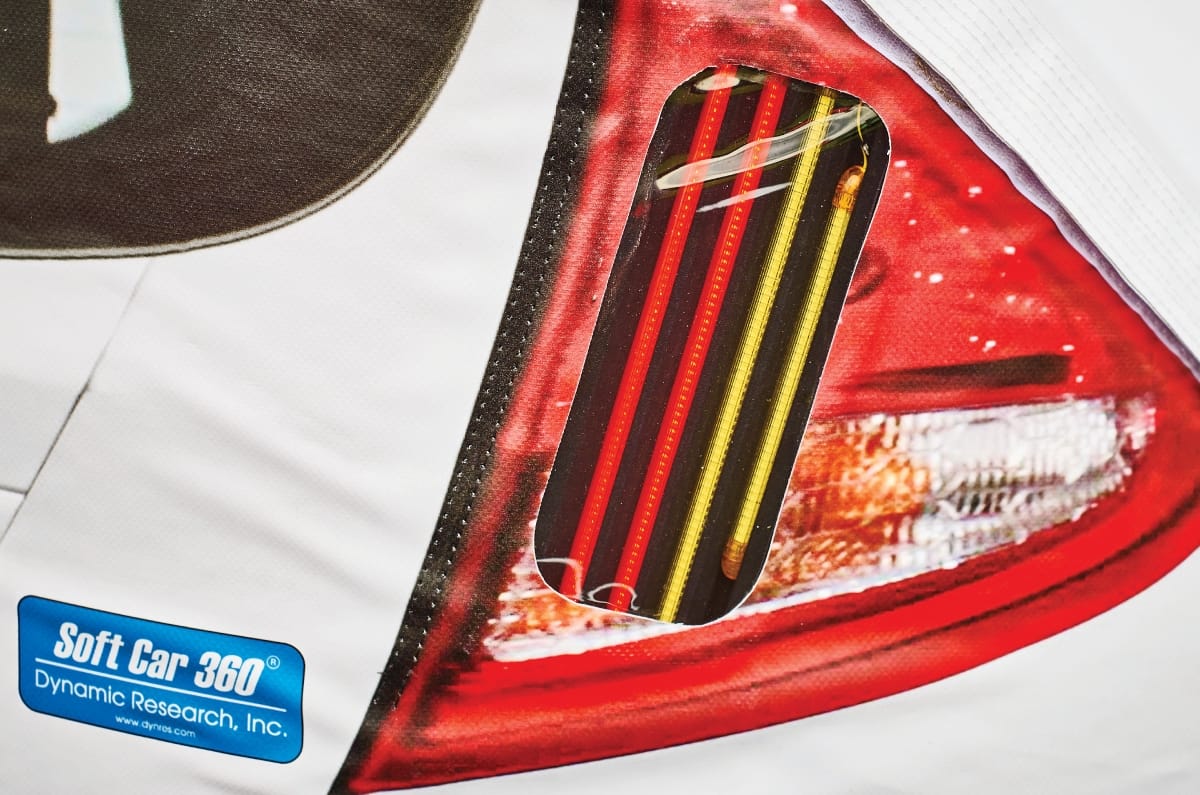
With the increase in demand for testing of camera-based ADAS that relies on visual cues from brake lights and indicators, the latest addition to the Soft Car kit is a rechargeable active tail-light system. The lights have an integrated battery and communication system and can be operated manually with a remote-control transmitter, programmed to work automatically, synchronised to the target’s movements or given customised lighting sequences.
In line with making the main Soft Car target non-damaging to test vehicles, the tail-lights are made using flexible LEDs, a lightweight mounting system and special protective cases for the batteries and electronics.
Batteries last a full day’s testing and can easily be swapped for replacements if necessary during the session. In durability testing, the Soft Car equipped with the new tail-lights was hit repeatedly by a test vehicle at 62mph and, according to the maker, neither the Soft Car, the light system, or the test vehicle sustained any damage.