


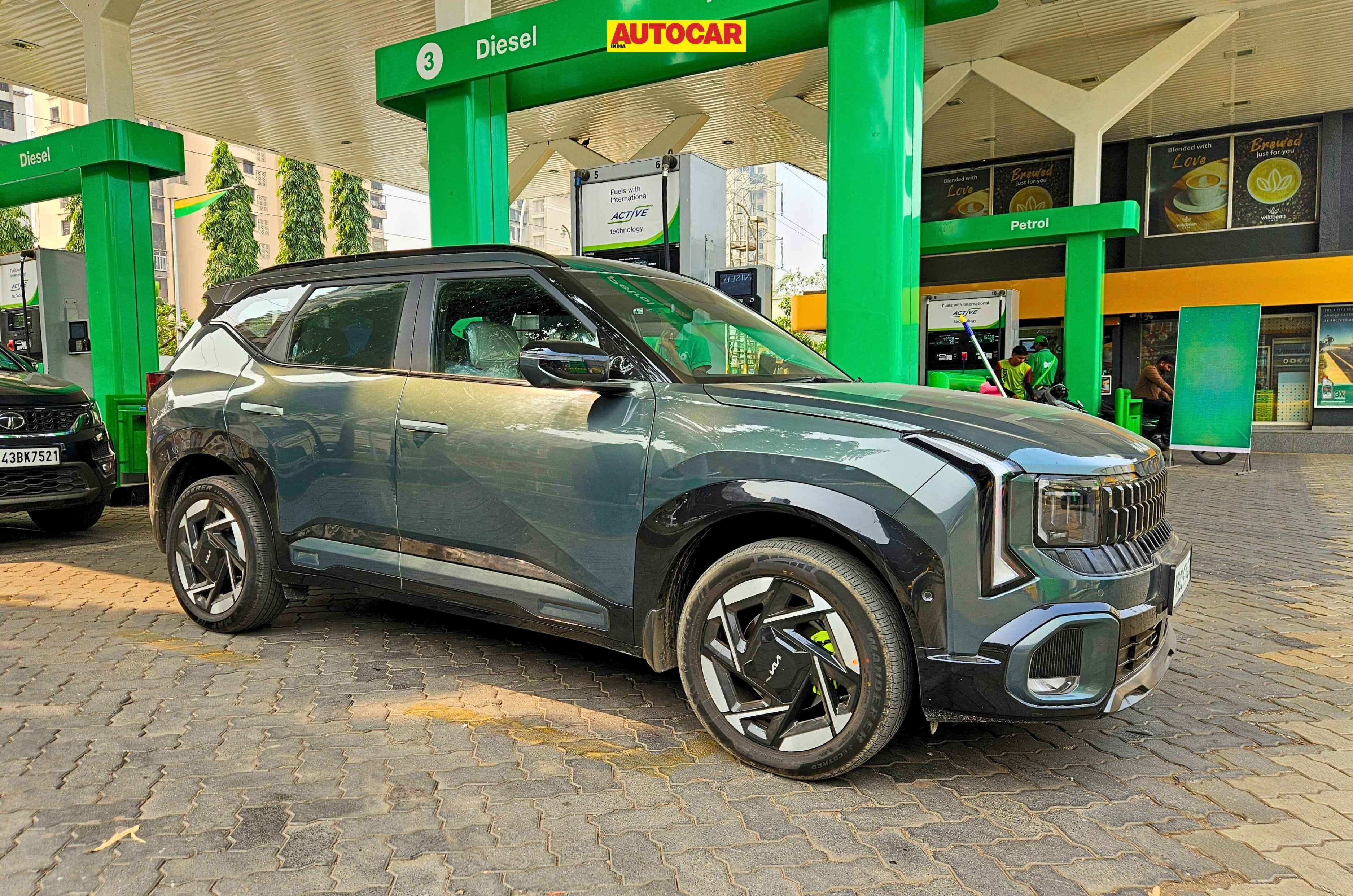
The new-generation Kia Seltos has grown in size, and feels like a clear step-up over the version it replaces. It continues with the same engine options – a 115hp 1.5-litre petrol, a 160hp, 1.5-litre turbo-petrol and a 116hp 1.5-litre diesel, all of which are available with manual and automatic gearbox options.
Our pick out of these is the 1.5 petrol engine with the continuously variable transmission (which Kia calls IVT), for its smoothness, refinement, and well-roundedness. We put this version through our real-world fuel efficiency tests.
-
Gets three drive modes: Eco, Normal and Sport
-
Misses out on auto engine stop-start
Kia Seltos petrol-CVT mileage
The Kia Seltos petrol-IVT comprises a 1.5-litre 4-cylinder petrol engine which produces 115hp/144Nm, and a continuously variable transmission. It gets three drive modes – Eco, Normal and Sport, along with some Traction modes. Automatic engine stop-start isn’t part of the package.
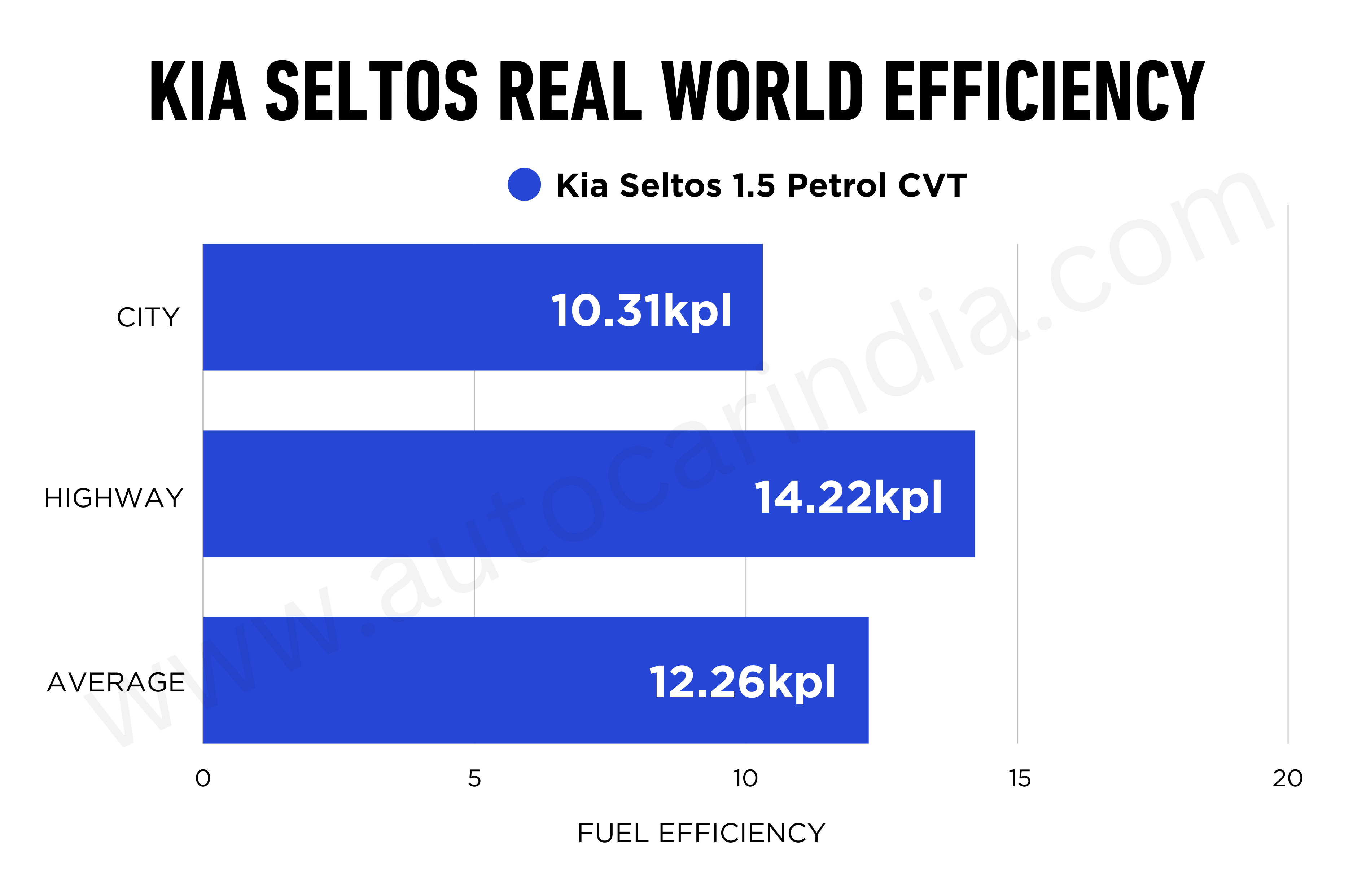
Our real-world fuel efficiency tests were conducted in Eco mode at all times. In the city, the Seltos petrol-IVT delivered 10.31kpl, and on the highway, it returned 14.22kpl, which seems acceptable for this class of vehicle. Incidentally, these figures are similar to the Hyundai Creta 1.5 petrol-IVT’s with which it shares its powertrain and equipment list.
Autocar India’s fuel efficiency testing
Before our real-world fuel efficiency tests, we fill our test cars’ tanks to the brim and maintain tyre pressures based on the manufacturer’s recommendation. These cars are driven in fixed city and highway loops in and around Navi Mumbai, and we maintain certain average speeds. Throughout the tests, there is only one person in each car, running the aircon at 22-degrees in full-auto mode, and other electricals, such as the audio system, indicators and wipers, when required, just like a regular user would. Periodic driver swaps further neutralise variations in driver patterns. At the end of each cycle, we calculate efficiency by filling the tanks to full again.