


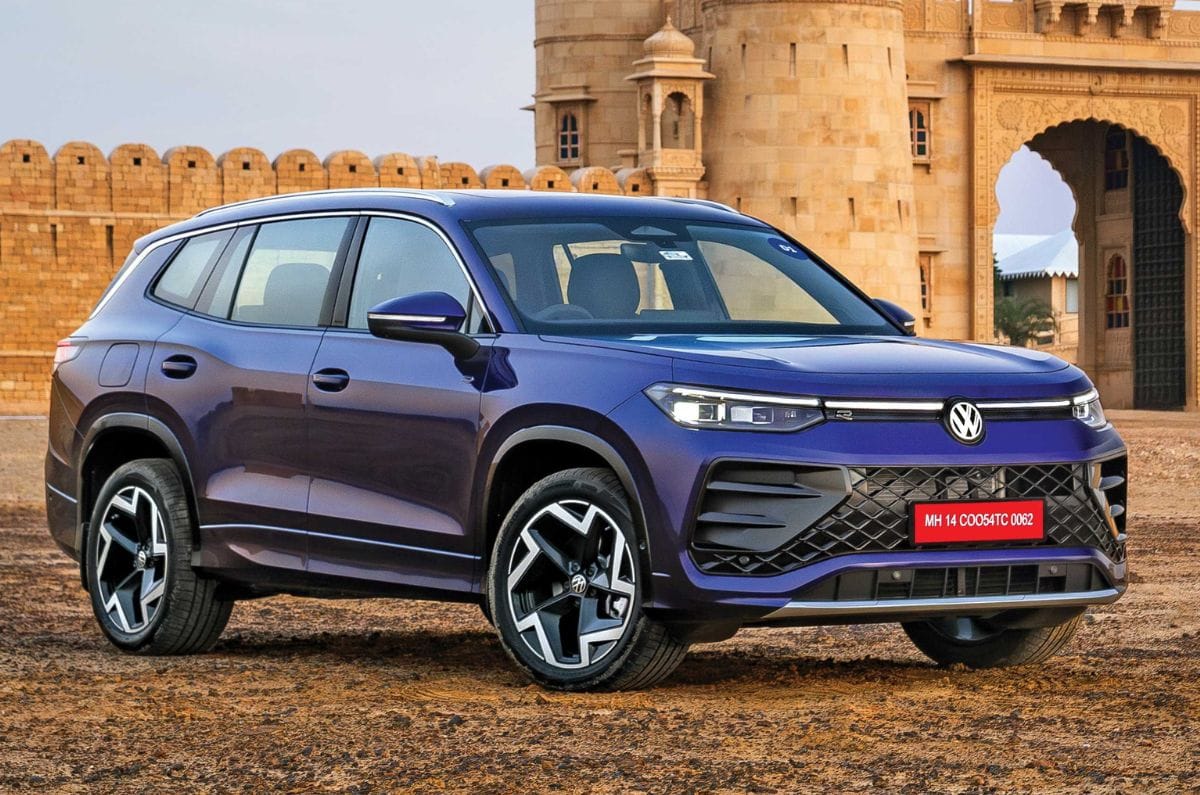
The India-spec Volkswagen Tayron R-Line was recently revealed, which has marked the manufacturer’s comeback in the 7-seater SUV space in India. We got to spend some time with the 3-row SUV recently, where we tested its engine performance, ride and handling, features, and other factors that would help you base your purchase decision. While prices are yet to be revealed, bookings are open. If you are interested in the Tayron, here are three reasons to consider it and two reasons not to.
Premium interior experience
The luxurious interior makes the SUV offer a lot of value
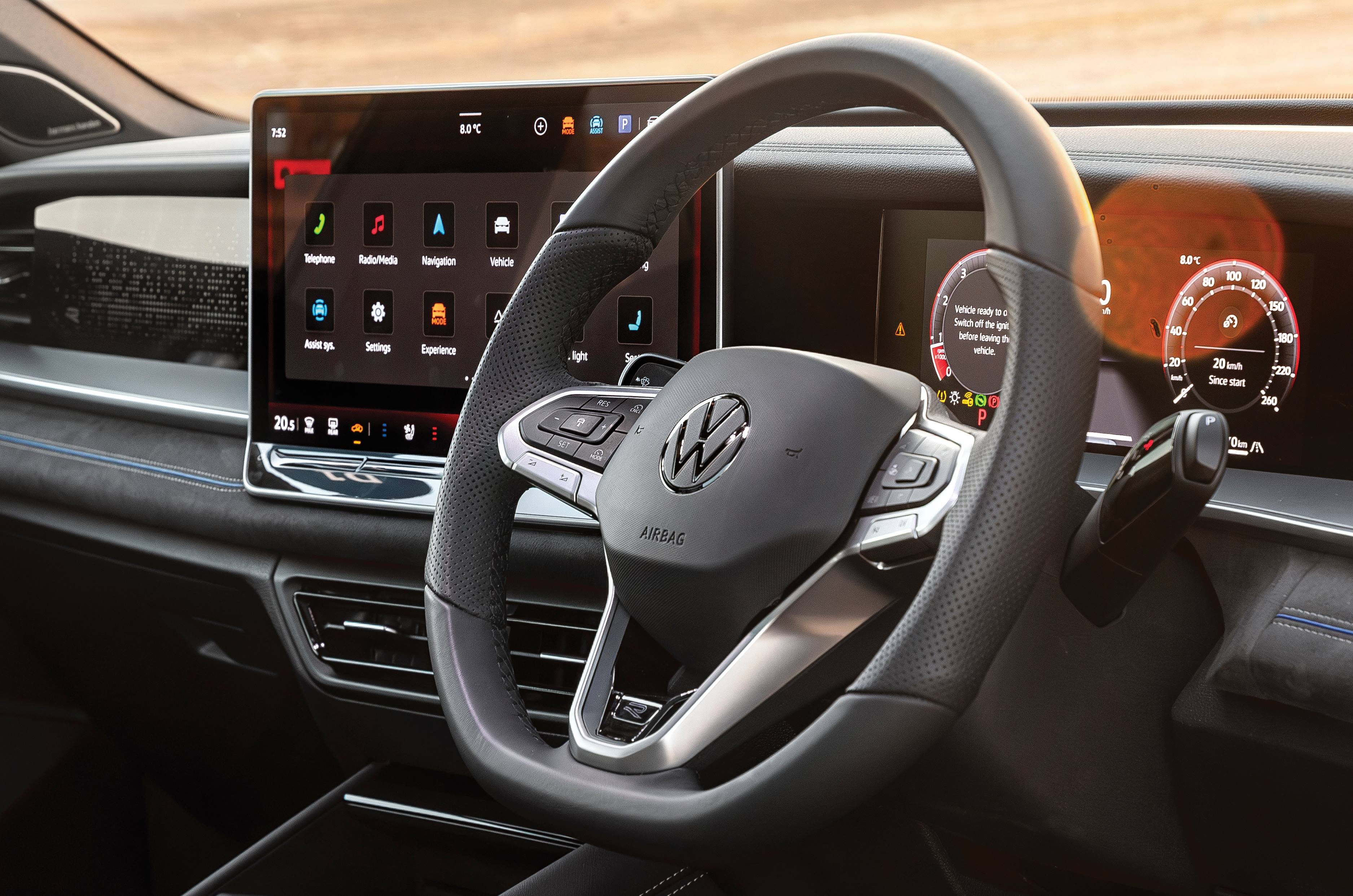
The Volkswagen Tayron offers an opulent cabin experience, which is expected from the German manufacturer. The dashboard looks similar to the Tiguan R-Line with a massive 15-inch touchscreen infotainment, which, despite its size, does not feel in-the-face. At night, the ambient lighting strip on the dashboard looks elegant. A 10.25-inch digital driver’s display and a 3-spoke steering wheel with physical buttons are also on offer. The steering-mounted buttons feel tactile, and the extensive usage of soft-touch materials makes the cabin feel premium. The build quality also feels solid, and the doors close with a proper thud. However, on the lower portions of the dashboard, Volkswagen has used hard plastics, which do not feel high-end.
Packs in all essential new-age features
It gets 3-zone AC, a panoramic sunroof, ADAS, a 360-degree camera, and more
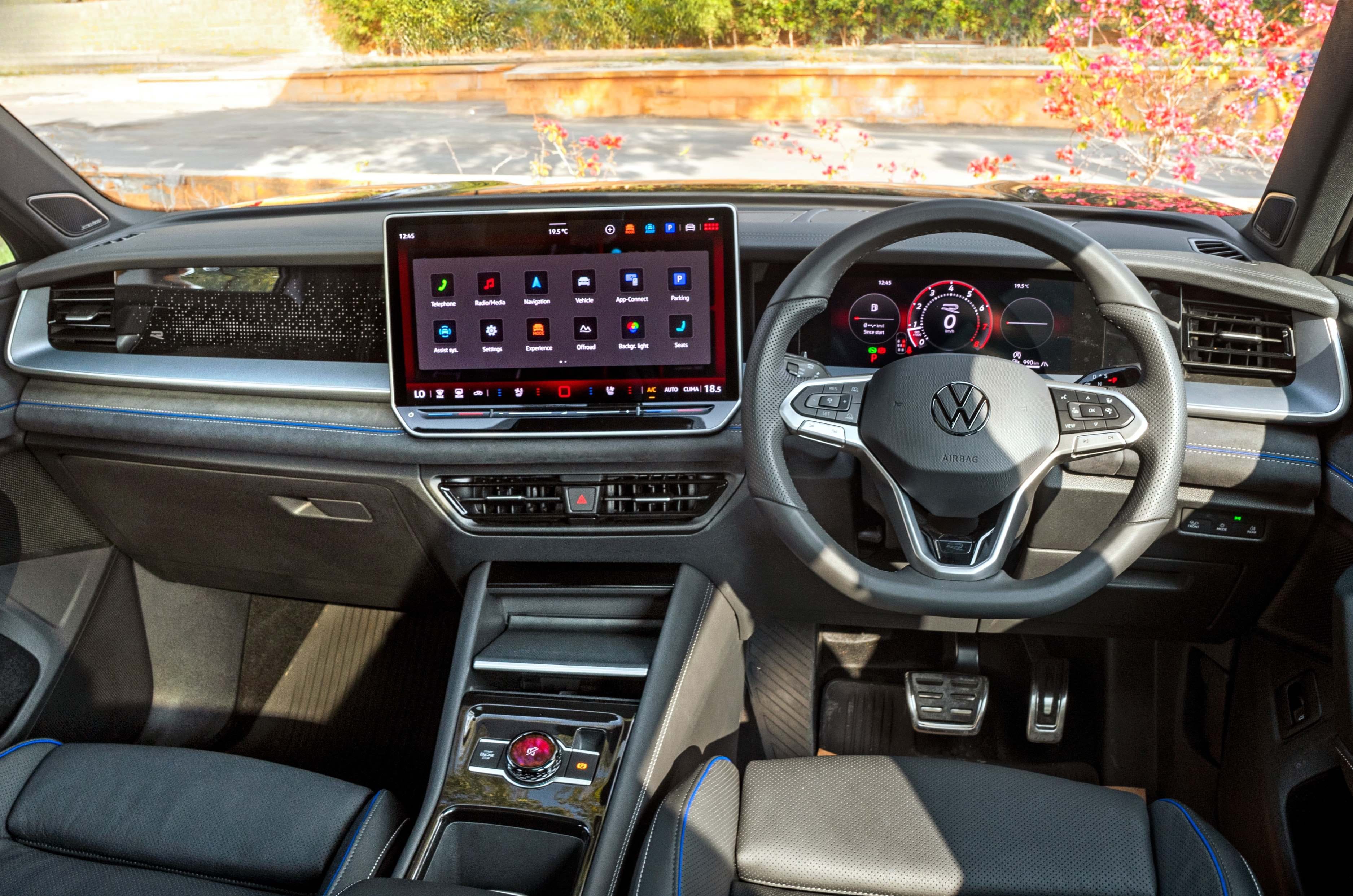
The premiumness of the cabin is further enhanced by modern-day features, which the Tayron gets in plenty. In addition to the digital screens mentioned above, the Tayron features a panoramic sunroof, 3-zone climate control with rear vents, an 11-speaker Harman Kardon sound system, an augmented reality (AR)-based head-up display (HUD), and a powered tailgate with gesture control. It also gets 12-way powered front seats with memory, massage, heating, and ventilation functions. All these amenities make the Tayron feel like a new-age offering.
However, important features like climate control and seat ventilation settings have to be operated via the infotainment system. This means that you will have to take your eyes off the road, which is unsafe. However, one notable thing is that the climate and ventilation settings are always visible on the screen, and while there are two touch-sensitive sliders to control the climate, some tactile buttons could have made it easier and more intuitive to use.
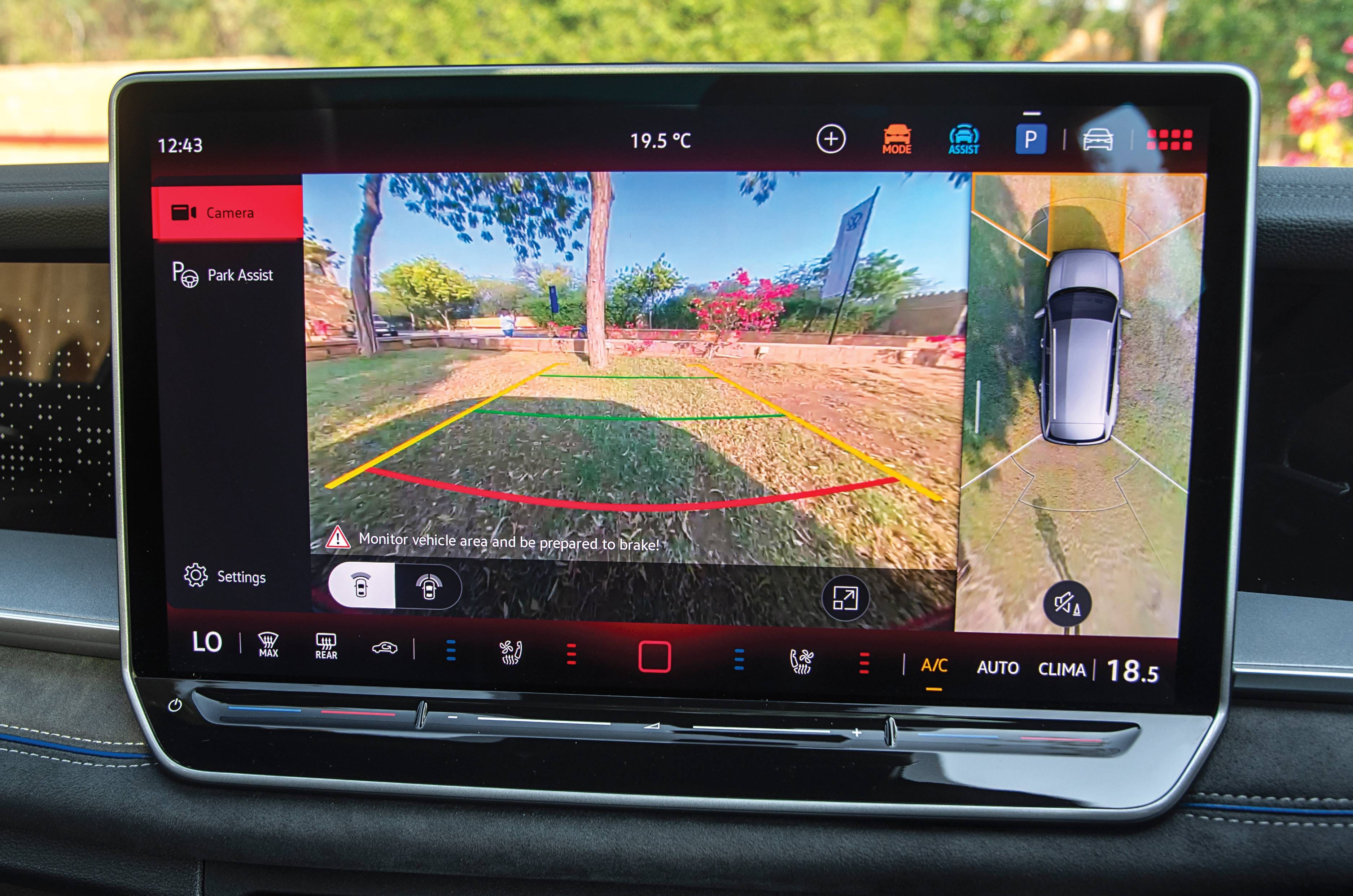
In terms of safety, it is equipped with 9 airbags, a 360-degree camera with a blind spot monitor, a level-2 ADAS, ABS with EBD, electronic stability control, a tyre pressure monitoring system (TPMS), and hill-hold assist. In our time with the Tayron, we found out that the lane-keep assist and adaptive cruise control worked well on the well-marked Jaisalmer roads. One thing that needs improvement, however, is the 360-degree camera feed resolution.
Peppy petrol engine and an easy handling nature
Features Volkswagen’s revered EA888 engine that also powers the Kodiaq
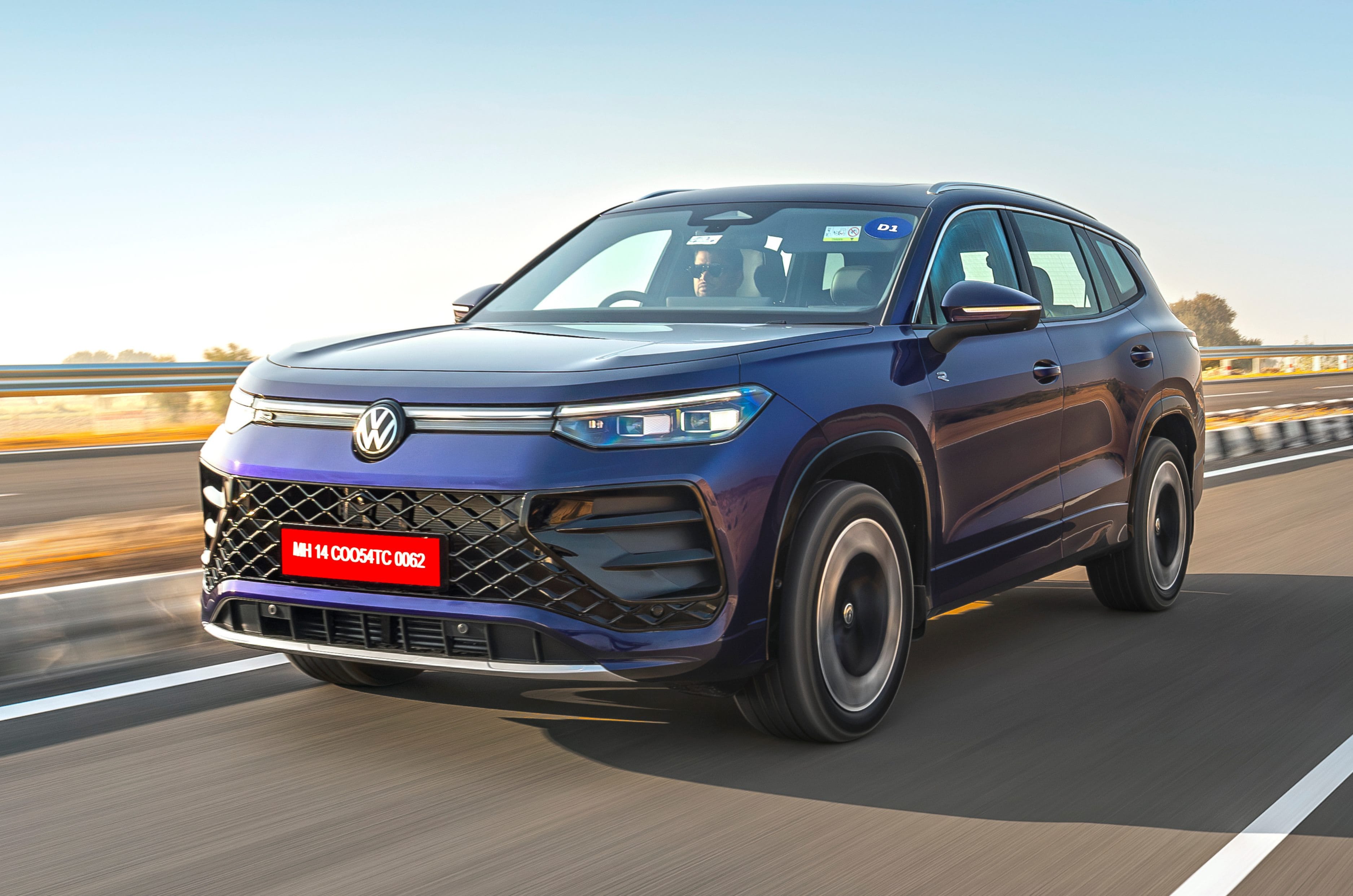
The Tayron R-Line is powered by Volkswagen’s EA888 2-litre turbo-petrol engine that produces 204hp and 320Nm. The engine is mated with a 7-speed DCT that sends power to all four wheels (AWD). The gearbox offers smooth shifts, especially on highways, and also lacks the sluggish low-speed response that is generally associated with DCTs.
We have experienced this engine on the 5-seater Tiguan R-Line and the Skoda Kodiaq, and as seen on these SUVs, the engine is smooth and feels responsive. Moreover, the Tayron has a wide power band but at the same time is quick, as it does 0-100kph in a claimed 7.3 seconds. The engine also has a gravelly note at low speeds, which develops into a throaty sound as the revs increase.
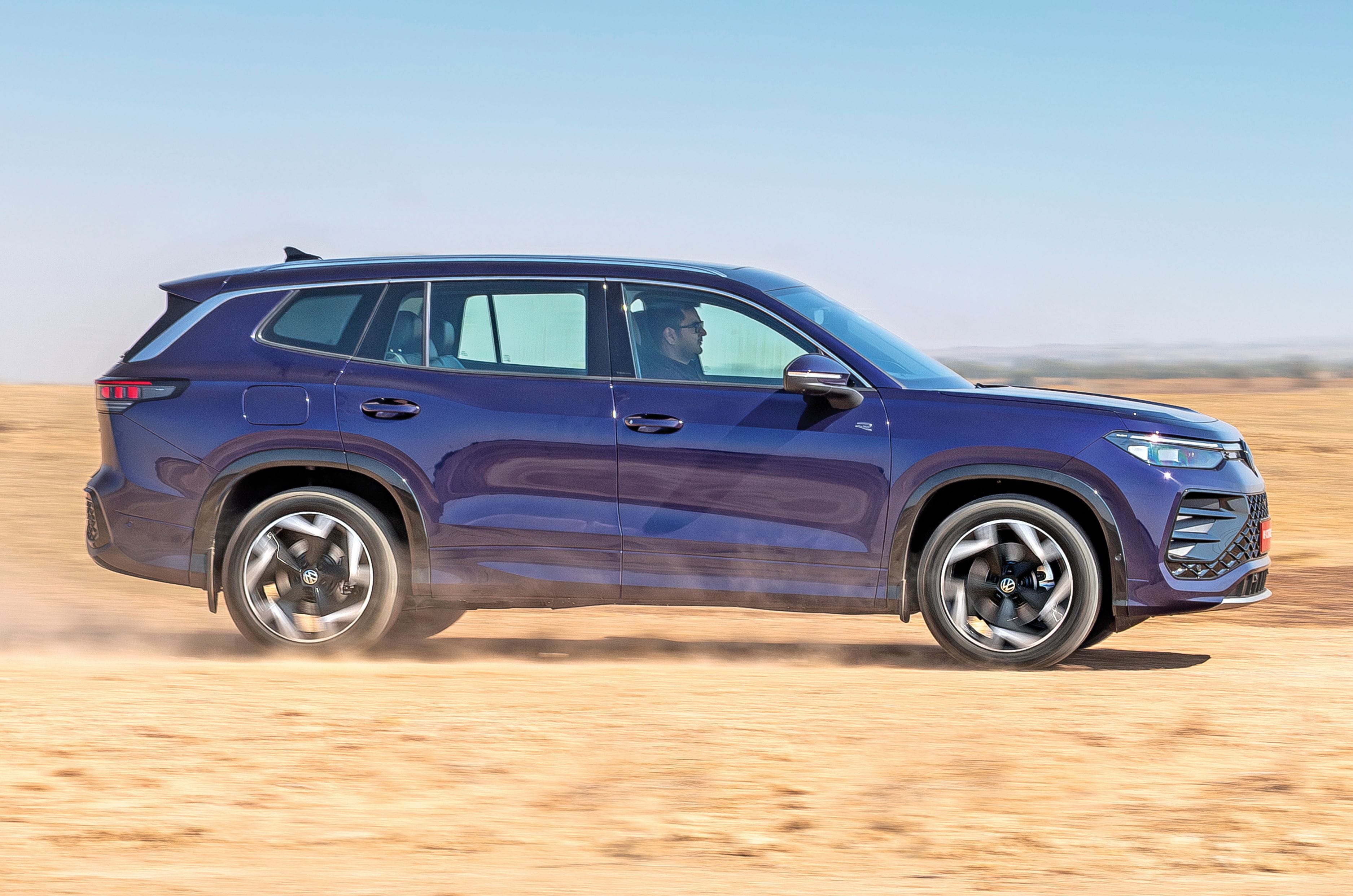
Volkswagen cars are renowned for their handling, and the Tayron is no different. The full-size SUV feels planted and stable, even at triple-digit speeds. Unlike the fully imported Tiguan R-Line, the Tayron lacks Dynamic Chassis Control (DCC), which lets in some vertical movement in the cabin at high speeds, but it won’t affect your confidence. Moreover, the steering feels light at slow city speeds and builds up heft as the speed increases. Volkswagen is also offering two drive modes – Comfort and Sport – that adjust the steering and engine response, AWD behaviour and ESC settings.
Ride quality is comfortable, but on potholes and rumble strips, some firmness does translate into the cabin.
No diesel option
The Volkswagen diesel engine is sorely missed
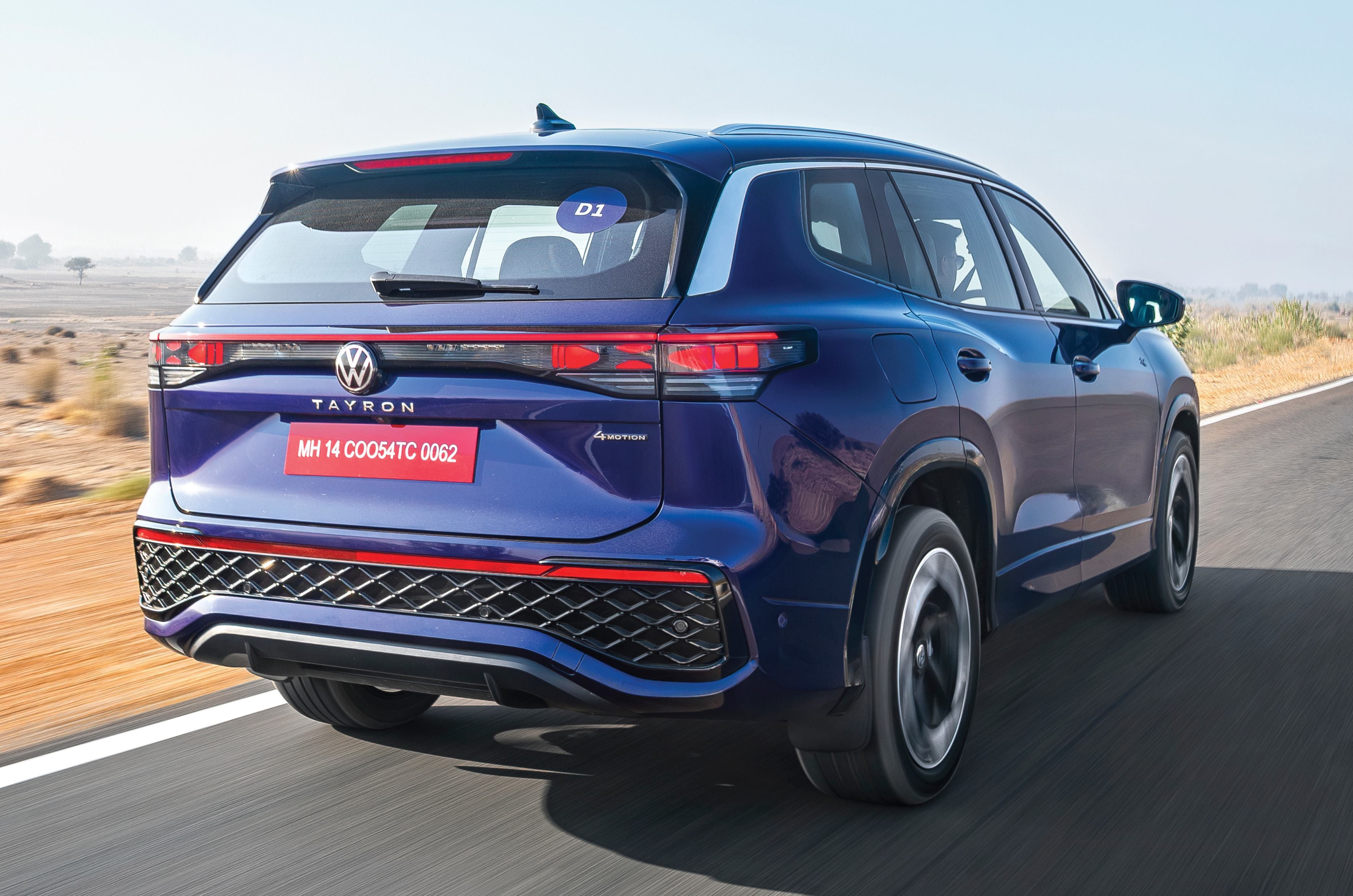
Although the turbo-petrol engine is enough for an enthusiast’s needs, the Tayron misses out on a diesel engine, which was one of the reasons why its Tiguan Allspace predecessor won over the enthusiasts. Internationally, the Tayron is offered with a 2-litre diesel engine that puts out 150hp and 360Nm. If Volkswagen had offered the diesel-powered Tayron in India, it would have served as a viable option for those seeking decent fuel economy while not compromising on performance.
Not an ideal 7-seater offering
The last row is suitable only for short drives
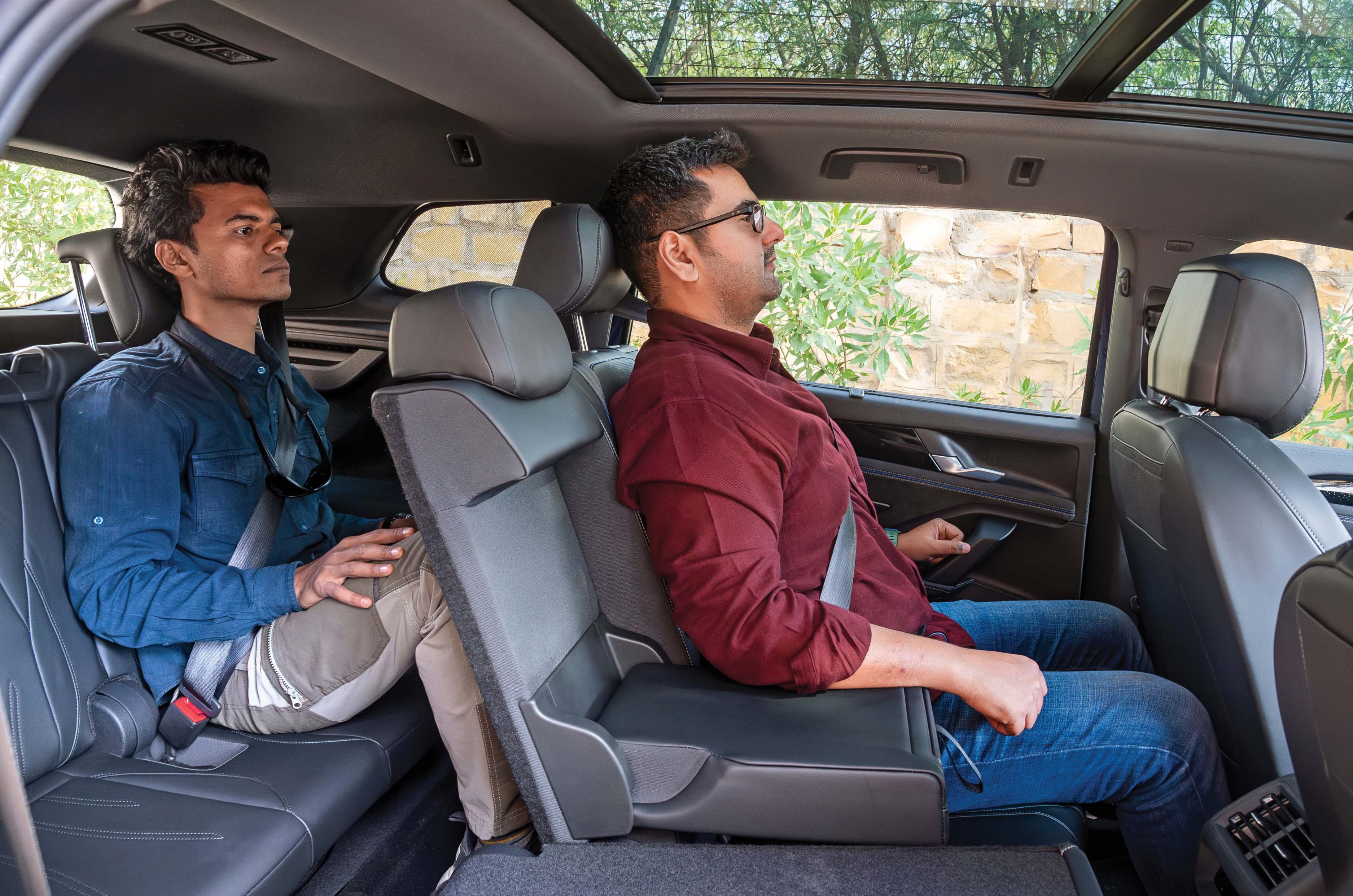
The new Tayron R-Line is the only 7-seater offering from Volkswagen in India. It offers good space for the second-row passengers with ample knee room and plenty of area under the front seats to tuck your feet. However, the middle-row bench can be a 60:40 split, and only the larger portion of the seat can be slid forward to access the last row. As the seat does not tumble, it constricts space, making it cumbersome to climb into the third row of seats.
But problems do not end here, as the knee room and headroom are tight, especially for taller passengers. This makes the last row good for short drives or children and pets.
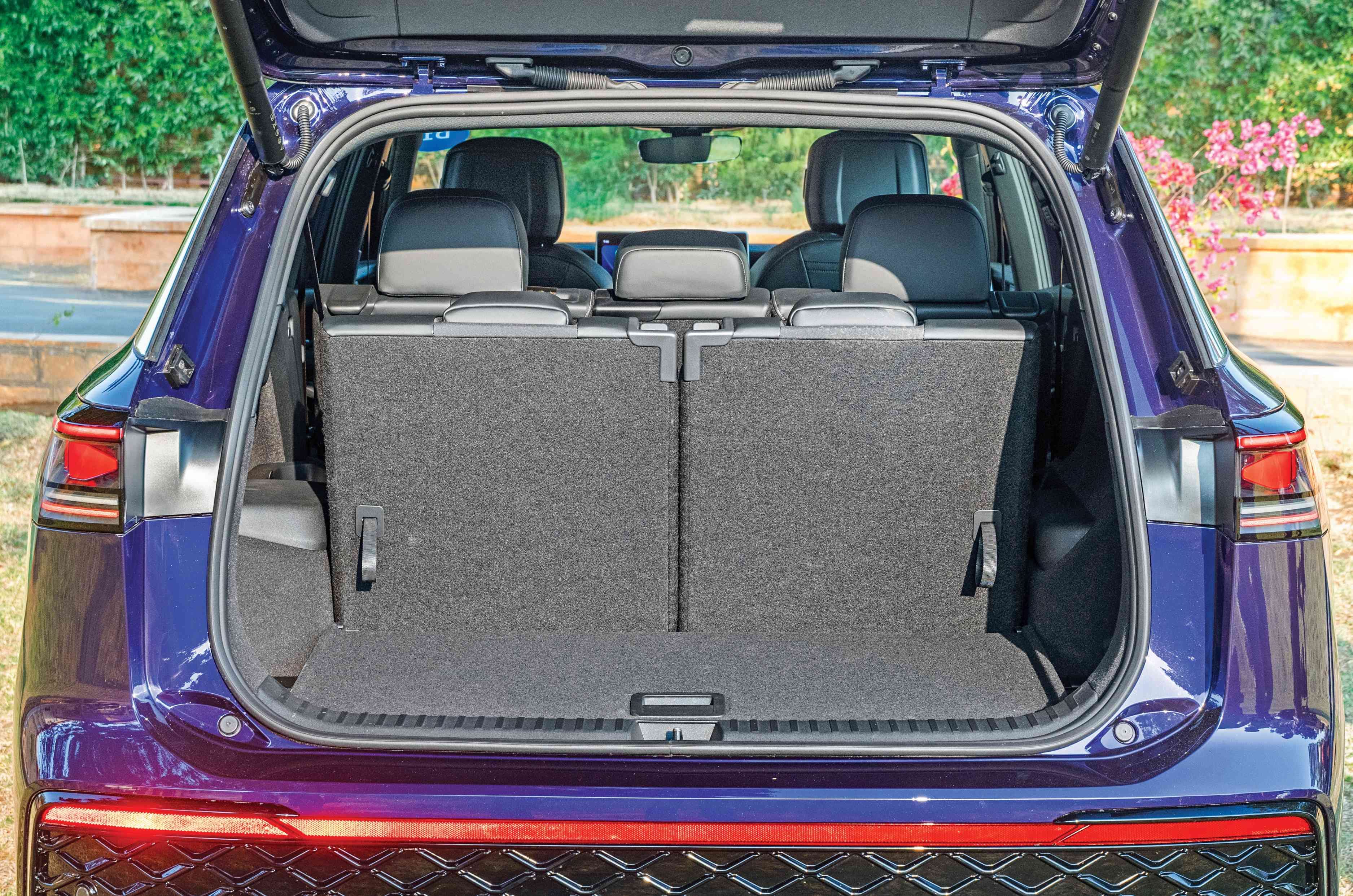
However, the boot space is not compromised, as with all three rows up, the Tayron R-Line has enough space to fit in multiple backpacks. The last row can be folded to free up 850 litres of space, and if the second row is also folded, a cargo van-rivalling 1,900 litres of space can be freed up.