


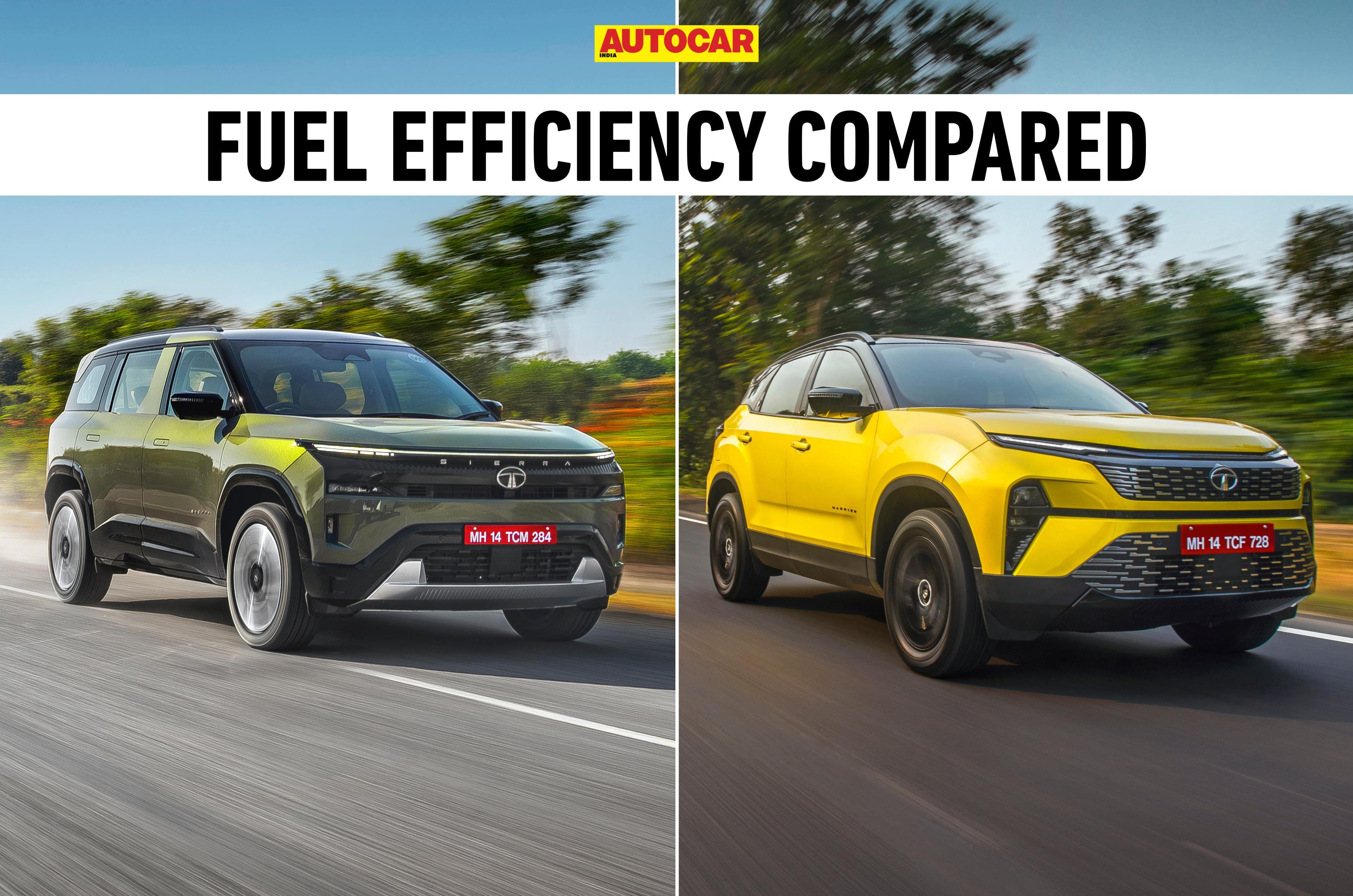
The Sierra is the most recent Tata Motors SUV and is positioned below the Harrier in the manufacturer’s line-up. Notably, both offer a diesel engine, which is generally opted for by those who prioritise fuel efficiency. We compare diesel-automatic versions of the Sierra and Harrier to find out which one delivers more mileage.
Tata Sierra vs Harrier diesel AT: Specifications and price
Harrier’s bigger engine offers more power and torque
The Tata Harrier offers a 2-litre diesel engine, while the Sierra is available with a smaller 1.5-litre unit, which also does duty on the Curvv and Nexon SUVs. The Harrier’s diesel engine puts out 52hp and 70Nm more than the Sierra’s. Both get a 6-speed torque-converter automatic transmission.
Though the official kerb weight figures of both SUVs are unknown, the Harrier, being the bigger of the two, is likely to be heavier as well. The fuel tank capacity is 50 litres for both. In terms of pricing, the Sierra’s higher-spec Adventure+, Accomplished and Accomplished+ trims are in the same territory as the Harrier’s lower-spec Pure X, Adventure X and Adventure X+ trims.
Tata Sierra vs Harrier diesel AT: Real-world fuel efficiency
Sierra has the better city fuel efficiency, but highway mileage is similar
While the ARAI-rated fuel-efficiency figures of both diesel-powered SUVs have not been revealed, in our real-world tests, the Sierra offers about 2kpl better mileage than the Harrier in city conditions. This could be because of its lighter weight and smaller diesel engine. But on the highway, the difference in fuel efficiency is minimal.
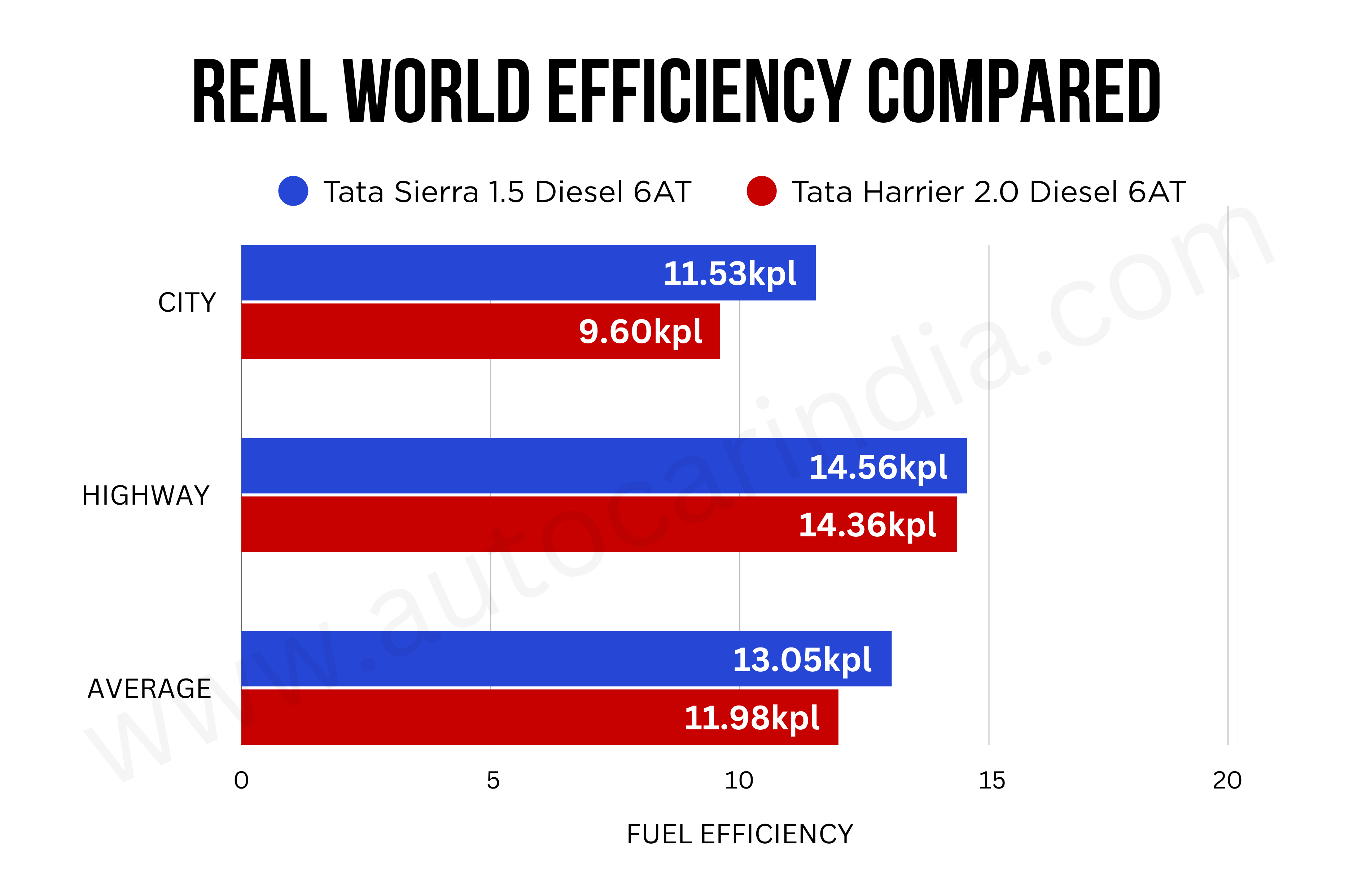
As mentioned earlier, both SUVs get the same 50-litre fuel tank capacity, but owing to its better fuel efficiency, the Sierra goes about 52km further than the Harrier on a full tank of diesel.
Autocar India’s fuel efficiency testing
Before our real-world fuel efficiency tests, we fill our test cars’ tanks to the brim and maintain tyre pressures based on the manufacturer’s recommendations. These cars are driven in fixed city and highway loops in and around Navi Mumbai, and we maintain certain average speeds. Throughout the tests, there is only one person in each car, running the air conditioner and other electricals, such as the audio system, indicators and wipers, when required, just like a regular user would. Periodic driver swaps further neutralise variations in driver patterns. At the end of each cycle, we calculate efficiency by filling the tanks to full again.
Prices are ex-showroom, India.