


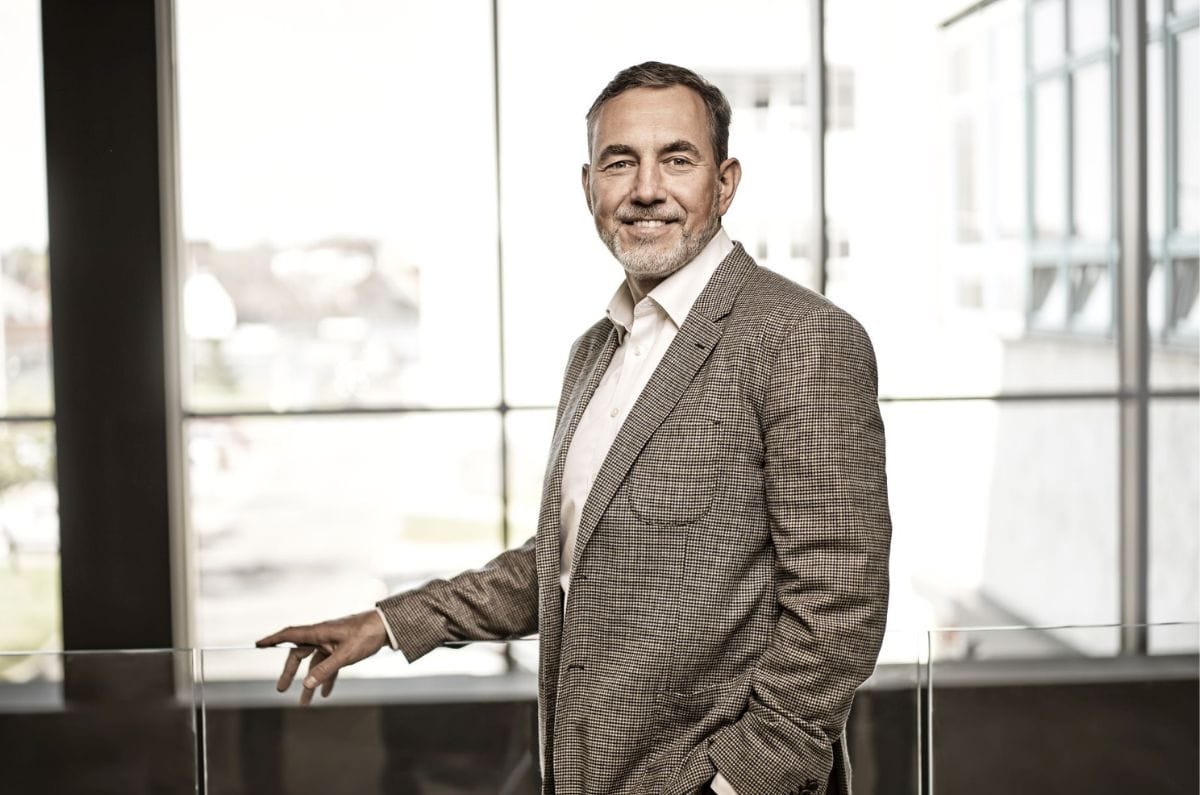
Skoda India has recorded its best year yet in 2025 with 107 percent growth, and it is carrying this momentum into 2026 with the launch of the upgraded Kushaq. We catch up with Martin Jahn, Member of the Board of Management for Sales and Marketing at Skoda Auto, to discuss how the company is navigating India’s unique challenges. He addresses the crucial balance of maintaining Skoda’s signature build quality while managing costs in a market that remains tough on profitability.
Let’s start with a quick recap of 2025 and the importance of the Indian market.
2025 was an extremely successful year for Skoda. We again sold about 1 million cars. We became number three in Europe, which is a big milestone for us. India is now number four on our list of top markets – the most important one outside of Europe. We are very happy about the growth here, as we have more than doubled ourselves. We are number seven in India and among the leading European brands here.
You’ve been refreshing the 2.0 cars, but there don’t seem to be more models on the horizon, and Skoda offers just petrol engines right now. With competition growing, especially in electrics and hybrids, and the Cafe 3 norms coming up, what is the strategy?
As India is so important for us, we are reviewing all options, all powertrains, and everything that would please the customers. We will also be bringing product enhancements for the current cars.
So the Kushaq will get even more enhancements?
Kushaq, Slavia and, of course, Kylaq as well. These are our three very successful babies, which we will take care of in India. We know we have to do electric, so we are now thinking about what would be the best option for an electric car in India. Of course, we are also looking at imports. The RS models are very successful. The Octavia RS was a big hit when we introduced it, so we will bring some cherry on the cake from Europe. At the moment, we are basically enjoying the success with the models we have, but we are very actively looking at all the possibilities – enhancing the current models and bringing new cars, including an electric model.
But what about other powertrains, like hybrids? Is that a possibility? And clearly, you would need a new platform, as the current 2.0 cars can’t support a hybrid powertrain.
As I said, we are reviewing all the options, looking at the customer preferences and what we can bring based on our costs. There is nothing I can say at the moment, but stay tuned, and news will be coming.
Could CNG be a possibility, as there’s a huge penetration of CNG in the Indian market? Introducing CNG on the 2.0 cars seems doable and logical.
It is very logical, as you said. And yes, we are also looking at CNG.
A future-ready platform beyond 2.0 will require significant investment that could run into a billion euros. How do you plan to fund this? Given the global volatility and the pressures faced by the group in key regions, where does India stand in your investment priorities?
India is a very important country for us. It’s one of the biggest countries with good opportunities for growth and a good outlook, and therefore, it plays a very important role in the considerations. But the money is scarce. There are a lot of markets, so it’s not an easy decision. But India is definitely a priority for Skoda, and we are doing everything we can to grow our business here, not only in the medium term but also in the long term.
So would you be open to a partner to share the costs because, as you said, money is scarce?
We are looking at every option. I cannot say more at the moment, but every setup has pros and cons – doing it alone, doing it as a partner, doing it with a joint venture – and we have to find the best model for us. We are open to everything that makes sense for us as well as for our customers.
I reckon that your existing products will have a very extended life cycle, and the A0 27 could go well beyond 2030 with more and more model enhancements. Is it fair to assume that there won’t be a complete replacement for them immediately?
It’s a possibility. As I said, we are reviewing every option. But MQB is a very solid platform. It proved itself in India. It’s working here, and we will use it as much and as long as we can, as long as it makes sense.
Circling back to the cost part, which really is a big challenge here as India is not a very profitable market, is being more cost-efficient the main focus area?
Cost is a big issue for us, and price pressure is very strong. As you said, the Indian market is not the most profitable one because the price level is relatively low. So, we are looking at savings everywhere: in our factory costs, in personnel costs and in material costs. We have to save money everywhere where it’s possible. And we are also looking at sourcing, whether it’s China, whether it’s South America, or whether it’s localising more here. We just have to look at every process, every component and see where we can save, but at the same time, of course, keep the good quality for our customers.