



GOOD FOR: Refined engines, easy to drive
LOOK OUT FOR: DCT overheating, infotainment issues
Ever since its launch in 2019, the Hyundai Venue has been a strong seller in the ultra-competitive compact SUV segment, owing to its smooth powertrains, appealing design and equipment levels.
With the 2022 facelift, the Venue received a major styling update, which brought it in line with newer Hyundai models. It also received a new interior upholstery, some additional features and a reclining rear seat, which improved the backseat comfort. Like before, the updated Venue has compact dimensions and light controls, which make it easy to drive in the city. Here’s all that you need to consider before buying one.
Hyundai Venue powertrain and mileage
Petrol, turbo-petrol, and diesel engines; up to 24.2kpl claimed mileage
The facelifted Venue continued to be powered by the same 83hp, 1.2-litre naturally aspirated petrol, 120hp, 1.0-litre turbo petrol, and 100hp, 1.5-litre diesel engine options as was the case with its predecessor. The 1.2 petrol comes with a 5-speed manual gearbox only, while the diesel can only be had with a 6-speed manual. The turbo-petrol, meanwhile, can be had with either a 6-speed iMT (clutchless manual) or a 7-speed dual-clutch automatic gearbox.
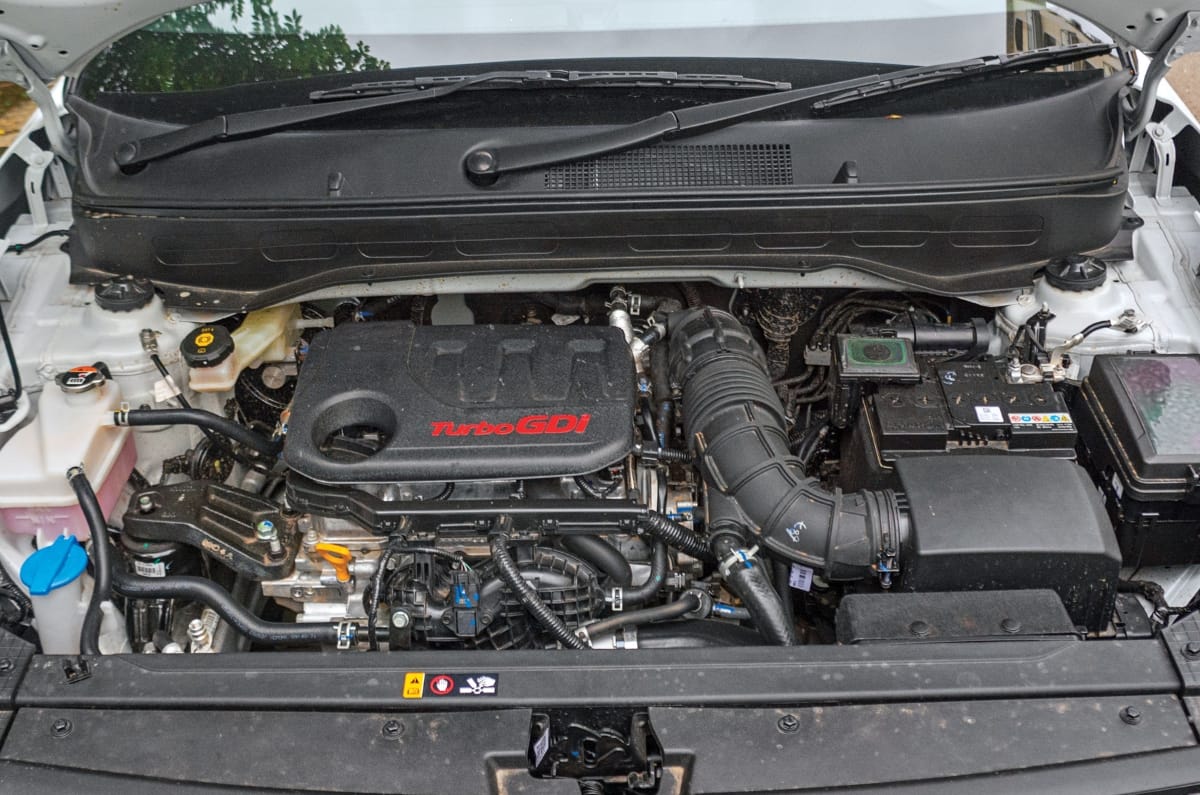
The Hyundai Venue’s ARAI-certified fuel efficiency figures are as follows: 17.52kpl for the 1.2-litre petrol manual, 18.27kpl for the turbo-petrol iMT, 18.15kpl for the turbo-petrol automatic and an impressive 24.2kpl for the diesel manual variant.
Choosing the right one for you can be difficult given the various engine-gearbox configurations it can be had in. If you do a lot of highway running and road trips, it’s best to go for the diesel owing to its torquey nature and superior fuel efficiency. But if you’re primarily going to drive in the city, one of the petrols would make more sense. The 1.2 petrol has better fuel economy, but it doesn’t have the punch of the 1.0 turbo-petrol. Also, the 1.0 Turbo is the only one that can be had with an automatic gearbox, which makes it more convenient in traffic. As for the iMT, only go for it if you want to have manual control and the marginally better fuel efficiency than the DCT.
Hyundai Venue variants and features
8-inch touchscreen, sunroof, powered driver’s seat, and more
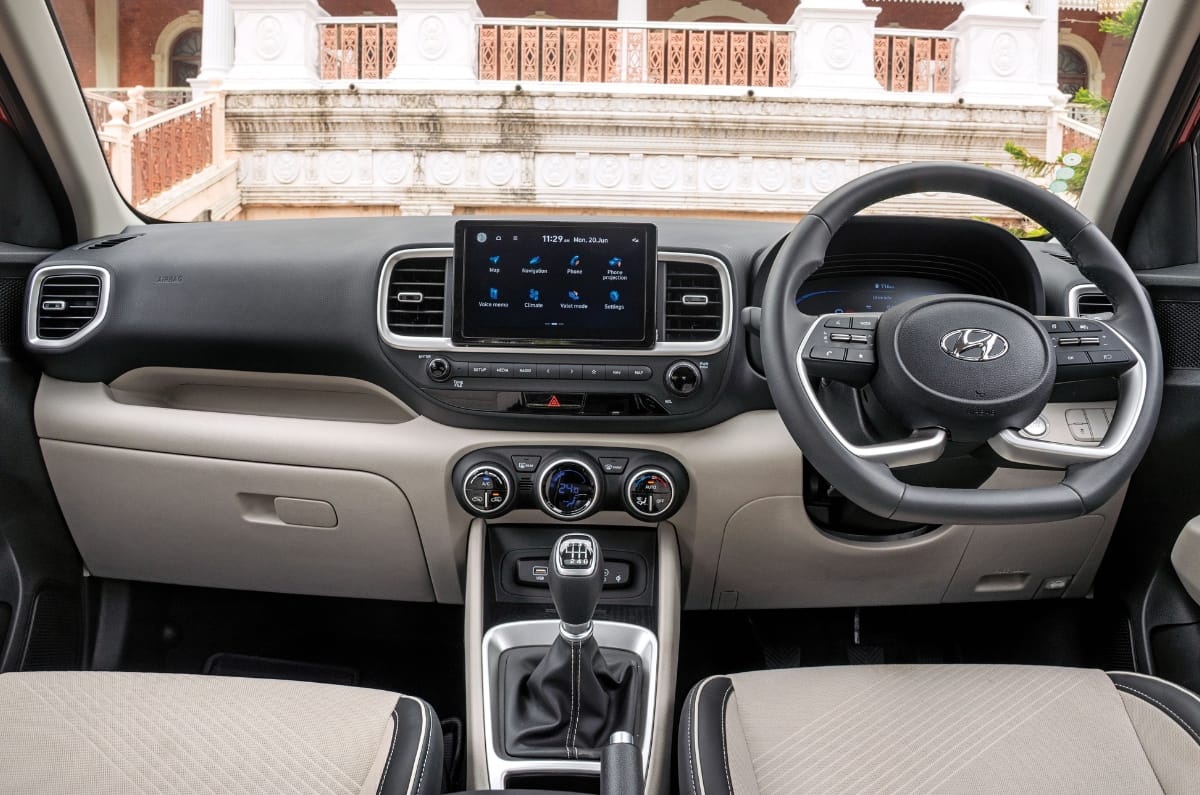
As for trim levels, the Venue facelift was launched in E, S, S+, S (O), SX, and SX (O) guises. In terms of features, the top-spec SX (O) is equipped with an 8-inch touchscreen with wireless smartphone connectivity, connected car tech, a sunroof, auto climate control, four-way electrically adjustable driver’s seat, a wireless phone charger, an air purifier, paddle shifters (on the auto only), ambient lighting, LED headlamps, and more. Safety kit includes 6 airbags, a rear parking camera, TPMS, ESP, hill-hold assist, and more. The Venue comes decently equipped in all trims, but it’s advisable to choose one of the top three trims.
Venue warranty and aftersales
The Venue comes with Hyundai’s 3-year/1,00,000km standard warranty, and buyers even had the option of an extended package on offer. So, it’s highly likely that the example you’re looking at is still covered under warranty. What should also give you more peace of mind is Hyundai’s widespread service network and the fact that spare parts are readily available throughout the country.
What to look out for in a used Hyundai Venue
DCT overheating
If you’re looking to buy the petrol-DCT, take a test drive and notice if the car rolls off the line smoothly and that the gearbox shifts seamlessly, as these are signs of a healthy transmission. There have been reports of some owners facing an overheating issue in bumper-to-bumper traffic with the DCT gearbox, which requires you to pull over and stop till the gearbox cools down. This isn’t a big issue but quite the inconvenience. The general best practice is to shift to neutral when the car is stationary for a while.
Infotainment issues
Check that the infotainment touchscreen functions smoothly, pairs up with your phone easily, and the connected car tech works. Owners have faced issues like the screen freezing and the phone randomly disconnecting. Also make sure that the system’s software is up to date.
Fuel pump failure
Few owners have faced issues with the fuel pump of the turbo-petrol, so check that the car starts without any hesitation, as this is a potential sign of a fuel pump issue. Being a direct-injection engine, it needs good-quality fuel, so it could be bad fuel that’s causing problems.
Consumables and bodywork rust or damage
It’s always a good idea to check the condition of consumables like the brake pads, tyres and clutch plate, as it could save you a good amount. It’s also worth examining all body panels, lights, and even the underside of the SUV for rust and damage.
Second hand Hyundai Venue price and resale value
Rs 7 lakh-10 lakh

Being a Hyundai, the Venue’s depreciation isn’t high. Depending on the engine-gearbox and variant, paying anywhere between Rs 7 lakh and 10 lakh in the used market represents decent value.
|
Hyundai Venue fact file |
|
| Years produced | 2022-2025 |
| Price when new (Rs, lakh) | 7.53-12.57 |
| Engine | 4 cyls, 1197cc, petrol / 3 cyls, 998cc, turbo-petrol / 4 cyls, 1493cc, diesel |
| Power (hp) | 83 / 120 / 100 |
| Torque (Nm) | 114 / 172 / 240 |
| Ground clearance (mm) | 195 |
| Boot space (litres) | 350 |
All prices are ex-showroom, India.