


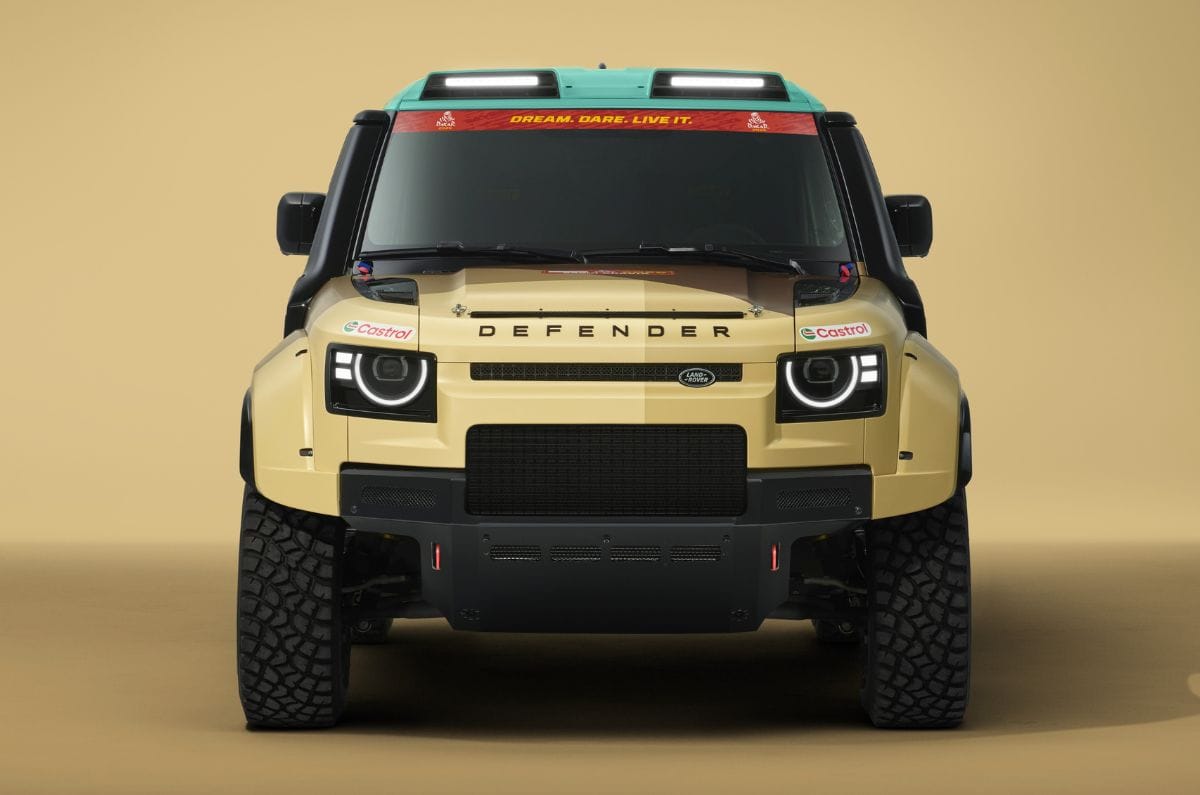
Involving nearly 5,000km of competitive racing over a span of two weeks, the World Rally-Raid Championship (W2RC) will begin in January 2026. Making its debut at this historically challenging rally under the ‘Stock’ category will be the Land Rover Defender Dakar D7X-R. Let us dive a little deeper and see what the Defender Dakar D7X-R is all about.
- Dakar D7X-R shares its platform and powertrain with the Defender Octa
- Sports a desert-inspired exterior livery and race-ready interior
- Special features include a roll cage, a 550-litre fuel tank and 35-inch tyres
Land Rover Defender Dakar D7X-R: Rally-specific features
Wider track and higher ground clearance are backed by a beefed-up suspension.
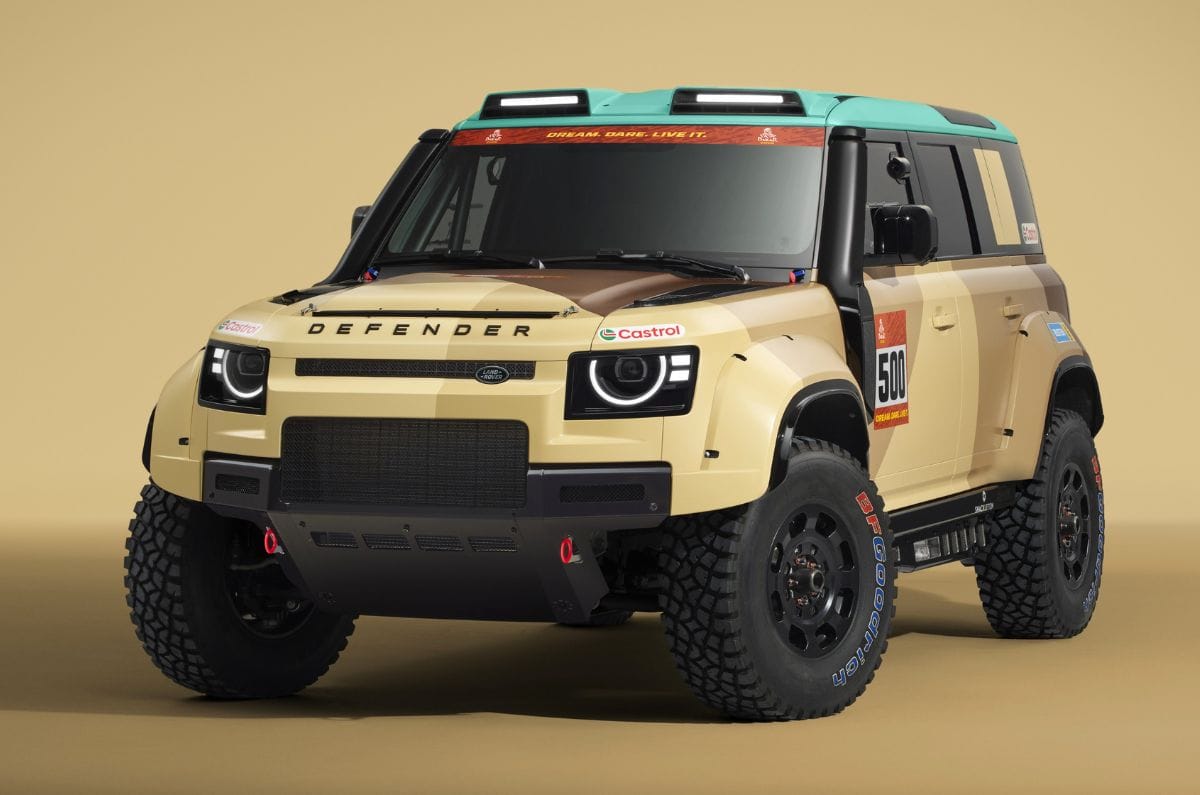
The Defender Dakar D7X-R is based on the same rugged ladder-body platform as the Defender Octa. The latter uses Land Rover’s D7X architecture, with the ‘R’ suffix likely standing for Rally. Where the India-spec Defender Octa has 20-inch wheels with BFGoodrich Trail-Terrain tyres, this Dakar Rally model gets massive 35-inch tyres designed to withstand the desert environment.
There has been an overall increase in ride height, helped partially by those big tyres, which should make clearing obstacles easier. Land Rover has also widened the track by 60mm over the Octa, likely a result of the beefy off-road tyres and suspension. The Defender Dakar D7X-R also features additional underbody protection, a sturdy front skid plate, as well as heavy-duty shock absorbers and dampers co-developed with Bilstein.
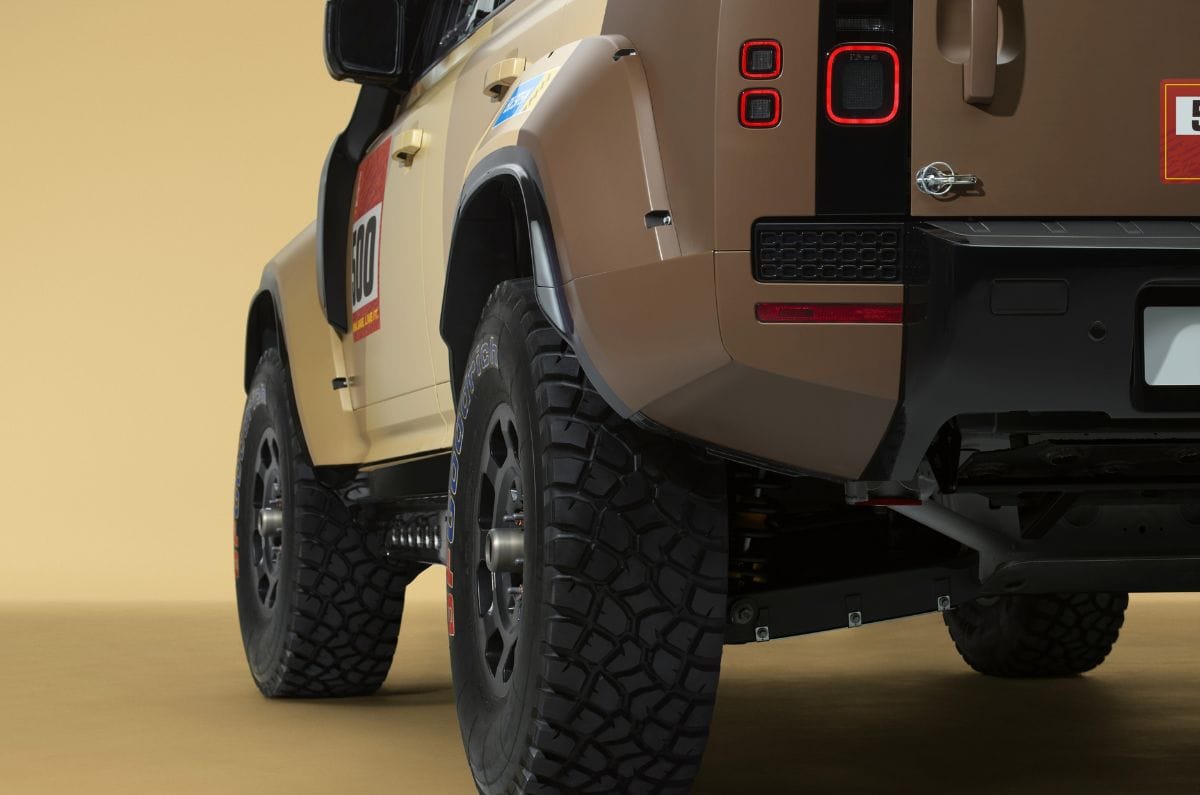
The bespoke suspension of the Defender Dakar D7X-R is designed to handle the massive 550-litre fuel tank, located towards the rear of the 4×4. It should also handle high jumps and heavy landings that are commonplace in these rallies, which also explains the inclusion of the so-called ‘Flight Mode’. Land Rover claims that this electronic feature will protect the engine and drivetrain during hard touchdowns by adjusting torque to the wheels. Finally, the race-spec roll cage should protect the crew if things go awry.
Land Rover Defender Dakar D7X-R: Engine and transmission
Rally-specific features include a particle filter, new brakes and a single, large radiator.
Land Rover has not yet disclosed performance figures for the Defender Dakar D7X-R. But the automaker has confirmed that the Octa-derived 4.4-litre twin-turbo V8 engine will run on sustainable fuel and that the gearbox will be an 8-speed torque-converter automatic. This powerplant puts out 635hp and up to 800Nm of torque in the Octa. However, FIA’s ‘Stock’ category requirements mean that Land Rover will reduce its output with the use of an air intake restrictor.
To prevent excessive heat damage to the internal components, the Defender Dakar D7X-R features an upgraded cooling system over the Octa. While the latter has three radiators, the Dakar D7X-R uses a single large unit. To optimise cooling even at low speeds, this single radiator is assisted by four 12-volt fans. There is also a particle filter in place to reduce any chances of sand entering the engine’s air intakes.
As for the 8-speed automatic gearbox, it has essentially been carried over from the Defender Octa with minor rally-specific tweaks. The torque converter’s final drive ratio has been lowered to enhance torque at low speeds, crucial when traversing dunes and on steep inclines. While the Octa has a claimed 0-100kph time of 4 seconds, its rally-ready counterpart will be slower due to its extra weight and lower engine output. The Defender Dakar D7X-R also has a rally-spec braking system comprising 6-piston front and 4-piston rear brake calipers.
Land Rover Defender Dakar D7X-R: Design and interior
Interior gets a roll cage, custom seats with racing harnesses, and water storage.
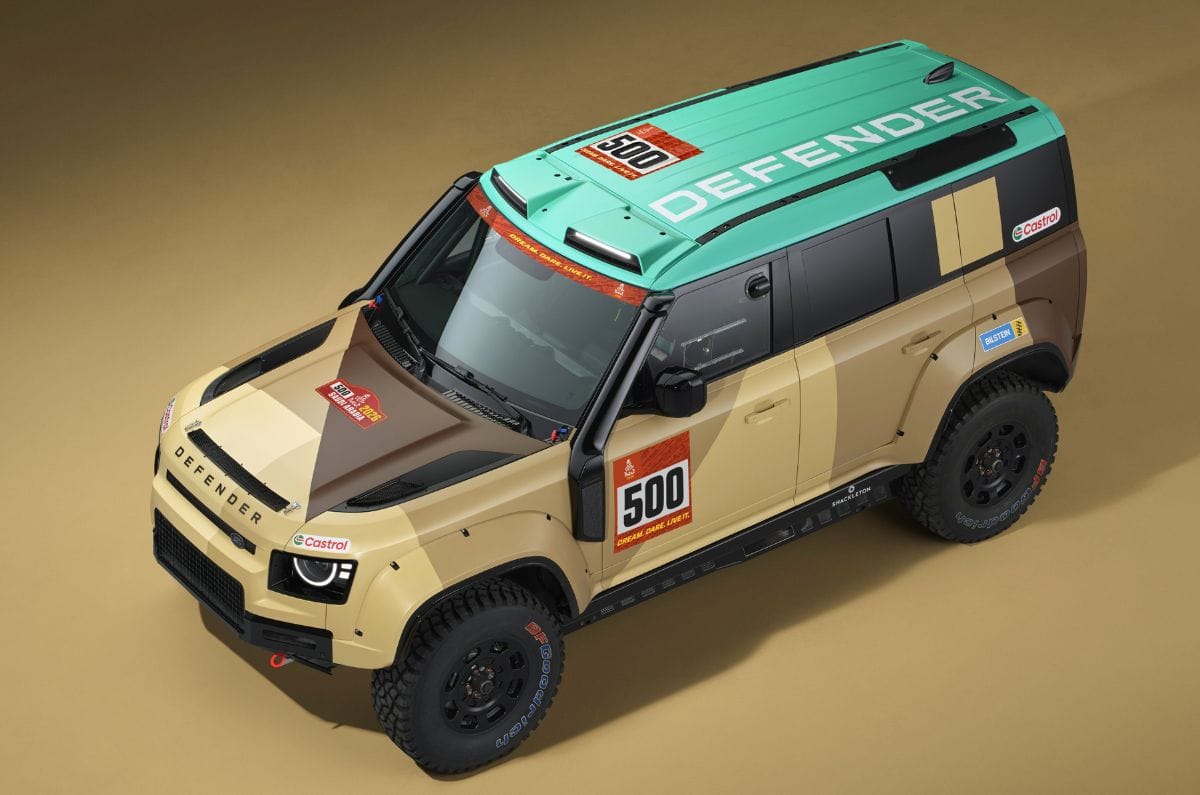
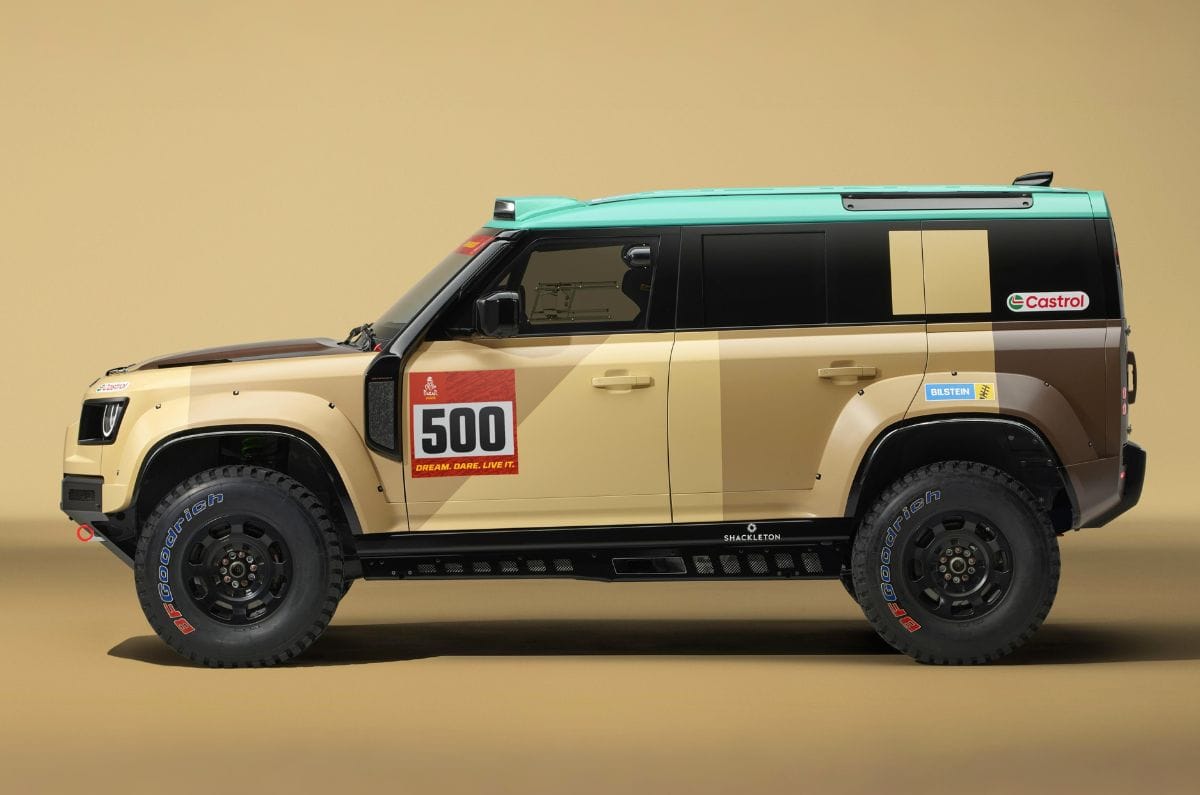
The Defender Dakar D7X-R has a dual-tone exterior, finished in what Land Rover calls the ‘Geopalette’ livery. The colours found on the lower half are supposedly inspired by the desert landscape, while the bright aqua roof represents “rare desert waters”. Apart from the muscular bonnet and wheel arches, the redesigned bumpers reduce the front and rear overhangs to achieve higher approach and departure angles.
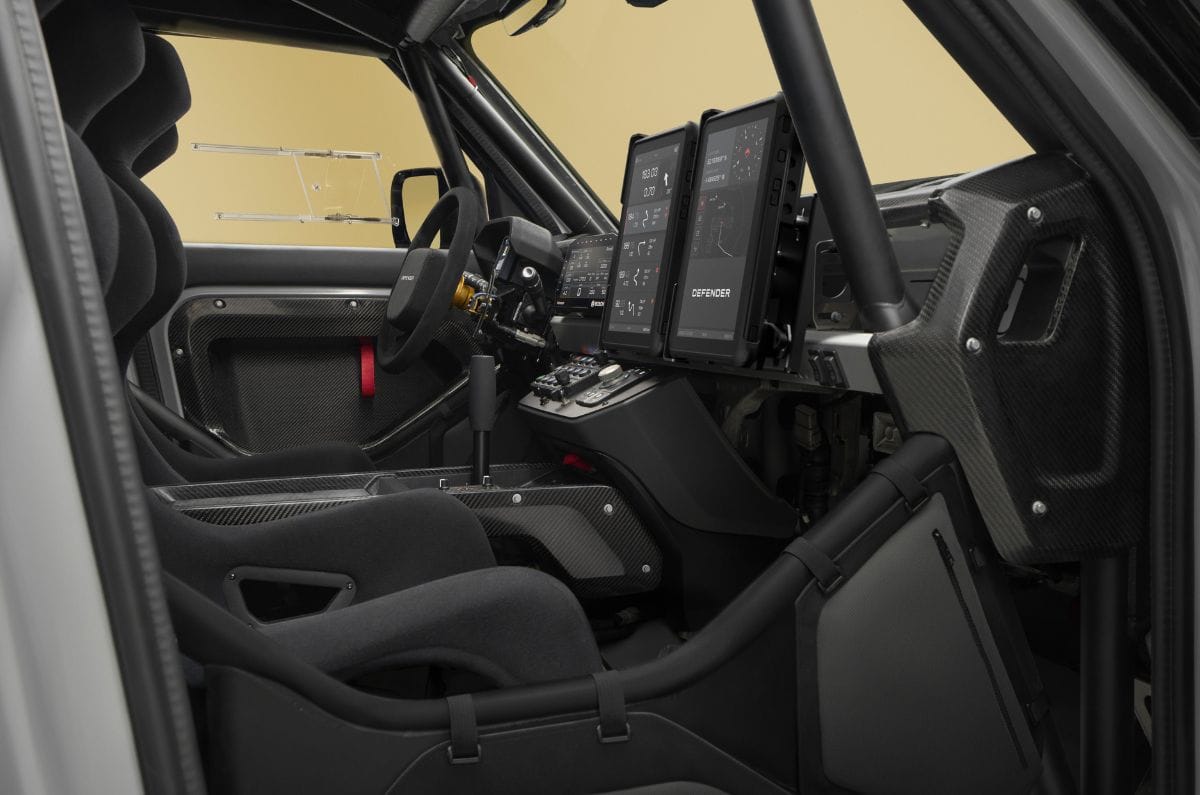
Other design aspects unique to the Defender Dakar D7X-R are its roof-integrated LED lights and air intakes for the cabin. The minimalistic interior features a comprehensive roll cage, pull tabs for opening the doors, fixed windows with opening portholes, and carbon-fibre and suede trim. The rally-spec seats are tailor-made for each driver and come with a 6-point racing harness. Interior amenities include a tool kit, compressed air, hydraulic jacks, three spare wheels and eight litres of water.
Land Rover Defender Dakar D7X-R: The human elements
There will be six drivers and co-drivers, including a Dakar Rally legend.
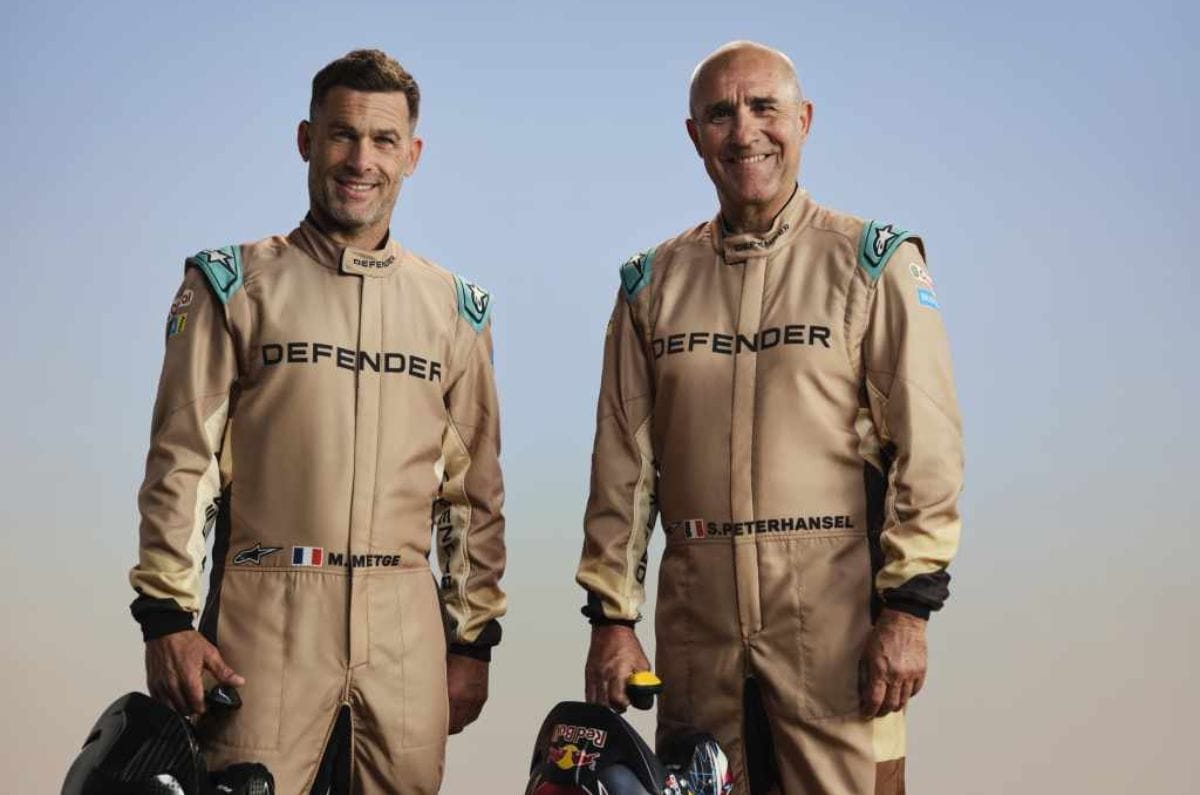
Taking the Defender Dakar D7X-R through its debut World Rally-Raid Championship will be a team of six experienced drivers and their co-drivers (also known as navigators). Leading this team is 14-time Dakar Rally champion Stephane Peterhansel, whose co-driver will be Mika Metge. Dakar stage-winner Sara Price is paired with Sean Berriman, while Oriol Vidal will be the co-driver for Rokas Baciuska. Along with a crew of engineers and mechanics, the Team Principal will be Ian James.
Also read
Defender Octa review: world’s fastest off-roader
Tata Sierra 7-seater SUV possible with ARGOS platform
Tata Sierra AWD to launch in 2027